

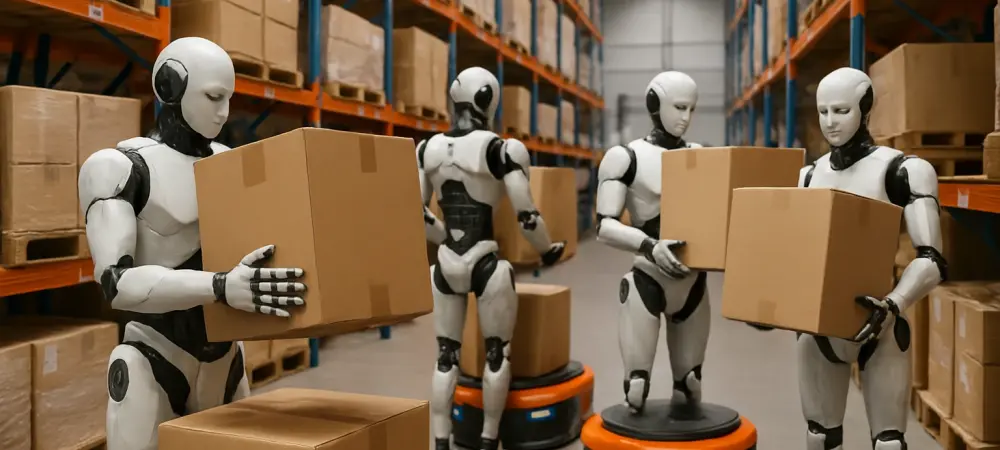
What if a package could navigate a warehouse, get packed, and be shipped out in mere minutes, all without human intervention? In today’s fast-paced world, the logistics sector is witnessing a groundbreaking transformation driven by artificial intelligence (AI) and robotics, amplified through strategic partnerships. This shift promises not just efficiency but a complete reimagining of how goods travel across the globe, impacting everything from delivery speeds to warehouse operations.
The Dawn of a New Logistics Era
The logistics industry stands at the threshold of a monumental change, where automation is no longer a luxury but a necessity. With e-commerce booming and consumer expectations for rapid delivery soaring, traditional methods are being outpaced by technology. Partnerships between tech innovators and logistics giants are paving the way for smarter, faster systems that redefine supply chain dynamics.
This revolution is evident in warehouses where robots glide seamlessly between shelves, and AI algorithms predict demand spikes before they happen. Such advancements are slashing processing times and setting new benchmarks for what efficiency means in this sector. The collaboration between companies is proving to be the backbone of this new era, merging expertise to tackle complex challenges.
Why Logistics Demands Technological Innovation
Global supply chains face unprecedented strain from skyrocketing online shopping trends and persistent labor shortages. Warehouses using outdated manual processes often grapple with inefficiencies, leading to delayed shipments and inflated costs. The urgency to adapt has never been clearer, as businesses strive to meet the demand for near-instant fulfillment.
AI and robotics offer a lifeline by automating repetitive tasks and optimizing space usage, directly addressing these bottlenecks. Strategic alliances enhance these solutions, allowing for scalable implementations that can transform operations without breaking budgets. This technological shift is critical for survival in a market where agility and speed are paramount.
Moreover, the financial stakes are high— studies indicate that companies adopting automation can cut operational expenses by as much as 30%. This isn’t merely about keeping up; it’s about staying relevant in an industry where every second counts. The push for innovation is reshaping expectations for businesses and customers alike.
Key Innovations Fueling the Logistics Overhaul
At the heart of this transformation are cutting-edge technologies that work in tandem to redefine warehousing. Automated Storage and Retrieval Systems, like Swisslog’s AutoStore, demonstrate this by enabling robots to handle up to 20,000 picks per hour, while also maximizing storage density for industries requiring specialized setups, such as multi-temperature zones for food logistics. This kind of precision is setting a new standard.
Equally impactful is AI-driven orchestration, exemplified by GreyOrange’s GreyMatter software, which uses real-time data to streamline workflows and adapt to sudden demand changes. Such systems integrate effortlessly with existing infrastructure, ensuring that warehouses can pivot without costly overhauls. The result is a fluid operation that minimizes downtime.
Strategic partnerships amplify these advancements, as seen in Comau’s acquisition of Automha, which broadens its automation footprint by combining human-focused design with scalable tech. Similarly, Bailey’s alliance with GreyOrange emphasizes energy-efficient solutions, proving that innovation can align with sustainability. Together, these developments create a cohesive ecosystem tackling speed, cost, and adaptability head-on.
Industry Perspectives and Tangible Outcomes
Leaders in the field are vocal about the profound impact of these technologies. A Swisslog executive remarked, “Automation goes beyond replacing labor—it’s about expanding possibilities,” pointing to how their AutoStore system, paired with SynQ software, accelerates delivery by 20% through predictive item placement. This insight reflects a broader industry shift toward smarter operations.
Data reinforces these claims, with research showing that AI-enhanced warehouses can slash costs by up to 30%. A striking example is Bailey’s collaboration with GreyOrange, which redesigned a distribution center to reduce energy consumption by 25%, balancing efficiency with environmental responsibility. Such outcomes highlight the real-world value of these innovations.
These voices and results point to a unified belief: partnerships are the linchpin that transforms cutting-edge tools into practical benefits. By combining resources and expertise, companies are not just solving today’s problems but also building resilience for future demands. The evidence is clear—collaboration drives progress in ways that isolated efforts cannot match.
Steps to Integrate AI and Robotics in Logistics Operations
For companies eager to embrace this wave, the journey begins with a focused evaluation of current inefficiencies, such as sluggish order processing or underutilized storage areas. Solutions like Swisslog’s AutoStore can address these by offering high-density storage that boosts throughput. This initial step ensures that technology aligns with specific needs.
Next, integrating software like GreyOrange’s GreyMatter allows for dynamic management of operations, adapting in real time to shifting priorities without disrupting established systems. This adaptability is crucial for maintaining workflow continuity while scaling up automation. The emphasis should be on modular tools that grow with the business.
Finally, forging partnerships with tech providers or industry allies can provide access to specialized knowledge and cost-effective scaling. By adopting flexible systems that blend automation with human oversight, businesses can prepare for evolving challenges. This strategic approach ensures that investments today yield benefits well into the coming years, from 2025 onward.
Reflecting on a Transformed Landscape
Looking back, the logistics sector underwent a remarkable evolution as AI and robotics, bolstered by strategic alliances, redefined operational norms. The strides made by innovations like Swisslog’s AutoStore and GreyOrange’s GreyMatter showcased how technology could elevate efficiency to unprecedented levels. Partnerships proved to be the catalyst, turning visionary ideas into practical successes.
The journey highlighted a critical lesson: embracing change required not just adopting tools but also fostering collaboration across the industry. Moving forward, businesses were encouraged to prioritize scalable, adaptable systems that could address both current bottlenecks and future uncertainties. Exploring alliances with tech innovators offered a pathway to stay ahead in a competitive market.
Ultimately, the focus shifted toward building a logistics framework where speed, sustainability, and resilience were intertwined. Companies were urged to assess their operations, identify gaps, and invest in solutions that balanced automation with strategic human input. This approach promised not just survival but a thriving presence in an ever-evolving global supply chain.