

The global economy is currently witnessing a profound structural shift as the promise of artificial intelligence transforms from theoretical experimentation into a foundational element of industrial and commercial operations worldwide. This trajectory suggests that the combined market for AI and machine learning is on track to surpass the $1.2 trillion mark by 2035, driven by a maturing ecosystem of hardware providers and a more sophisticated consumer base that demands integrated, high-performance solutions. Unlike the early days of generative hype, the current era is defined by disciplined procurement strategies and a global supply chain that is gradually diversifying to mitigate systemic risks. This expansion is not merely about smarter chatbots or automated assistants; it represents a comprehensive overhaul of how data is processed, how machines are built, and how value is extracted from every byte of information generated by interconnected systems. As enterprise-level adoption moves from the pilot phase to full-scale deployment, the underlying infrastructure is being pushed to its limits, necessitating a new generation of technological breakthroughs to maintain this rapid pace of growth.
The current transition is characterized by a move away from general-purpose tools toward highly specialized, domain-specific applications that offer measurable returns on investment. For organizations navigating this landscape, the challenge has shifted from simply acquiring AI capabilities to integrating them into the very fabric of their business models in a way that is both scalable and sustainable. This requires a deep understanding of the interplay between software sophistication and hardware capacity, as the complexity of modern neural networks demands unprecedented levels of computational throughput. Furthermore, the global nature of this market means that success is increasingly tied to one’s ability to navigate a complex web of geopolitical interests, material shortages, and regional regulatory environments. As we move deeper into this decade, the distinction between “tech companies” and “traditional companies” continues to blur, with every major player in the global market becoming, in effect, an AI-driven enterprise. The road to the $1.2 trillion milestone is paved with significant technical and logistical hurdles, but the potential for increased efficiency and innovation remains the primary catalyst for this historic investment cycle.
The Physical Infrastructure of Intelligence
Hardware Dominance: The Foundation of Modern AI
Hardware remains the undeniable king of the AI landscape, currently claiming more than 55% of total market revenue as the physical requirements for high-level computation continue to escalate. While software innovations often capture the public imagination, the reality for modern enterprises is that the ability to execute complex models depends entirely on the availability and performance of specialized physical components. This heavy tilt toward hardware reflects a broader industry recognition that software alone is not a competitive moat; instead, the physical infrastructure—the racks of servers, the high-speed interconnects, and the vast arrays of memory—dictates the actual speed and scalability of any AI initiative. Consequently, many tech-heavy organizations are prioritizing investments in their own data centers and proprietary hardware stacks rather than relying solely on generic cloud instances. This strategy allows them to fine-tune their environments for specific workloads, ensuring that they can handle the massive datasets required for modern neural networks without falling victim to the latency or throughput bottlenecks that plague less specialized systems. The market’s current valuation is essentially a reflection of this massive, tangible investment in the physical brains of the digital age.
Building on this physical foundation, the supply system for AI hardware is becoming increasingly diverse, moving away from the centralized bottlenecks that defined the earlier years of the decade. Market experts note that while the demand for high-powered processors remains insatiable, the focus is shifting toward creating a more resilient and distributed network of data centers that can serve local markets with lower latency. This trend is driven by both technical requirements and a growing desire for digital sovereignty among nations that want to keep their data processing within their own borders. As a result, we are seeing a surge in “micro-data centers” and regional hubs that provide the necessary muscle for AI training and inference without the need for long-distance data transmission. This decentralized approach not only improves the performance of real-time AI applications but also provides a layer of protection against localized outages or international connectivity issues. The result is a more robust global infrastructure that can support the widespread, large-scale use of AI across every major industry, from finance to healthcare, ensuring that the trillion-dollar growth target remains well within reach as we progress toward 2035.
Specialized Silicon: The Rise of Custom ASICs
The shift away from general-purpose processing units toward Application-Specific Integrated Circuits (ASICs) is fundamentally altering the cost structure and efficiency of the entire machine learning sector. While graphics processing units were the original workhorses of the AI boom, they are increasingly being viewed as less efficient for the highly specific, repetitive mathematical tasks required by mature models. ASICs, which are custom-designed for these exact operations, offer a compelling alternative that can reduce total operating costs by as much as 60% in high-volume environments. As the market matures toward the middle of the next decade, analysts expect these specialized chips to double their market share as companies seek to move away from the high power consumption and thermal limits associated with generic silicon. This transition is not just about raw power; it is about economic viability, as the energy costs of running massive AI models have become a significant line item on corporate balance sheets. By optimizing the silicon at the architectural level, developers can achieve significantly higher performance-per-watt, making large-scale AI deployment sustainable for companies that lack the infinite resources of hyperscale cloud providers.
Complementing the rise of custom silicon is a newfound focus on specialized memory and advanced thermal management systems to handle the intense heat generated by high-density AI clusters. As processors become more powerful, the bottleneck often shifts to the speed at which data can be moved between the memory and the computing cores, leading to a surge in demand for High Bandwidth Memory and other advanced storage technologies. These components are essential for training the complex language models and neural networks that businesses are increasingly relying on to stay competitive in a data-driven world. Furthermore, the sheer physical intensity of these workloads has made traditional air cooling obsolete in many high-end facilities, leading to the rapid adoption of liquid cooling and other innovative heat dissipation methods. By managing the thermal environment more effectively, operators can push their hardware to higher clock speeds without risking damage or significant downtime. This focus on the “supporting cast” of the processor—the memory, the cooling, and the power delivery—is what will ultimately determine which organizations can scale their AI efforts effectively as the market continues its march toward a $1.2 trillion valuation.
Key Industries Driving Market Demand
Industrial Automation: Transforming the Factory Floor
Industrial automation has emerged as the single largest vertical for artificial intelligence, presently accounting for nearly 30% of the total market demand as manufacturers race to modernize their operations. The focus within this sector has shifted away from simple robotic arms toward intelligent, self-correcting systems that can anticipate maintenance needs before a failure occurs. Predictive maintenance models, fed by a constant stream of sensor data from the factory floor, allow companies to bypass the rigid, schedule-based repair cycles of the past in favor of a dynamic approach that maximizes uptime. By identifying microscopic vibrations or subtle heat signatures that indicate a failing component, these AI-driven systems can schedule repairs during planned downtime, preventing catastrophic losses in production capacity. This proactive stance is becoming the standard for modern factories, where even a few hours of unexpected idleness can result in millions of dollars in lost revenue and disrupted supply chains. As these systems become more sophisticated, they are also taking on more complex roles, such as optimizing energy consumption across entire facilities and managing the real-time flow of raw materials.
Furthermore, the integration of machine learning into robotic control systems has enabled a new level of dexterity and adaptability, allowing machines to handle a wider variety of parts and tasks without the need for extensive manual reprogramming. This flexibility is essential in a global market where consumer preferences change rapidly, and manufacturers must be able to pivot their production lines with minimal delay. In the current landscape, robots are no longer confined to highly structured environments; they can now navigate cluttered warehouse floors and collaborate safely with human workers thanks to advanced computer vision and real-time pathfinding algorithms. This increase in throughput is not just a matter of moving faster, but of moving smarter, reducing waste and ensuring that every movement contributes to the final goal of production. By removing the need for constant human oversight, these intelligent industrial systems allow companies to scale their operations significantly while maintaining a high degree of precision. The result is a more resilient and efficient industrial base that can produce higher-quality goods at lower costs, providing a powerful incentive for continued investment in AI technology.
Semiconductor Innovation: Building Smarter Hardware
The semiconductor industry itself has become a primary consumer of the very technology it produces, utilizing machine learning to navigate the increasing difficulty of modern chip fabrication. As manufacturing nodes shrink toward 2 nanometers and beyond, the margins for error become almost non-existent, and the traditional methods of process optimization are proving inadequate for the task. AI models are now being used to manage the incredibly complex physics of extreme ultraviolet lithography and other advanced production steps, ensuring that the chemical and mechanical processes remain perfectly balanced. By analyzing millions of data points from previous production runs, these models can predict how a specific batch of silicon will react to certain conditions, allowing manufacturers to make real-time adjustments that significantly increase the number of working chips per wafer. This improvement in yield is the lifeblood of the semiconductor industry, as even a small increase in output can translate into hundreds of millions of dollars in additional revenue. As the physical limits of silicon are pushed to their breaking point, machine learning is providing the necessary insights to keep the pace of innovation alive for another generation.
Beyond the fabrication process, manufacturers are fundamentally changing how they generate value by embedding AI directly into their hardware products for long-term support. By integrating high-performance processors into their machines, original equipment manufacturers can offer intelligence as a standard feature rather than an optional upgrade. This capability to improve hardware through wireless updates creates a persistent relationship between the manufacturer and the end-user, opening up recurring revenue streams through ongoing software services and maintenance. For example, a medical imaging tool might receive a software update that allows it to detect a new type of pathology, or a factory machine might be updated with a more efficient autonomous operation algorithm. This shift turns basic hardware into smart systems that can adapt and improve over time, providing significantly more value to the people who use them throughout their lifecycle. It also allows companies to collect anonymized performance data from their fleet of devices, which is then used to train even better models, creating a virtuous cycle of improvement that benefits the entire ecosystem.
Global Supply and Regional Competition
Infrastructure Evolution: From Cloud to Edge
While centralized data centers remain the primary engines for the AI revolution, the market is currently seeing a distinct migration of processing power toward “edge AI,” where data is handled directly on local devices. This evolution is driven by the need for near-instantaneous decision-making in applications like autonomous vehicles, industrial robotics, and smart cities, where the delay involved in sending data to a distant cloud server is unacceptable. In these environments, processing data at the source reduces latency, saves significant amounts of power, and enhances privacy by keeping sensitive information on the local network. Consequently, this shift is becoming exceptionally popular in fields like telecommunications and electronics, where devices must operate efficiently in fast-paced or remote environments. The rise of edge computing does not replace the cloud but rather complements it, creating a tiered architecture where the most difficult training happens in a central “brain” while real-time execution occurs at the periphery. This balance allows organizations to harness the massive computational power of the cloud without sacrificing the speed and responsiveness required for operational excellence on the ground.
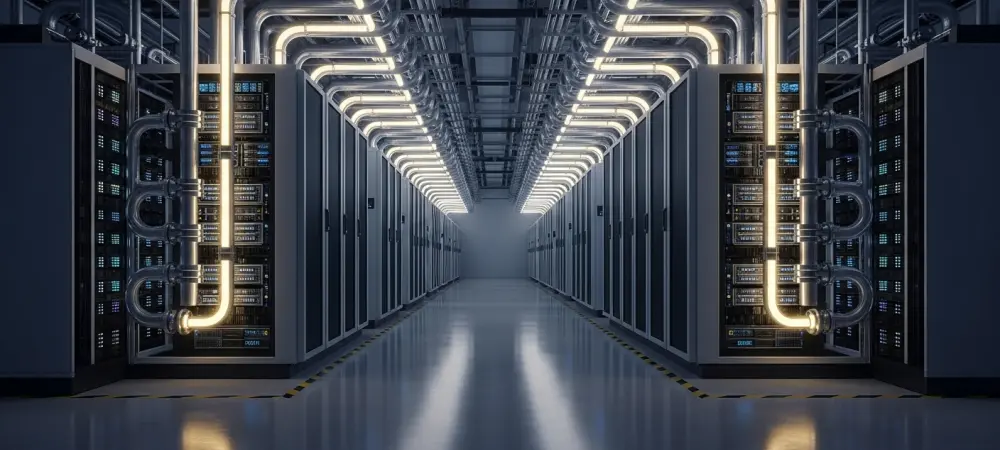
The persistent growth of giant data centers continues to create an endless demand for specialized infrastructure, particularly in the area of high-performance thermal management. As these facilities pack more computing power into smaller spaces, the heat generated by thousands of AI-optimized processors has become a significant engineering challenge. New technologies like liquid cooling, once reserved for niche scientific applications, are now becoming a necessity for managing the intense power needs of massive server clusters. These cooling systems are far more efficient than traditional air-based methods, allowing data center operators to maintain peak performance even during periods of heavy computational load. This physical evolution of the data center is a critical component of the broader AI market, as it ensures that the hardware can run reliably for long periods without the risk of thermal throttling or equipment failure. As we look toward 2035, the ability to manage these extreme physical environments will be just as important as the ability to design the neural networks themselves, making thermal engineering a key driver of the industry’s long-term sustainability and growth.
Geopolitical Strategy: Securing the Supply Chain
The global AI market is currently wrestling with the strategic vulnerability posed by the extreme concentration of advanced semiconductor manufacturing in a few specific geographic locations. With roughly 90% of the world’s most sophisticated chips coming from a handful of facilities, the entire industry remains highly susceptible to regional instability, natural disasters, or shifts in international trade policy. In response to these risks, governments in North America, Europe, and Asia have launched massive initiatives to foster domestic chip production, pouring billions of dollars into the construction of new fabrication plants. These efforts are aimed at creating a more resilient and geographically distributed supply chain that can withstand the pressures of a polarized geopolitical climate. However, building these facilities is a multi-year endeavor that requires not only enormous financial capital but also a highly specialized workforce and a reliable supply of specialized chemicals. This reorganization of the supply chain is a necessary step to ensure that the trillion-dollar market has a stable foundation upon which to grow, free from the threat of sudden and catastrophic disruptions that could stall progress for years. The demand for artificial intelligence is currently led by the Asia-Pacific region, which holds nearly half of the global market due to its massive electronics hubs and established manufacturing base. North America and Europe follow closely, with a heavy focus on the design of high-end chips and the integration of AI into the automotive and healthcare sectors. As these regions compete for dominance, the focus is shifting from what AI can do to how efficiently it can perform, making it a standard part of global infrastructure by the middle of the next decade. Costs for raw materials and rare-earth elements used in manufacturing remain very volatile, forcing companies to adopt more complex financial strategies and careful supply chain management to avoid sudden price spikes. To deal with this, leading firms are exploring alternative materials and more efficient recycling programs to recover valuable components from old hardware. This emphasis on resource security is becoming a core component of corporate strategy, as the companies that can most effectively manage their material inputs will be the ones that maintain their competitive edge in a resource-constrained environment.
The industry successfully navigated the transition from novelty to necessity by prioritizing tangible outcomes over speculative potential. Leaders in the sector recognized that sustainable growth required a move away from the experimental mentality toward a more disciplined, engineering-centric approach. Organizations that integrated AI into the core of their physical operations achieved a level of operational resilience that shielded them from the broader market instabilities of the decade. By 2035, the narrative around machine learning matured into a discussion about reliability, power efficiency, and regional sovereignty. Those who invested early in specialized hardware and localized processing established a dominant position that defined the next era of industrial history. The $1.2 trillion market was not reached through a single breakthrough, but through the cumulative effect of millions of small optimizations across the entire global supply chain. This period of rapid evolution demonstrated that the true power of intelligence lay in its ability to be embedded everywhere, transforming the very nature of modern manufacturing and commerce. Moving forward, the focus remained on refining these systems to be even more autonomous and resource-efficient, ensuring that the infrastructure established during this era continued to serve as the backbone of the global digital economy.