

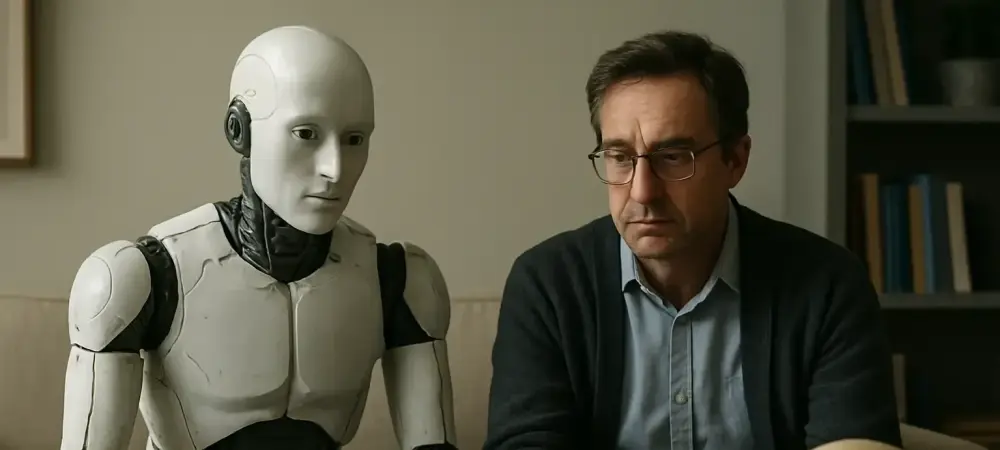
The abrupt silence that follows the unexpected end of a therapeutic relationship can be one of the most disorienting experiences a person can face, leaving a void where a trusted voice once resided. This deeply personal space, built on vulnerability and trust, is assumed to be a stable sanctuary. Yet, the very foundation of this sanctuary is now being questioned from two different directions. For those who rely on a human therapist, the unspoken fear has always been the fragility of a single human life. For the growing number who turn to artificial intelligence for guidance, the assumption has been one of digital permanence, an advisor that will exist forever. This article explores the uncomfortable truth that both of these pillars of support—one built of flesh and blood, the other of code and capital—are subject to their own forms of mortality, raising critical questions about continuity of care in the modern age of mental health.
When Your Confidant Vanishes The Unspoken Fear in Therapy
At the heart of the therapeutic bond lies a profound and unsettling question: What happens when the one person who holds your deepest vulnerabilities is suddenly gone forever, without a warning or a goodbye? This is not a hypothetical scenario but a recurring crisis that exposes a deep-seated vulnerability within the mental health care system. The therapeutic alliance is predicated on consistency and trust, a relationship carefully nurtured over months or even years. The sudden death or incapacitation of a therapist shatters this foundation, often leaving clients feeling abandoned, destabilized, and alone with the very issues they sought help to manage. The loss is not just of a professional guide but of a unique human connection that cannot be easily replicated.
This inherent risk in human-led therapy creates a stark contrast with the perceived stability of digital entities. The core conflict emerges from this juxtaposition: the known, biological fragility of a human life versus the assumed, technical permanence of an AI. A human therapist is subject to illness, accidents, and the inevitable process of aging. An AI, on the other hand, appears to exist outside these limitations, promising a constant presence that never tires, forgets, or faces a personal crisis. This apparent invulnerability is a powerful draw, offering a seductive solution to the deep-seated anxiety associated with depending on another mortal human being. The very idea of a “forever therapist” directly confronts the most significant point of failure in the traditional model, promising a continuity that human life simply cannot guarantee.
The New Frontier of Mental Health A Landscape of Human and Artificial Support
The conversation surrounding therapeutic continuity is becoming increasingly urgent due to two parallel trends shaping the mental health landscape. Firstly, the demand for traditional therapy continues to outpace the supply of qualified practitioners, leaving many individuals on long waiting lists or unable to access care. This scarcity has amplified the need for accessible alternatives. Secondly, the rapid adoption of generative artificial intelligence for mental health guidance has created a new, burgeoning frontier of support. Millions of users now turn to AI platforms like ChatGPT and specialized mental health chatbots as a supplement, or in some cases a replacement, for human counseling. These users, often tech-savvy and comfortable with digital interaction, are pioneering a new form of self-care.
This dual evolution of the mental health ecosystem makes the question of long-term stability more critical than ever before. As individuals invest significant emotional energy and personal history into these relationships—whether with a human in an office or an AI on a screen—the expectation of continuity grows. For users of AI, the platform’s ability to maintain a running log of conversations creates a powerful sense of an ongoing, evolving relationship. For patients in traditional therapy, the bond is built on shared experience and mutual understanding over time. In both cases, the abrupt termination of the service or relationship can be profoundly disruptive. Therefore, understanding the unique vulnerabilities of each modality is no longer an academic exercise but a necessary step for anyone seeking to build a resilient and sustainable mental health support system.
Two Forms of Mortality A Comparative Analysis of Discontinuation
The end of a therapeutic relationship can be a planned and healthy transition, but when it is abrupt and unexpected, it triggers a crisis. While both human and AI therapists can “disappear,” the nature of their mortality is fundamentally different. For human therapists, the end is biological and often tragic, leaving a wake of emotional and logistical chaos. For AI advisors, the end is corporate and technical, a silent and sudden shutdown that can be equally jarring for a user who has come to depend on its presence. A comparative analysis of these two forms of discontinuation reveals that neither system is immune to sudden failure, each presenting a unique set of risks to the person seeking help.
The frailty of a human therapist is an unavoidable reality that the mental health profession has struggled to adequately address. When a therapist dies or becomes suddenly incapacitated, clients are often plunged into a profound crisis. This experience can trigger feelings of abandonment, grief, and a destabilization of their mental state, compounding the very issues for which they were seeking treatment. Systemically, there are supposed to be safeguards. The concept of a “professional will,” sometimes known as a PRID (psychologist reiteration, incapacitation, and death) document, dictates that practitioners should have a plan in place. This plan should designate a professional executor to notify clients and manage the secure transfer or disposal of confidential patient records. However, as documented in journalistic investigations such as the New York Times article “The Ghost In The Therapy Room,” enforcement of these ethical guidelines is tragically lax. Many therapists lack such a plan, leaving their clients unprotected and in the dark. The cascading challenges are immense: the daunting task of finding a suitable new therapist, the emotional burden of starting the therapeutic process from scratch, and the uncertainty surrounding the fate of their most private information. Even when a transition plan exists, its success is not guaranteed. Legal entanglements can delay its execution, a designated successor may not be a good personal fit for the client, and the previous therapist’s notes may be too cryptic or subjective to be of any real use to a new practitioner.
In stark contrast, the AI “forever therapist” presents a seductive promise of absolute permanence. Its advantages are compelling and cater directly to the shortcomings of the human model. An AI advisor is available 24/7, requires no appointments, and often comes at little to no cost, removing barriers of time, geography, and finance. It provides a judgment-free space where a user can converse for hours without fear of imposing or being a burden. However, its most powerful and alluring feature is its continuous conversation “memory.” Subject to technical limitations, an AI can retain a near-perfect record of every interaction, creating the illusion of an all-knowing confidant who never forgets a single detail. A user can return after a week, a month, or a year and seamlessly pick up the conversation. This perceived immortality directly counters the anxieties associated with the potential loss of a human therapist. It offers users a false sense of absolute security, a belief that this source of support will never get sick, never move away, and never die, thus eliminating the risk of sudden abandonment that haunts the traditional therapeutic relationship.
Deconstructing the Myth The Hidden Vulnerabilities of the Digital Mind
The narrative of the “forever AI” is a compelling one, but it is ultimately a myth. A critical examination reveals that an AI’s existence is not biological but corporate and technical, making it just as susceptible to a sudden and permanent “death.” While it does not face illness or old age, it is subject to the volatility of the market, the whims of corporate strategy, and the fallibility of technology. The assumption that a digital service will last forever is a high-stakes gamble, especially when one’s mental well-being is the wager. The stability of an AI platform is entirely dependent on the stability of the company that created and maintains it, a factor that is far from guaranteed in the fast-paced tech industry. Several plausible “corporate mortality” scenarios could abruptly end an AI mental health service, leaving users in the lurch. The most straightforward is financial failure; if the company behind the AI goes bankrupt, the servers that host it will be shut down, and the service will cease to exist. A more subtle threat is a strategic pivot. A company might decide to remove mental health features due to fears of litigation, changing regulations, or a shift in business focus, causing the AI to suddenly become unresponsive to the very topics it was designed to address. Technical catastrophe is another significant risk. A flawed software update or a catastrophic system error could wipe out the AI’s “memory” and all user history, effectively erasing the relationship and forcing the user to start over with a digital stranger. Finally, the threat of corporate acquisition looms large. If the AI company is purchased, the new parent company may have different priorities, leading it to discontinue the platform, sell off its assets, or even monetize the sensitive user data it has acquired. Each of these scenarios results in the same outcome for the user: the sudden and unexpected loss of a trusted confidant.
Navigating Impermanence A Framework for Resilient Mental Health Support
The unavoidable conclusion is that neither system—human nor AI—offers a foolproof guarantee of permanence. Both are marked by their own inherent vulnerabilities, and both require a proactive and informed approach from the individual seeking help. Rather than placing blind faith in either modality, building true resilience requires acknowledging the potential for disruption and preparing for it. This involves moving from a passive role as a recipient of care to an active role as a manager of one’s own mental health support network, with a clear-eyed understanding of the risks involved in any therapeutic relationship.
For patients of human therapists, this means initiating a difficult but necessary conversation. It is entirely appropriate to ask a therapist about their professional will and their emergency transition plan. Understanding who their designated professional executor is and how clients would be contacted in the event of an emergency can provide significant peace of mind and a clear path forward should the worst occur. This conversation is not about mistrust; it is about responsible planning and ensuring the continuity of one’s own care. For users of AI advisors, a different set of precautions is necessary. It is crucial to avoid becoming overly reliant on a single platform. Where possible, users should periodically back up or export their conversation logs to preserve their history. Furthermore, it is essential to read the terms of service to understand what happens to personal data if the company is sold or shut down. This digital literacy is a form of self-protection in an unregulated landscape. Ultimately, the core principle for navigating this complex environment is the diversification of one’s support network. Relying on any single point of support, whether it is one therapist or one AI, creates a single point of failure. A more resilient strategy involves building a multifaceted support system that may include a primary therapist or AI, but also incorporates support groups, trusted friends and family, and personal coping mechanisms. By spreading the emotional investment across multiple pillars, the failure of any single one becomes less catastrophic. This approach recognizes the inherent impermanence of all relationships and systems, empowering the individual to withstand disruptions and continue their journey toward mental well-being with confidence and stability.
The exploration of these parallel forms of mortality revealed that the search for a truly permanent therapeutic solution, whether human or artificial, was a flawed premise from the start. A direct comparison between the longevity of a human and an AI ultimately proved to be less important than the overarching theme that emerged: no system of support is infallible. Both the human therapist, bound by biological limits, and the AI advisor, subject to corporate and technical failure, presented their own unique risks of sudden discontinuation. The crucial takeaway was not to choose one over the other, but to approach either with a new awareness and a proactive stance. By acknowledging the inherent impermanence in any therapeutic relationship, individuals were better equipped to prepare for that eventuality. As Mahatma Gandhi once advised, one had to “Live as if you were to die tomorrow. Learn as if you were to live forever,” a sentiment that aptly captured the need to engage fully in the present while planning wisely for an uncertain future.