

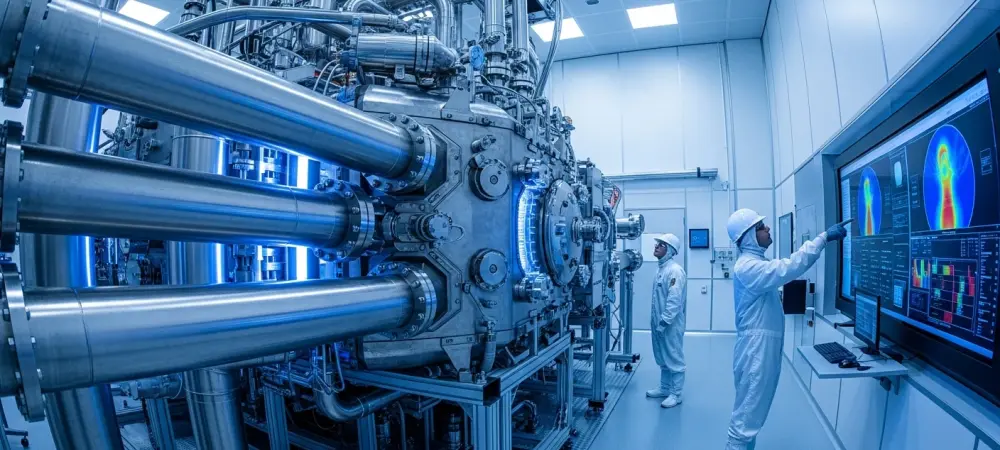
The global energy landscape is undergoing a radical transformation as the elusive dream of nuclear fusion transitions from a theoretical laboratory exercise into a tangible commercial reality. This shift marks a pivotal moment in human history, where the goal is no longer just to understand the physical laws of the universe but to harness the very process that powers the sun to resolve the planet’s looming energy crisis. For decades, the primary hurdle remained the complex fusion puzzle, a challenge defined by the immense difficulty of sustaining superheated plasma at temperatures exceeding one hundred million degrees Celsius. Achieving a net energy gain, where the output surpasses the initial input, required not just raw power but an unprecedented level of precision in electromagnetic confinement. Today, this scientific boundary is being crossed through a combination of sophisticated material science and advanced engineering, setting the stage for a world where clean energy is no longer a finite resource but a nearly boundless utility for a growing population.
Recent Progress in Plasma Containment and Commercial Scaling
Achieving Stability: Breakthroughs in Reactor Longevity and Design
New breakthroughs have shown that the long-standing technical barriers to holding high-temperature plasma are finally beginning to fall in experimental facilities across the globe. Scientists have recently set significant records for confinement times, with plasma being held in a stable state for over twenty minutes in experimental reactors, which represents a massive leap from the fleeting seconds achieved in previous years. These achievements have moved the technology beyond academic curiosity, triggering a surge in private sector interest as companies compete to build the first functional, commercial-scale hardware. This influx of capital has accelerated the development of superconducting magnets and innovative heat-shielding materials, ensuring that the containment fields can withstand the intense thermal stresses of a sustained reaction. As these records continue to be broken, the industry is transitioning from small-scale testing to the construction of pilot plants designed to prove long-term durability and the economic viability of the fusion process.
This increase in private investment is also driving a move toward more versatile reactor designs that challenge the traditional model of massive, centralized power plants. While much of the research still focuses on large-scale facilities for the public power grid, some startups are now developing miniaturized fusion reactors that utilize high-temperature superconductors for efficiency. These compact systems could eventually provide a portable, reliable energy source for specialized industries, such as powering large container ships, advanced aircraft, or even remote mining operations, rather than relying solely on traditional infrastructure. By shrinking the physical footprint of the reactor, engineers can test and iterate on designs at a much faster pace, allowing for a more modular approach to energy deployment. This diversification ensures that fusion energy will not only support urban centers but also provide a resilient power solution for the most demanding and geographically isolated industrial sectors, fundamentally changing how humanity powers heavy transport and infrastructure.
The Symbiotic Catalyst: Artificial Intelligence and Future Energy
Artificial intelligence is acting as a critical catalyst for this energy revolution by creating both a new source of demand and the tools needed to satisfy the world’s power requirements. Modern data centers and AI training models require an immense amount of high-density, reliable power that is not subject to the vulnerabilities of global fuel supply chains or weather-dependent renewables. Because of these unique requirements, the technology industry is positioned to be the first major consumer of fusion energy, providing the financial incentive necessary for rapid development and commercialization. Beyond just consuming electricity, AI is also being used as a specialized tool to solve the complex engineering problems that once stalled progress in reactor physics. Advanced algorithms can now process massive amounts of data to predict plasma behavior and make real-time adjustments to reactor containment fields, effectively preventing instabilities before they can disrupt the fusion process, which significantly shortens the path to a viable commercial product.
Humanity successfully navigated the transition toward a star-powered era by prioritizing the integration of fusion energy into the global electrical grid. Stakeholders and industry leaders established robust regulatory frameworks that allowed for the rapid deployment of demonstration facilities by 2030, which proved the economic viability of the technology on a utility scale. The strategic alignment of artificial intelligence and energy production resolved the most pressing engineering challenges, effectively decoupling economic prosperity from the scarcity of carbon-intensive fuels. By focusing on decentralized infrastructure and modular reactor designs, the global community ensured that even remote regions gained access to reliable, high-density power without environmental degradation. This fundamental shift facilitated the stabilization of global resource markets and provided a clear path toward long-term prosperity. Moving forward, the emphasis shifted to the mass production of reactor components and the training of a specialized workforce to maintain this new energy backbone for future generations.