

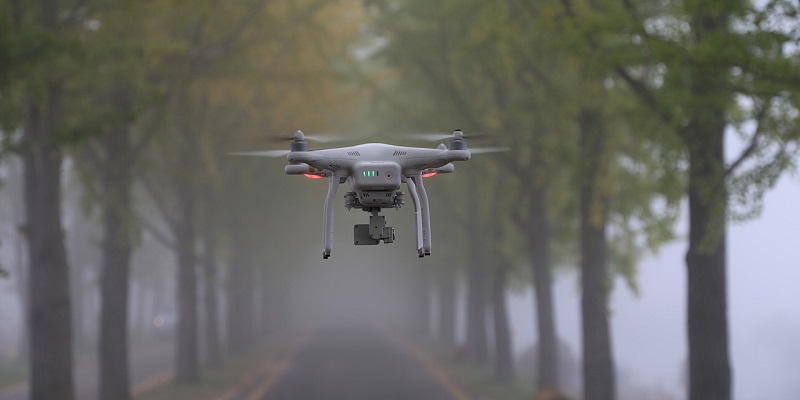
The rapid increase in the use of autonomous drone aircraft in uncontrolled airspace below 400 feet altitude has raised concerns about the safety and orchestration of drone traffic. To address this, a team of researchers led by the Institute for Assured Autonomy’s Lanier Watkins and Louis Whitcomb has leveraged the power of artificial intelligence (AI) to model a system that can more effectively and safely manage drone traffic, reducing the risk of accidents and collisions. The findings of their study, published in the journal Computer, demonstrate the potential for significant advancements in drone traffic management.
Research Team and Methodology
The pioneering research was led by Lanier Watkins and Louis Whitcomb from the Institute for Assured Autonomy. This team utilized artificial intelligence to develop a model that facilitates efficient and secure drone traffic management. By applying AI algorithms, the researchers were able to simulate and analyze various traffic scenarios, refining the system to ensure optimal safety.
Results and findings
The results of the study published in the prestigious journal Computer indicate that incorporating strategic deconfliction algorithms significantly enhances the safety of drone operations in uncontrolled airspace. These algorithms control the timing of drone movements to avoid collisions, effectively reducing the chances of accidents. Astonishingly, the team discovered that these enhancements almost completely eliminated airspace accidents, paving the way for the widespread implementation of autonomous drone technology.
Benefits of Noisy Sensors
To further enhance the adaptability and realism of their system, the researchers integrated “noisy sensors” into their model. These sensors replicate the unpredictable conditions of real-world environments, providing the AI system with the ability to adapt and respond to dynamically changing circumstances. By incorporating noisy sensors, the team has created a robust and reliable drone traffic management system that can effectively handle a wide range of scenarios.
The Fuzzy Inference System
Central to the researchers’ model is the utilization of a “fuzzy inference system.” This system calculates the risk level for each individual drone based on a multitude of factors, including proximity to obstacles and adherence to planned routes. By considering these variables, the system can allocate appropriate space and prioritize drone movements, minimizing the risk of collisions and ensuring safe and efficient traffic flow.
Future Enhancements and Simulations
While the findings of this study are already groundbreaking, the team plans to improve their simulations further by introducing dynamic obstacles, including weather conditions and other real-world factors. By incorporating these elements, the researchers will gain a more comprehensive understanding of the system’s performance under more challenging circumstances, supplementing its real-life applicability and effectiveness.
Practical implications
The investigation of the system’s performance in deployment environments is crucial for its practical implementation. By simulating its performance in potential airspaces, the research team is laying the groundwork for third parties to assess its viability and potential challenges. Furthermore, this work serves as a significant contribution to the field, aiding researchers in understanding how autonomy algorithms can effectively protect airspace in the face of noise and uncertainty in a three-dimensional simulated airspace.
The results of this study hold great promise for the future of autonomous drone traffic in uncontrolled airspace. The utilization of AI algorithms, strategic deconfliction algorithms, and the integration of noisy sensors and a fuzzy interference system has significantly improved the safety and efficiency of drone traffic management. By eliminating or mitigating airspace accidents, the system developed by Lanier Watkins and Louis Whitcomb provides a foundation for further advancements in autonomous drone technology. With continued enhancements and simulations, this research paves the way for the safe and widespread deployment of drones in uncontrolled airspace, enabling a wide range of industries to benefit from this transformative technology.