

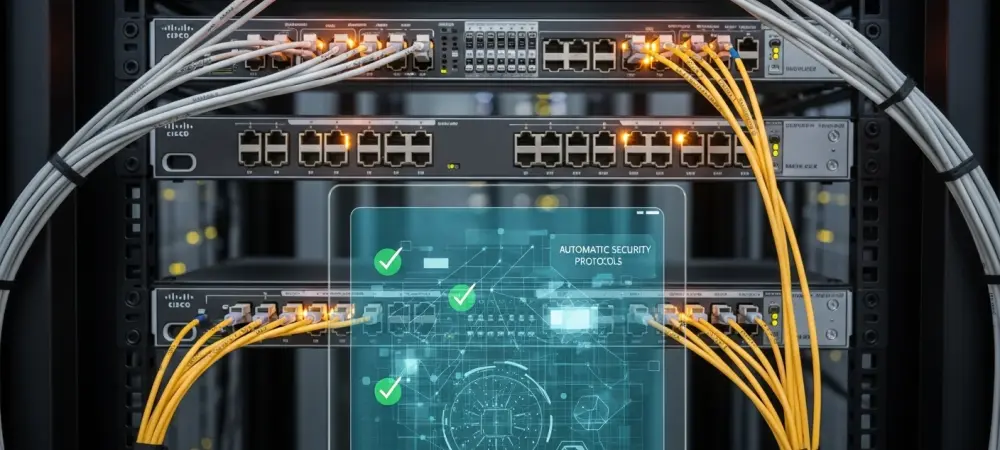
The traditional perimeter of the enterprise network has effectively dissolved under the relentless pressure of automated exploits that move at speeds no human security operations center can hope to match without the intervention of autonomous agents. This paradigm shift marks the end of the era where passive automation and static rule-based firewalls were sufficient to protect corporate assets. As we move deeper into 2026, the industry is witnessing the birth of agentic AI, a technology that does not simply flag problems for review but possesses the reasoning capabilities to diagnose and remediate threats independently. This review examines the current state of this technology, focusing on its ability to bridge the gap between human capacity and machine-driven aggression. The shift toward agentic AI is driven by the necessity of survival in an environment where attackers utilize high-reasoning models to find and exploit vulnerabilities in a matter of seconds. Traditional security models relied on a “detect and notify” workflow, which inherently introduced latency because of the required human intervention. In contrast, agentic systems use a closed-loop logic that allows them to observe a network anomaly, hypothesize the cause, and execute a fix before a human engineer even receives the initial alert. This proactive stance is essential for protecting software-defined networks where configuration changes occur thousands of times a day, creating a surface area too complex for manual oversight.
Evolution and Fundamentals of Agentic Defense
The movement from passive automation to autonomous reasoning represents a fundamental change in the underlying architecture of security software. Early automation tools were essentially sophisticated scripts that followed rigid “if-this-then-that” logic, which made them predictable and easy for sophisticated attackers to circumvent. Agentic AI, however, leverages Large Language Models (LLMs) and specialized reasoning engines to understand the intent behind network traffic. Instead of looking for a specific signature, these agents analyze the behavior and context of an interaction, allowing them to identify novel “zero-day” threats that have no prior history in a database.
This evolution is particularly relevant in the context of proactive threat hunting and enterprise networking. As networks have become more decentralized through the use of multi-cloud environments and edge computing, the telemetry data generated has become overwhelming. Agentic defense systems serve as an intelligent filter, using their reasoning capabilities to correlate disparate data points across different network layers. By doing so, they can distinguish between a benign misconfiguration and a coordinated lateral movement attempt, reducing the noise that often leads to alert fatigue in security teams.
Furthermore, the “machine speed” threat environment has made human-led protocols a liability rather than a safeguard in certain scenarios. When an AI-driven exploit can map a corporate network and identify every end-of-life device within minutes, waiting for a human to approve a patch is no longer a viable strategy. The adoption of agentic AI allows organizations to fight fire with fire, deploying defensive agents that can counter-map the network and apply temporary restrictions at the same velocity as the attack. This creates a more resilient infrastructure that is capable of absorbing shocks without requiring a total system shutdown.
Primary Components of the Agentic Security Ecosystem
Cisco IAutomated Asset Inventory
The core of any defensive strategy is visibility, and Cisco IQ addresses this by transforming the traditionally static asset inventory into a dynamic, SaaS-based intelligence hub. It serves as a technical assistance functionality that continuously scans the network to identify every connected device, from core switches to obscure Internet of Things (IoT) sensors. By maintaining an up-to-the-minute inventory, the system can automatically flag devices that are nearing their end-of-support dates, which are often the primary targets for automated scanning tools.
Beyond simple identification, this component streamlines the interaction between human engineers and the technical assistance center by automating telemetry routing. When a potential vulnerability or performance issue is detected, the system gathers all relevant logs and configuration data before a support ticket is even generated. This ensures that the human responder has a complete situational picture from the start, eliminating the back-and-forth communication that typically delays resolution times. It represents a shift from reactive troubleshooting to a preemptive maintenance model that significantly reduces the window of exposure.
Deep Reasoning: Diagnostic Agents
Within modern network control systems, the “Deep Reasoning” mode provides a specialized layer of intelligence that goes beyond simple pattern matching. These agents are grounded in specific networking skills, such as understanding routing protocols, VLAN configurations, and security policy hierarchies. When an anomaly is detected, the agent doesn’t just provide a list of possible causes; it uses real-time telemetry to validate its hypotheses. It might simulate different traffic flows or check historical performance baselines to confirm whether a specific configuration change is actually the source of a disruption.
This capability is what differentiates an agent from a standard chatbot. While a chatbot might suggest a list of commands based on documentation, a reasoning agent executes those diagnostic commands in a sandbox environment to see the results. It provides human operators with a step-by-step troubleshooting guide that is tailored to the unique architecture of their specific network. This level of precision helps bridge the skills gap in many security operations centers, allowing junior analysts to perform complex diagnostic tasks that would normally require a senior architect.
Live Protect: Compensating Controls
One of the most significant challenges in modern cybersecurity is the “patch avalanche,” where the volume of critical vulnerabilities exceeds the operational capacity of the team to test and deploy fixes. Live Protect offers a unique solution by allowing for the implementation of virtual patches or compensating controls directly on data center switches. For hardware like the Cisco Nexus 9000, this technology can shield a vulnerability by intercepting and blocking specific exploit traffic at the silicon level without requiring a full system reboot.
This approach provides a vital stopgap for critical infrastructure where the cost of downtime is prohibitive. By applying these controls at the network layer, organizations can maintain their security posture even when they cannot immediately take a system offline for a formal software update. This decoupling of security and availability allows for a more strategic approach to maintenance, where patches can be scheduled during planned maintenance windows rather than in a state of emergency. It effectively neutralizes the advantage that attackers gain during the period between vulnerability discovery and patch deployment.
Agent Gateway: Identity Governance
As the population of internal AI agents grows, the need for a dedicated infrastructure to manage, track, and authorize these autonomous entities becomes paramount. The Agent Gateway serves as the centralized control point for all AI agents operating within the corporate environment. It ensures that every agent has a distinct identity and a specific set of permissions, preventing “agent sprawl” where autonomous services might perform actions beyond their intended scope. This governance model is essential for maintaining accountability in an increasingly automated ecosystem.
By integrating identity management into the agentic workflow, organizations can ensure that every autonomous action is logged and tied to a specific human supervisor. If an agent attempts to change a firewall rule or access a restricted database, the gateway validates that the agent has the necessary authorization for that specific task. This architecture mitigates the risk of an agent being compromised or malfunctioning and causing widespread network disruption. It also provides the audit trails necessary for regulatory compliance, demonstrating that the organization maintains control over its autonomous assets.
The Mythos Catalyst: Impact of Frontier Models
The urgency surrounding agentic AI was significantly accelerated by the emergence of frontier models like Anthropic’s Claude Mythos. During the Project Glasswing evaluation phase, this model demonstrated an unprecedented capacity for identifying critical vulnerabilities across thousands of applications and open-source projects in a very short period. This discovery served as a wake-up call for the industry, proving that the tools available to “white hat” defenders were now powerful enough to be catastrophic in the hands of malicious actors. The speed at which these models can analyze complex codebases and identify subtle logic flaws has effectively shortened the lifecycle of a vulnerability.
The transition from conversational AI to specialized agents capable of multi-step reasoning has changed the nature of offensive cyber operations. We are no longer dealing with simple scripts that look for known bugs; we are facing agents that can chain multiple minor flaws together to create a major exploit. This “Mythos moment” has made it clear that the only way to defend against such a sophisticated threat is to employ an equally advanced agentic defense. The closing window of time between the discovery of a flaw and its active exploitation by “black hat” tools has forced organizations to prioritize speed and autonomy in their security roadmaps.
Real-World Implementations: Critical Infrastructure
The practical deployment of agentic AI is already yielding results in high-stakes environments like the financial sector. Institutions are using these agents as a “GPS” for network navigation, helping them map out complex interdependencies between legacy systems and modern cloud services. In one instance, a bank used AI-guided troubleshooting to resolve a persistent connectivity issue that had baffled human engineers for weeks. The agent was able to correlate disparate telemetry data from various geographic locations to identify a subtle routing loop that only occurred under specific load conditions.
In the public sector, observability tools are being used to manage the massive data sets associated with state-level infrastructure. Managing the security of thousands of government offices and public services requires a level of oversight that is impossible to achieve through manual monitoring alone. AI agents are being deployed to monitor these networks, though they are often confined to specific subsets of users and data to maintain operational stability and data sovereignty. This restricted rollout allows organizations to reap the benefits of AI analysis while maintaining a safety buffer against potential errors or unintended consequences.
Technical Hurdles: The Enterprise Trust Gap
Despite the clear technical advantages, a significant “trust gap” remains between the potential of agentic AI and its widespread adoption. Many enterprise leaders are wary of granting full autonomy to AI in critical systems, fearing that an autonomous error could lead to a massive service outage. This has led to a “crawl, walk, run” approach where agents are initially limited to “read-only” roles, providing analysis and recommendations rather than taking direct action. The reliability requirements for enterprise networking are incredibly high, and the “move fast and break things” philosophy of the software world is often seen as a risk too great for infrastructure.
Moreover, there is often a notable gap between the marketing of “alpha” features and the general availability of stable, production-ready tools. Organizations that operate on multi-year hardware cycles need certainty that their security tools will remain stable and supported over the long term. The rapid pace of AI development can sometimes lead to a mismatch between the cutting-edge capabilities shown in demos and the actual performance of the software in a complex, real-world environment. Closing this implementation gap is the next major hurdle for vendors who want to see their agentic tools become the standard for enterprise defense.
Future Outlook: Autonomous Security Operations
Looking ahead, the transition from “read-only” analysis to “write-enabled” autonomous remediation is inevitable as the technology matures and trust is established. We will likely see a move toward “agentic identity” as the new perimeter of cybersecurity, where the focus shifts from managing human access to managing the permissions and behaviors of autonomous agents. In this future, the role of the Security Operations Center (SOC) will evolve from manual incident response to the high-level orchestration of agent fleets. Human analysts will focus on setting the strategic parameters and ethical boundaries within which the AI agents operate.
The ultimate goal of this evolution is the creation of fully self-healing network architectures. Such systems would not only detect and block attacks but would also automatically reconfigure themselves to eliminate the underlying vulnerability that the attack attempted to exploit. By integrating observability, reasoning, and remediation into a single autonomous loop, organizations can achieve a level of resilience that was previously unimaginable. This shift will fundamentally change the economics of cyber warfare, as the cost of launching an attack will rise significantly when facing a network that can adapt and defend itself in real-time.
Summary and Final Assessment
The review established that the move toward agentic AI was an inevitable consequence of the machine-speed threat environment that emerged over the last few years. Security leaders recognized that the value of these systems lay not just in their speed but in their ability to provide compensating controls in real-time. The transition toward autonomous security operations proved to be less of a sudden leap and more of a calculated migration, as engineers identified that the most significant barrier was the reliability of the underlying infrastructure rather than the capability of the AI itself.
By the conclusion of the analysis, it was clear that the successful institutions were those that treated AI agents as distinct identities with specific, limited scopes of action. The strategy favored a cautious integration that prioritized network stability over the raw velocity of autonomous remediation. This measured approach allowed organizations to build the necessary trust while still benefiting from the “GPS-like” guidance that agentic systems provided. Ultimately, the review determined that while the era of human-only defense ended, the necessity for human-led strategic oversight became more critical than ever before to ensure that these autonomous systems remained aligned with organizational goals.