

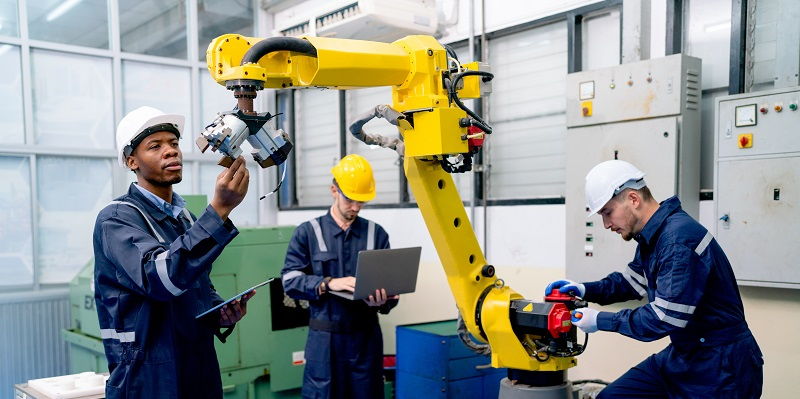
Located in Botany, New South Wales (NSW), Advanced Navigation’s newly established facility is poised to revolutionize the manufacturing of AI navigation systems for GPS-denied environments. This pioneering initiative marks a significant step forward in bolstering Australia’s sovereign capabilities and positioning the country as a key player in advanced navigation technology.
Manufacturing Strategic-Grade Fiber-Optic Gyroscopes
Advanced Navigation proudly stands as one of only four companies worldwide equipped with the capability to manufacture strategic-grade fiber-optic gyroscopes. These gyroscopes, known for their unmatched precision and reliability, play a pivotal role in advanced navigation systems. By manufacturing these crucial components in-house, Advanced Navigation ensures quality control and fosters self-reliance in the defense and space sectors.
Strengthening Australia’s Sovereign Capabilities
With the establishment of this cutting-edge facility, Advanced Navigation reinforces Australia’s sovereign capabilities by reducing dependency on foreign providers for critical navigation technologies. This move aligns with the government’s vision of building a resilient and self-sufficient defence industry that can adapt to evolving regional and global challenges.
Research Collaborations with UTS
Beyond manufacturing, the facility will serve as a hub for extensive research collaborations between Advanced Navigation and the University of Technology Sydney (UTS). Leveraging UTS’s expertise in autonomous systems technology, these collaborations will ensure the rapid commercialization of socially impactful technologies.
Socially Impactful Technologies
An exemplary innovation in space exploration technology, the Light Detection, Altimetry, and Velocimetry (LiDAV) system offers precise three-dimensional velocity and altitude information relative to the lunar surface. This breakthrough technology will significantly enhance navigation accuracy and safety for future lunar missions.
The facility will also spearhead the development of Cloud Ground Control, a revolutionary cloud-based solution that enables remote command and control over a swarm of unmanned vehicles across air, land, and sea. This advanced system presents significant opportunities in areas such as surveillance, disaster response, and environmental monitoring.
As part of the NSW Small Business Innovation and Research (SBIR) program, Advanced Navigation has developed an innovative indoor positioning technology to support visually impaired individuals in navigating safely within underground train stations. This groundbreaking solution highlights the company’s commitment to using advanced navigation technology for social good.
Collaboration between UTS and Advanced Navigation
The collaboration between UTS’s globally renowned research leaders in autonomous systems technology and Advanced Navigation’s exceptional team of scientists and engineers is a testament to the commitment of both organizations in developing sovereign capabilities for defense and space. Utilizing UTS Tech Lab’s cutting-edge facilities, this partnership ensures the deployment of innovative and world-class technologies.
Government’s Commitment to STEM Workforce
The establishment of this facility aligns with the Australian Federal Government’s steadfast dedication to building a robust science, technology, engineering, and mathematics (STEM) workforce. By providing a platform for research collaborations and giving rise to groundbreaking technologies, Advanced Navigation significantly contributes to fostering the innovation and growth of skilled professionals in Australia.
The unveiling of Advanced Navigation’s state-of-the-art manufacturing facility marks a pivotal moment in Australia’s quest to enhance its sovereign capabilities in defense and space. With the ability to manufacture strategic-grade fiber-optic gyroscopes, the facility not only reduces reliance on foreign providers but also positions Australia at the forefront of advanced navigation technology. Collaborations with UTS further expedite the commercialization of socially impactful technologies, solidifying Australia’s position as a global leader in autonomous systems. This momentous initiative reflects the government’s commitment to a robust STEM workforce capable of driving future advancements in defense, space, and beyond.