

The rapid shift toward digital-first economies has transformed high-speed internet from a luxury into a fundamental utility that dictates the success of modern businesses and communities. As the demand for seamless data transmission continues to escalate, traditional wired infrastructure often struggles to keep pace with the geographic and economic realities of a hyper-connected world. Fixed Wireless Access, particularly when powered by 5G technology, has emerged as a formidable solution to these challenges, offering a sophisticated alternative to fiber and cable systems. This article explores the intricate details of 5G FWA, providing a comprehensive analysis of its mechanics, benefits, and the transformative role it plays in bridging the connectivity gaps that still exist across the globe.
Readers can expect to gain a deep understanding of how this technology functions as a primary broadband source for both residential and enterprise sectors. The scope of this discussion encompasses the technical foundations of radio-based connectivity, the strategic advantages for various industries, and the broader economic landscape that supports its proliferation. By addressing the most pressing questions surrounding 5G FWA, the following sections aim to clarify common misconceptions and highlight the real-world impact of this wireless revolution on the modern digital ecosystem.
Key Questions Regarding 5G Fixed Wireless Access
What Exactly Defines 5G Fixed Wireless Access in the Current Landscape?
Fixed Wireless Access, or FWA, represents a fundamental shift in how high-speed data is delivered to a stationary location without the need for physical cables entering the building. While wireless technology is often associated with mobile devices, FWA focuses specifically on providing a permanent internet connection to homes, offices, and industrial sites through radio signals. By utilizing the robust infrastructure of 5G networks, FWA now delivers performance levels that were previously only possible through high-end fiber-optic installations, effectively turning cellular towers into the primary distribution points for home and business broadband.
The technology relies on a sophisticated link between a service provider’s base station and a piece of equipment known as Customer Premises Equipment, or CPE. This receiver is installed at the user’s location, where it captures the 5G signal from the air and converts it into a standard internet connection for internal use. Unlike older iterations of wireless internet, 5G FWA leverages advanced spectrum management and massive antenna arrays to ensure that the connection remains stable and fast, even in densely populated urban environments or during peak usage hours.
How Does FWA Technology Differ From Standard Wi-Fi Systems?
It is common for users to confuse FWA with Wi-Fi, as both involve wireless data transmission, yet they serve entirely different purposes within the networking hierarchy. Fixed Wireless Access acts as the “last-mile” connection, which is the bridge that brings the internet from the service provider’s network to the customer’s doorstep. In contrast, Wi-Fi is a short-range technology designed to distribute that internet connection throughout the interior of a building to various devices like laptops, smartphones, and smart home appliances. Essentially, FWA is the pipe that brings the water to the house, while Wi-Fi is the plumbing that moves it to different rooms.
Moreover, the technical standards and frequencies used by these two technologies are distinct and optimized for their specific roles. FWA utilizes licensed cellular spectrum, including high-frequency millimeter waves, which allows it to transmit data over several miles with minimal interference. Wi-Fi operates on unlicensed frequencies that are shared among many devices, making it prone to congestion if too many networks are active in the same area. By combining FWA for the external connection and Wi-Fi for internal distribution, users can achieve a high-performance network environment that avoids the costly and intrusive process of installing physical lines.
What Are the Primary Technical Components That Make 5G FWA Possible?
The efficacy of 5G FWA is rooted in a few critical hardware and software innovations that distinguish it from its 4G predecessors. At the heart of the system is the CPE, which can be configured as either an indoor or outdoor unit depending on the signal strength required. Outdoor units are typically mounted on rooftops or poles to maintain a clear line of sight with the transmission tower, thereby maximizing throughput. Inside the network, 5G base stations utilize Massive MIMO, which stands for Multiple Input Multiple Output, allowing the tower to send and receive dozens of data streams simultaneously to different users without signal degradation.
Another cornerstone of this technology is beamforming, a signal processing technique that directs a concentrated radio beam toward a specific receiver rather than broadcasting it in all directions. This precision significantly increases the efficiency of the network and allows for the use of millimeter-wave frequencies, which carry vast amounts of data but have difficulty penetrating solid objects. By focusing the energy of the signal directly at the CPE, providers can maintain gigabit speeds and ultra-low latency, ensuring that the wireless link is as reliable as a physical cable.
Why Is 5G FWA Considered a Superior Alternative to Traditional Fiber Optics in Certain Scenarios?
While fiber-optic cables offer immense bandwidth, the logistical hurdles associated with their deployment are often insurmountable in many regions. Installing fiber requires extensive permitting, trenching through streets, and significant manual labor, which can delay projects for months or even years. In contrast, 5G FWA can be deployed in a matter of days because it utilizes existing cellular towers and requires no ground-breaking activities. This speed of deployment makes it an ideal choice for expanding coverage into new residential developments or providing immediate connectivity to businesses that cannot wait for a wired installation.
Furthermore, the cost-efficiency of FWA is a major driver for both service providers and consumers. The capital expenditure required to connect a single household via fiber can be thousands of dollars in rural or suburban settings, whereas an FWA installation involves only the cost of the CPE and a brief setup process. This lower overhead allows providers to offer competitive pricing and flexible service plans that are more accessible to a broader range of the population. For enterprises, the ability to scale bandwidth quickly by simply upgrading hardware rather than laying new cables provides a level of agility that traditional wired networks cannot match.
In What Ways Does 5G FWA Address the Global Digital Divide for Remote Areas?
The “digital divide” remains a significant social and economic challenge, where rural and underserved communities lack the high-speed access necessary for modern life. In many of these regions, the low population density makes it financially unfeasible for telecommunications companies to invest in expensive wired infrastructure. 5G FWA solves this problem by providing a wide-reaching signal that can cover large geographic areas from a single tower. This allows schools, clinics, and residents in remote locations to access the same digital resources as those in major metropolitan hubs, fostering equity in education and economic opportunity.
Real-world applications have shown that FWA can successfully bring 5G speeds to places that were previously limited to slow DSL or satellite connections. For instance, coastal communities and island regions, where underwater cabling is prohibitively expensive, have utilized FWA to establish reliable links for telemedicine and remote work. By removing the physical barriers to connectivity, FWA acts as a catalyst for growth in these areas, allowing local businesses to compete on a global scale and ensuring that no community is left behind in the transition to a fully digital society.
How Does Network Slicing Enhance the Functionality of FWA for Enterprise Users?
For the business sector, 5G FWA offers more than just raw speed; it introduces the concept of network slicing, which is a revolutionary way to manage data traffic. Network slicing allows a service provider to create multiple virtual networks on top of a single physical 5G infrastructure. Each “slice” can be customized with specific performance characteristics, such as guaranteed low latency for voice-over-IP services or high-priority bandwidth for mission-critical industrial sensors. This ensures that essential business operations are never disrupted by general internet traffic or household streaming activities.
This capability is particularly valuable for enterprises that operate complex Internet of Things (IoT) ecosystems. In a warehouse or manufacturing plant, thousands of sensors may need to communicate in real-time to monitor inventory and machine health. Through network slicing, an FWA connection can dedicate a secure and stable portion of its capacity specifically to these sensors, providing a level of reliability that was previously only available through expensive private leased lines. This flexibility allows businesses to optimize their networking costs while maintaining the highest standards of operational efficiency and security.
What Industries Are Currently Seeing the Most Significant Impact From FWA Adoption?
The impact of 5G FWA is being felt across a diverse array of sectors, with the healthcare industry standing out as a primary beneficiary. Telemedicine relies heavily on high-quality video and real-time data transmission, and FWA provides the necessary bandwidth to support remote consultations and even remote surgical assistance in areas where wired broadband is unavailable. Similarly, in the education sector, FWA has enabled the widespread adoption of e-learning platforms, ensuring that students in disadvantaged neighborhoods have the tools they need to succeed in an increasingly digital academic environment.
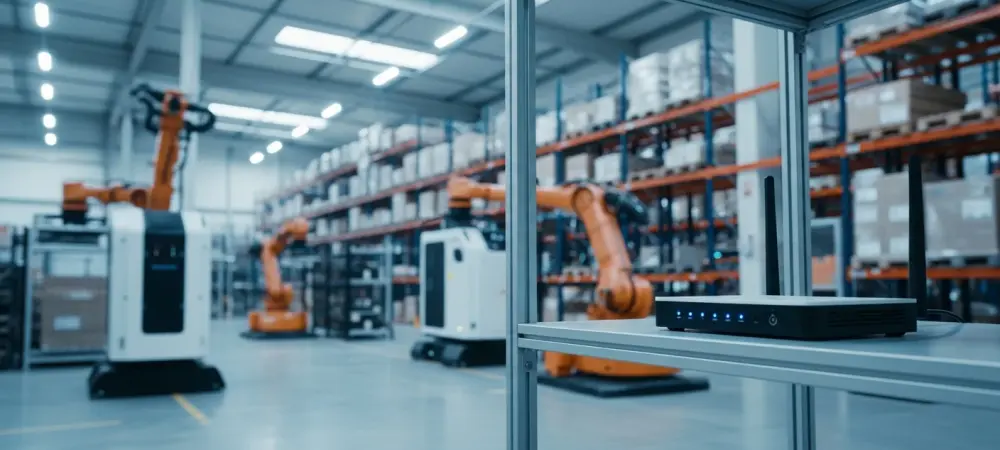
In the retail and logistics sectors, FWA facilitates the rapid deployment of pop-up shops and temporary distribution centers that require immediate, secure connectivity. Construction firms also utilize FWA to connect job sites that are constantly evolving, where physical wiring would be impractical and prone to damage. Furthermore, the manufacturing industry is leveraging FWA to power smart factories, where the technology supports high-speed data exchange between automated robots and cloud-based management systems. These diverse use cases demonstrate that 5G FWA is a versatile tool capable of driving innovation in nearly every corner of the economy.
What Does the Economic Ecosystem Surrounding 5G FWA Look Like Today?
The growth of 5G FWA has fostered a complex and thriving economic ecosystem that involves a wide range of global stakeholders. At the forefront are the Internet Service Providers (ISPs) and mobile network operators who have invested billions in 5G infrastructure to offer FWA as a standalone service. These companies are now competing directly with traditional cable providers, leading to increased innovation and better pricing for consumers. Supporting these operators are the Original Equipment Manufacturers (OEMs), who design and produce the high-performance CPE units and base station hardware required to maintain these wireless networks.
Beyond the hardware, there is a significant market for the specialized chipsets and software that drive FWA performance. Semiconductor designers are constantly pushing the boundaries of what is possible with 5G silicon, while software vendors provide the automation and security platforms necessary for managing millions of FWA connections. This collaborative environment ensures that the technology continues to evolve, with improvements in energy efficiency and signal range being integrated into the network on a regular basis. The synergy between these various players is what makes 5G FWA a sustainable and rapidly expanding segment of the global telecommunications market.
Summary of Strategic Developments
The transition toward 5G Fixed Wireless Access has fundamentally altered the connectivity landscape by providing a high-performance, cost-effective alternative to traditional wired broadband. Throughout this exploration, it has become clear that FWA is not merely a niche solution for rural areas but a primary technology that serves urban enterprises and residential users alike. By leveraging the advanced capabilities of 5G, such as Massive MIMO, beamforming, and network slicing, FWA delivers speeds and reliability that were once thought to be the exclusive domain of fiber optics. This shift has enabled rapid deployment in diverse environments, from remote islands to complex industrial sites, effectively addressing the “last-mile” challenge that has long hindered global internet expansion.
The economic and social implications of this technology are profound, as it continues to bridge the digital divide and foster innovation across various industries. From healthcare and education to manufacturing and logistics, 5G FWA provides the essential backbone for modern digital operations. The ecosystem supporting this growth is robust, involving a coordinated effort between service providers, hardware manufacturers, and software developers. As network coverage expands and hardware becomes even more efficient, the role of FWA as a cornerstone of global connectivity is set to strengthen, offering a more flexible and scalable path forward for the world’s digital infrastructure.
Final Considerations on Wireless Infrastructure
The widespread adoption of 5G Fixed Wireless Access represented a pivotal moment in the evolution of telecommunications, as it moved the industry away from a reliance on physical cabling. This transition demonstrated that wireless technology could finally meet the rigorous demands of stationary broadband, providing a level of agility that was previously unattainable. The success of FWA deployments across the globe showed that connectivity could be established rapidly and affordably, even in the most challenging geographic locations. Organizations and individuals alike realized that the quality of their digital experience was no longer tied to the presence of underground wires, but rather to the strength and sophistication of the radio signals surrounding them.
As society continues to integrate more devices into the fabric of daily life, the lessons learned from the rise of FWA remained highly relevant. The focus shifted toward creating even more resilient and intelligent wireless networks that could adapt to changing user needs in real-time. Stakeholders across all sectors were encouraged to look beyond traditional infrastructure models and embrace the flexibility offered by advanced wireless solutions. By prioritizing investment in 5G and its successors, the global community ensured that high-speed access became a universal standard, empowering people everywhere to participate fully in the digital economy. The legacy of 5G FWA was a world where connectivity was as ubiquitous and reliable as any other essential utility.