

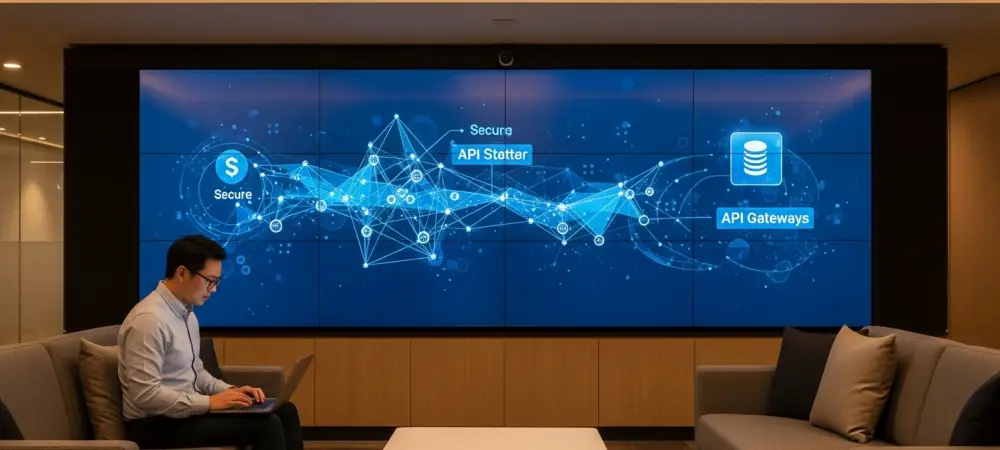
The rapid expansion of the digital landscape has rendered traditional manual security protocols effectively obsolete in the face of the overwhelming speed at which modern applications are now generated and deployed. In a significant move to address this vulnerability, 42Crunch and Anthropic have announced a landmark collaboration to integrate the Claude Code engine directly into the API security ecosystem. This partnership heralds the arrival of a sophisticated model known as Agentic DevSecOps, where artificial intelligence transitions from a passive assistant into an active, autonomous participant in the software development lifecycle. By embedding advanced reasoning capabilities into the very fabric of code creation, the collaboration aims to provide a robust defense mechanism that operates at the same velocity as the AI-driven development tools currently dominating the industry. This shift is not merely an incremental improvement but a fundamental reimagining of how enterprises protect their most critical digital assets in real time.
Bridging the Gap Between Speed and Safety: The Technical Core
As modern enterprises increasingly leverage generative models to produce code at breakneck speeds, the disparity between production velocity and security verification has reached a critical breaking point. APIs currently serve as the essential connective tissue for cloud-native architectures and microservices, yet their proliferation has simultaneously expanded the potential attack surface beyond the capacity of human intervention. Traditional DevSecOps workflows often treat security as a concluding phase, which frequently results in bottlenecks that either delay product launches or lead to the deployment of vulnerable interfaces. By integrating Claude Code into the 42Crunch platform, organizations can now ensure that security considerations are inherently woven into the initial stages of code generation. This proactive approach effectively bridges the security gap by enabling autonomous systems to identify architectural flaws before they are ever compiled into a functional environment.
The technical engine driving this partnership revolves around a sophisticated and self-sustaining cycle of detection and remediation that requires minimal oversight from human engineers. Whenever an AI agent modifies or creates a new API endpoint, the 42Crunch security platform instantly performs a comprehensive analysis to identify potential vulnerabilities such as broken object-level authorization or improper data exposure. Unlike legacy scanning tools that merely flag issues for later review, this integrated system utilizes the reasoning power of Claude to suggest and implement context-aware fixes immediately. The agentic system autonomously applies these corrective patches across the entire codebase and subsequently re-tests the application to ensure the vulnerability has been neutralized without introducing secondary regressions. This closed-loop process allows developers to maintain a continuous flow of innovation without the constant disruption of manual security audits or the fear of deploying unstable code.
Economic Evolution: Redefining the Strategic Role of Human Talent
The transition toward autonomous security operations presents a compelling economic narrative that fundamentally alters the cost-benefit analysis of modern software development. Market analysts have observed that the global API security sector is on a trajectory to surpass the twenty-billion-dollar mark by 2035, a growth fueled by the ubiquity of cloud integrations and mobile-first consumer services. This massive valuation highlights a growing consensus that the traditional reliance on manual security labor is no longer a scalable or cost-effective strategy for high-growth enterprises. By automating the routine aspects of vulnerability management, companies can significantly reduce their operational expenditures while simultaneously accelerating their time-to-market for new features. The ability to deploy secure software at “machine speed” provides a distinct competitive advantage, allowing organizations to capitalize on emerging market opportunities without being tethered by the heavy administrative burden of legacy security frameworks.
Furthermore, the rise of agentic AI in the security space does not signal the displacement of human experts but rather necessitates a strategic pivot in their professional focus and responsibilities. As autonomous agents take over the repetitive and high-volume tasks of code auditing and patching, human security professionals are free to transition into roles centered on high-level governance and policy definition. These experts will focus their intuition on defining the overarching standards and architectural boundaries within which the AI agents must operate, ensuring that organizational goals align with safety requirements. This evolution allows human talent to address complex, non-linear threats and strategic risk management while the AI handles the granular, data-intensive aspects of daily maintenance. By fostering a collaborative relationship between human intelligence and autonomous systems, enterprises can create a more resilient security posture that leverages the unique strengths of both parties.
Operational Guardrails: Navigating the Future of Software Integrity
Despite the immense potential of autonomous systems, the integration of AI into critical security workflows introduces specific operational risks that require careful management and oversight. One of the primary concerns involves the potential for improper configurations or automated patches that might inadvertently disrupt the functionality of mission-critical applications. To address these challenges, the partnership emphasizes the implementation of robust guardrails and transparent decision-making processes that allow for full visibility into AI actions. Successful adoption depends on the creation of detailed logging mechanisms and audit trails that document every modification made by the autonomous agent in real time. This transparency ensures that technical teams can monitor the behavior of the AI, verifying that its remediations align with established business logic and security policies. Balancing autonomy with control remains essential to preventing catastrophic system failures while reaping the benefits of automated speed.
The synergy achieved between 42Crunch and Anthropic represented a significant milestone in the ongoing quest to secure the global digital infrastructure through integrated software integrity. This partnership provided a foundational blueprint for how organizations managed the transition toward a fully automated development lifecycle where security functioned as a real-time attribute. Industry leaders observed that the traditional boundaries between development and protection faded as autonomous agents successfully navigated the complexities of modern API ecosystems. The implementation of these technologies allowed businesses to scale their software initiatives with unprecedented confidence, knowing that every line of code underwent rigorous, automated scrutiny. Ultimately, the adoption of this agentic model transformed security from a reactive burden into a proactive driver of technical excellence. Organizations that embraced this paradigm shift realized the necessity of moving beyond manual intervention to maintain safety in an increasingly automated world.