

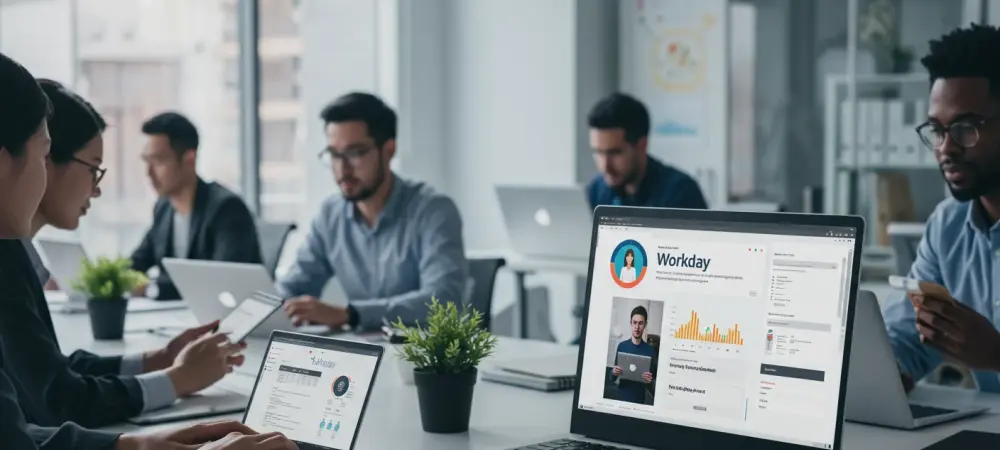
Imagine a fast-food chain with 30,000 employees struggling to manage hiring and talent development using outdated spreadsheets, losing top candidates due to slow processes, and failing to nurture potential leaders. This was the reality for many large organizations until platforms like Workday stepped in to revolutionize human resources (HR) management. As a leading HR technology solution, Workday has emerged as a catalyst for digital transformation, enabling companies to streamline operations and prioritize employee experience in a competitive business landscape. This review delves into how this platform is reshaping workforce management, with a spotlight on a notable implementation by Hungry Jack’s, an Australian fast-food giant.
Core Features Driving HR Efficiency
Streamlined Recruitment and Onboarding Processes
Workday’s core HR system offers a robust solution for automating critical recruitment tasks, such as resume screening and interview scheduling, which traditionally consumed significant time. By digitizing these processes, the platform slashes hiring timelines and enhances candidate interactions, ensuring organizations can secure top talent swiftly. This efficiency is not just theoretical; real-world applications demonstrate its impact on operational speed. A prime example lies in Hungry Jack’s adoption of Workday, where hiring times dropped from weeks to a mere 24 hours. This dramatic reduction has allowed the company to manage a surge in applications while maintaining a seamless onboarding experience. Such advancements underscore how automation can address longstanding bottlenecks in talent acquisition.
Talent Development and Performance Tracking
Beyond recruitment, Workday excels in talent management by providing tools for performance reviews, career path planning, and employee surveys. These features enable companies to identify and nurture potential within their workforce, fostering a culture of growth and retention. The platform’s ability to centralize employee data ensures managers can make informed decisions about development opportunities.
In the case of Hungry Jack’s, the upcoming phase two rollout will introduce enhanced tools for communication and performance evaluation. These additions aim to further empower employees by offering clear visibility into their career progression, aligning individual goals with organizational objectives. This focus on development highlights Workday’s role in building sustainable talent pipelines.
Innovations and Industry Adoption Trends
The growing adoption of Workday across diverse industries reflects a broader shift toward technology-driven workforce solutions. Companies are increasingly turning to this platform to tackle challenges like scalability and employee engagement in dynamic markets. Its adaptability to various organizational needs makes it a preferred choice for modern HR transformation. Recent innovations, such as the integration of artificial intelligence (AI) and real-time analytics, have further elevated Workday’s appeal. Hungry Jack’s, for instance, introduced an AI crew member named Jacki, showcasing how such technologies can complement human efforts in operational roles. Additionally, events like the Workday Elevate Summit in Sydney play a pivotal role in raising awareness and driving adoption by highlighting these cutting-edge capabilities.
These advancements signal a trend where data-driven insights and automation are becoming integral to HR strategies. As more organizations witness the benefits of such tools, the momentum behind Workday’s adoption continues to build, setting new standards for workforce management efficiency.
Real-World Success: Hungry Jack’s Implementation
Hungry Jack’s transition from manual spreadsheets to Workday offers a compelling case study of digital transformation in action. Managing a workforce of 30,000 across 450 restaurants, the company faced significant inefficiencies in recruitment and employee oversight. Implementing Workday’s core system marked a turning point, addressing these pain points with remarkable results. One standout outcome is the 300% increase in weekly job applications, now exceeding 10,000, driven by an improved candidate experience. This surge reflects how a streamlined digital interface can attract talent in a competitive industry like fast food. Moreover, the platform has freed restaurant managers from administrative burdens, allowing them to focus on team leadership. Equally significant is the emphasis on employee growth, particularly for younger staff. By providing accessible career pathways through mobile-friendly tools, Hungry Jack’s is empowering crew members to envision advancement into managerial or corporate roles. This human-centric approach, supported by technology, sets a benchmark for balancing efficiency with personal development.
Challenges in Workday Deployment
Despite its benefits, implementing Workday is not without hurdles, particularly in securing leadership buy-in and justifying the investment. Demonstrating a clear return on investment remains a critical factor for organizations considering such a shift. Without executive support, projects risk stalling before delivering tangible outcomes.
Additional challenges include the need for comprehensive training and effective system integration within existing frameworks. Large organizations often grapple with change management, as employees adapt to new workflows and tools. These obstacles can slow down the realization of Workday’s full potential if not addressed proactively.
To mitigate these issues, phased rollouts and continuous platform updates are proving effective. Hungry Jack’s, for example, has adopted a gradual implementation strategy to ease the transition. Such measures, combined with ongoing support, help ensure that the technology aligns with organizational goals while minimizing disruption.
Future Prospects for HR Technology
Looking ahead, Workday is poised to further transform HR through advancements in AI, predictive analytics, and personalized employee experiences. These developments promise to enhance decision-making and tailor support to individual needs, driving deeper engagement. The potential for scalability across industries remains a key area of focus.
In sectors like fast food, where workforce turnover is high, Workday’s evolving capabilities could redefine talent retention strategies. By leveraging data to anticipate employee needs and optimize operations, the platform may offer solutions that balance efficiency with empathy. This dual focus is essential for long-term success in competitive markets.
As technology continues to evolve, Workday’s role in shaping workforce management will likely expand, influencing how companies approach growth and innovation. The integration of emerging tools over the coming years, from now until 2027, could set new benchmarks for creating agile, people-focused organizations.
Final Thoughts and Next Steps
Reflecting on Workday’s impact, it becomes evident through implementations like Hungry Jack’s that this platform has redefined HR efficiency and employee engagement in remarkable ways. The dramatic reduction in hiring times and the surge in applications showcase its ability to address critical operational challenges. Moreover, its focus on talent development has laid a foundation for sustained growth. For organizations considering Workday, the next steps involve a strategic approach to adoption, starting with securing leadership commitment and planning phased integrations. Investing in robust training programs is crucial to ensure staff can leverage the platform’s full capabilities. Additionally, continuously monitoring outcomes and adapting to updates proves vital for maximizing value.
As HR technology advances, staying informed about Workday’s innovations will be key to maintaining a competitive edge. Exploring how AI and analytics can further personalize employee experiences should guide future strategies. This proactive mindset, blending technology with a human touch, offers a pathway to transform workforce management for lasting impact.