

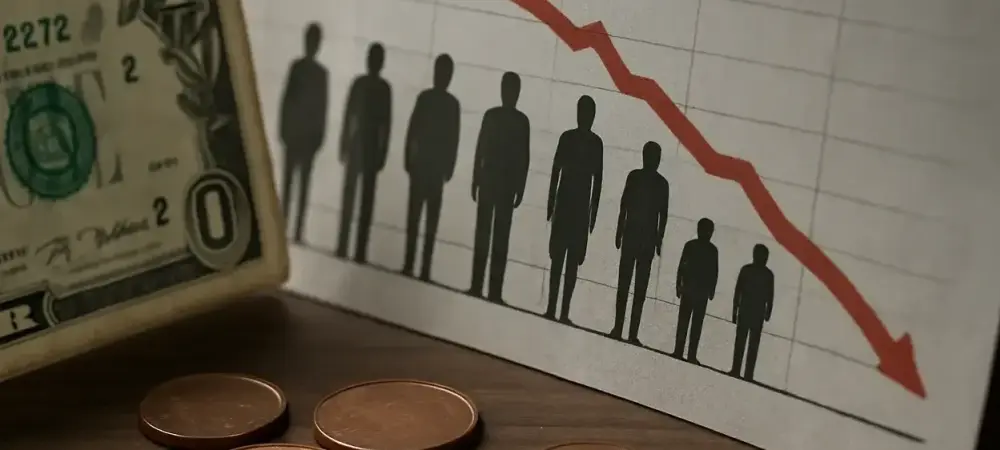
What happens when the backbone of an economy begins to falter? Last month, the U.S. job market added a mere 73,000 jobs, a staggering drop from the vigorous hiring sprees of recent times, according to the latest Labor Department report. This slowdown isn’t just a number on a page—it’s a signal of deeper cracks in the foundation of American employment. Businesses are hesitating, workers are uneasy, and the ripple effects are spreading fast. What forces are driving this abrupt shift, and how will it reshape the lives of millions?
The Alarming Reality: A Steep Drop in Job Growth
The latest figures paint a grim picture. A sharp decline to just 73,000 new jobs last month marks a stark contrast to the robust growth seen in prior years. This isn’t merely a statistical blip; it’s a dramatic slowdown that has caught economists and policymakers off guard. The engine of job creation, once humming with opportunity, seems to have lost its momentum, leaving many to wonder about the stability of the broader economy.
Beyond the headline number, revisions to earlier data reveal an even bleaker truth. The Labor Department slashed 258,000 jobs from payroll reports for May and June, suggesting that previous optimism about hiring was misplaced. With unemployment creeping up to 4.2% from 4.1%, and an additional 221,000 individuals joining the ranks of the unemployed, the labor market’s fragility is becoming impossible to ignore.
Why This Slowdown Hits Hard Right Now
In an economy still grappling with the aftershocks of past disruptions, a faltering job market is more than a temporary setback—it’s a looming threat. Families are finding it harder to secure stable employment, while businesses face mounting uncertainty about future growth. The stakes couldn’t be higher as economic confidence wavers and stock markets respond with jittery declines to each new report.
This downturn also exposes vulnerabilities at a time when resilience is critical. The reduced rate of workers voluntarily leaving their jobs—a key indicator of confidence in finding better opportunities—has returned to pre-pandemic levels. This caution among the workforce reflects a broader unease, amplifying concerns about whether the economy can weather these mounting challenges without deeper consequences.
Digging Deeper: What’s Behind the Job Market Slump?
Several forces are converging to stall job growth, starting with trade policy upheaval. President Trump’s aggressive tariffs on global imports have injected uncertainty into the business landscape, raising costs for companies and curbing their willingness to hire. This protectionist stance, while aimed at bolstering domestic industries, has instead created a chilling effect on economic activity.
Monetary policy adds another layer of strain. The Federal Reserve’s decision to maintain higher interest rates to combat inflation continues to burden businesses, limiting their capacity for expansion and job creation. Meanwhile, anticipated immigration restrictions tied to deportation plans threaten to shrink the labor pool, especially in sectors heavily reliant on foreign workers, further tightening an already constrained market.
Sector-specific struggles highlight the uneven impact of this slowdown. Manufacturing shed 11,000 jobs, federal government employment dropped by 12,000, and administrative roles declined by nearly 20,000. Yet, amidst the gloom, healthcare emerged as a standout, adding 55,400 jobs and accounting for 76% of last month’s gains. This narrow concentration of growth underscores a troubling disparity across industries.
Hearing the Impact: Insights from Experts and Workers
Economists point to trade policies as a primary driver of this downturn, with one prominent analyst stating, “Tariffs create a cascading effect—businesses pause investments, costs rise, and jobs vanish.” This perspective aligns with broader concerns about erratic policy shifts that leave companies unable to plan for the future. The uncertainty isn’t just academic; it’s a tangible barrier to economic stability.
On the ground, the human toll is evident. Manufacturing workers, facing layoffs due to escalating costs from trade disputes, share stories of dwindling opportunities and financial strain. Meanwhile, the declining rate of voluntary job quits signals a workforce that feels trapped rather than empowered, hesitant to risk seeking better prospects in such an unpredictable climate.
These voices—both expert and everyday—paint a vivid picture of distress. The interplay between policy decisions and personal livelihoods reveals a labor market under siege, where abstract numbers translate into real-world struggles for millions of Americans navigating an increasingly uncertain economic landscape.
Charting a Path Forward: Strategies to Counter the Decline
Addressing this slowdown demands action on multiple fronts. Policymakers must reevaluate trade tariffs to minimize business uncertainty, striking a balance between protecting domestic interests and fostering economic stability. Targeted support for struggling sectors like manufacturing, through incentives or tax relief, could also help stem further job losses and rebuild confidence.
Businesses, facing the dual pressures of high interest rates and potential labor shortages from immigration policies, need to adapt by prioritizing efficiency and exploring domestic hiring solutions. At the same time, workers can build resilience by upskilling in high-demand fields like healthcare, where opportunities remain strong, and by staying attuned to local job trends to seize emerging roles.
All stakeholders share a responsibility to advocate for data-driven policies and closely monitor indicators like unemployment rates and sector-specific growth. Collaborative efforts to anticipate and respond to economic shifts will be crucial in navigating this challenging period, ensuring that the labor market doesn’t spiral further into decline.
Reflecting on a Turning Point
Looking back, the sharp slowdown in the U.S. job market stood as a stark reminder of how interconnected policy and economic health truly were. The addition of just 73,000 jobs in a single month, coupled with rising unemployment and sector-specific losses, underscored the fragility of progress. Trade tariffs, monetary pressures, and looming immigration changes had combined to create a perfect storm, testing the resilience of businesses and workers alike.
Yet, amidst the challenges, there was room for hope if action followed insight. Policymakers had the chance to recalibrate strategies, easing burdens on industries and fostering stability. Businesses could pivot toward innovative solutions, while workers sought growth in resilient sectors. The path ahead demanded vigilance and adaptability, ensuring that lessons learned from this downturn paved the way for a stronger, more balanced labor market in the years to come.