

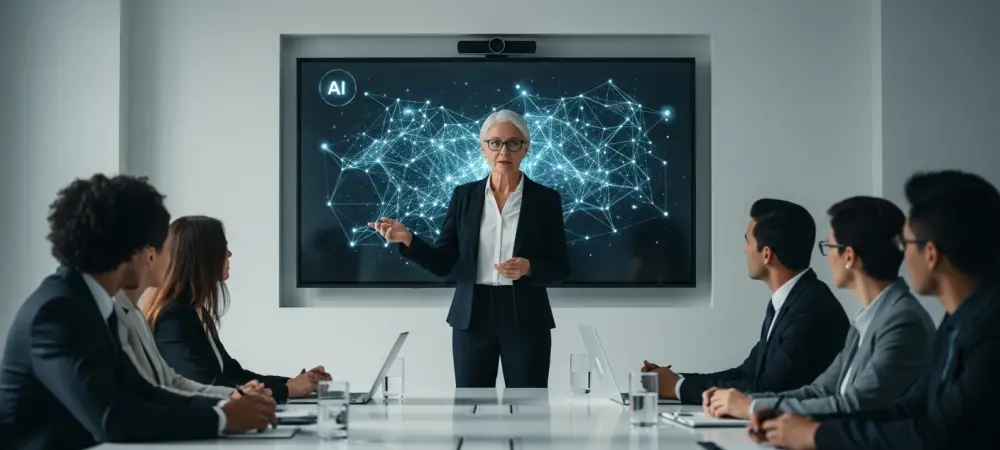
A gnawing sense of irrelevance is quietly spreading through the ranks of seasoned professionals, a feeling less about their past accomplishments and more about their future value in a world reshaped by artificial intelligence. This is not the familiar, self-generated doubt of classic imposter syndrome. Instead, it is a rational response to a tangible and profound shift in the professional landscape. This emerging “AI-driven imposter syndrome” stems from a genuine revaluation of skills and experience, creating a new and pervasive form of professional anxiety. The goal is not simply to name this feeling but to dissect its root causes, understand its impact, and forge a clear path forward for individuals and the organizations they serve.
Introduction The New Professional Anxiety
The rising unease among seasoned professionals is a defining feature of the modern workplace. It manifests as a quiet fear that decades of accumulated knowledge and hard-won intuition are being rendered less critical by algorithms that can generate solutions, strategies, and content in a fraction of the time. This feeling, termed AI-driven imposter syndrome, must be distinguished from its classic counterpart. Where traditional imposter syndrome is an internal struggle against self-doubt despite external validation, this new anxiety is a logical reaction to observing the very foundations of professional value being technologically disrupted.
This article seeks to navigate this complex emotional and professional terrain. It explores why this anxiety is a rational, systemic issue rather than a personal failing. By examining the fundamental conflict between traditional and AI-augmented value, delving into the specific drivers of this obsolescence anxiety, and analyzing the organizational dynamics that amplify it, a constructive framework emerges. The ultimate aim is to propose a strategic response that empowers both experienced professionals and their leaders to transform this period of uncertainty into an era of unprecedented growth and redefined expertise.
The Core Conflict a Fundamental Shift in Professional Value
The feeling of becoming obsolete is not an irrational fear but a direct consequence of a genuine revaluation of skills in the workplace. For generations, professional value was deeply intertwined with tenure and the slow accumulation of institutional knowledge. Experience was the currency of authority, and seniority was a reliable proxy for expertise. An individual’s worth was measured by the depth of their knowledge base, honed over years of practice and pattern recognition.
However, the rise of sophisticated AI tools has introduced a new paradigm that challenges this long-standing model. The modern workplace now increasingly prioritizes AI-augmented efficiency and measurable results over the traditional markers of experience. Competence is no longer defined solely by what a professional knows but by their ability to leverage intelligent systems to achieve outcomes faster and more effectively. This shift creates a core conflict, where the very definition of “expertise” is in flux, moving from being a repository of information to being a masterful operator and guide of advanced technology.
Unpacking the Anxiety Key Drivers of Obsolescence
To address this growing anxiety, it is crucial to understand the specific technological, psychological, and cultural factors that make experienced professionals feel their value is diminishing. These drivers are not isolated; they intersect and reinforce one another, creating a potent and often disorienting sense of professional instability that must be carefully deconstructed.
The Erosion of Experience as a Competitive Edge
At the heart of the anxiety is the erosion of experience as an exclusive competitive advantage. Many tasks that were once the sole domain of highly experienced individuals—from complex data analysis and market forecasting to drafting intricate legal documents—can now be automated or dramatically accelerated by AI. These tools can process vast datasets, identify subtle patterns, and generate sophisticated outputs that mimic, and sometimes surpass, the work of a human expert.
This technological advancement forces a difficult existential question upon seasoned professionals: “Is my experience still relevant if a machine can replicate the output?” When a core component of one’s professional identity is the ability to perform a specific, high-skill task, its automation feels like a direct threat. The devaluing of the process of work, in favor of the sheer speed of output, leaves many questioning where their unique contribution lies in this new equation.
Real-World Scenario The Veteran Strategist and the AI-Powered Analyst
Consider a veteran market strategist with twenty-five years of experience, known for her unparalleled ability to synthesize industry trends and predict competitor movements. Her methodology involves weeks of meticulous research, source interviews, and data consolidation. In contrast, a junior analyst, just two years into her career, is tasked with a similar project. Using an advanced AI platform, she feeds it quarterly reports, earnings calls, news archives, and social media sentiment data. Within a single afternoon, the AI generates a comprehensive analysis, complete with predictive models and strategic recommendations, that is nearly indistinguishable from the strategist’s work. This scenario does not just challenge the strategist’s efficiency; it challenges the traditional hierarchy of expertise, suggesting that deep experience is no longer the sole gatekeeper of high-level insight.
The Deconstruction of Professional Identity
The anxiety triggered by AI transcends a simple skills gap; it strikes at the core of a professional’s sense of self, purpose, and craft. For many, their identity is inextricably linked to the expertise they have cultivated over a lifetime. It is built on a foundation of nuanced judgment, ethical considerations, and the kind of strategic foresight that cannot be easily articulated or codified. These are the “soft” but essential skills that separate a master from an apprentice.
The fear is that these deeply human attributes are being overshadowed by the speed and volume of AI-generated work. In an environment that increasingly prizes quantifiable output, the subtle art of mentorship, the wisdom to know when to deviate from the data, and the courage to make a difficult judgment call risk being devalued. This creates a profound sense of loss, as professionals worry that the very soul of their craft is being replaced by the cold logic of an algorithm.
Real-World Scenario The Creative Directors Crisis of Craft
A creative director at a major advertising agency built his career on a refined aesthetic and an intuitive understanding of brand storytelling. His identity is rooted in his “eye”—the ability to discern the perfect color palette, font, and image that will resonate with an audience. Now, he watches as his team uses generative AI to produce thousands of viable campaign concepts, logos, and taglines in seconds. While the options are technically sound, he feels a growing sense of displacement. His role shifts from creator to curator, from visionary to editor. This shift precipitates a crisis of craft, as he questions whether his decades of refined judgment hold the same meaning in a world where creativity can be generated on an industrial scale.
The Peril of Organizational Silence
This professional anxiety is significantly amplified by a lack of open, honest dialogue about AI’s role within organizations. When leaders fail to establish clear norms, expectations, and a shared language around AI usage, they inadvertently create a culture of fear, assumption, and isolation. Employees are left to navigate this monumental shift on their own, leading to a pervasive and counterproductive silence.
This “new silence” operates in two destructive ways. On one hand, some employees secretly use AI to keep pace with mounting demands, all the while feeling like frauds who are taking shortcuts. They fear that admitting their reliance on these tools will devalue their contributions. On the other hand, some colleagues avoid AI altogether, either out of technological intimidation or a fear of revealing their inexperience. They feel hopelessly behind, watching the pace of work accelerate around them. Both groups suffer in silence, leading to widespread anxiety, burnout, and a failure to develop collective intelligence.
Real-World Scenario The Two Anxious Team Members
Within a marketing team, one employee secretly uses generative AI to write all his copy, working late to refine the prompts and edit the outputs so his work appears original. He lives with the constant stress of being discovered, feeling his success is unearned. Meanwhile, his colleague, a talented writer, refuses to use the same tools, believing it compromises her integrity. She struggles to meet deadlines and feels her methodical approach is no longer valued, leaving her exhausted and demoralized. Because their manager has never facilitated an open conversation about AI tools, best practices, or new standards of work, both employees are isolated in their anxiety, and the team misses a crucial opportunity to innovate together.
Conclusion Redefining Experience and Leading the Change
The exploration of AI-driven anxiety revealed that it was a systemic issue, not a personal failing, which required a concerted organizational and individual response. The core conflict stemmed from a fundamental revaluation of professional skills, where the traditional premium on accumulated knowledge was challenged by the demand for AI-augmented efficiency. This shift created a rational basis for the fear of obsolescence, particularly among experienced professionals whose identities were intertwined with their craft. The analysis further demonstrated that this anxiety was exacerbated by an organizational silence that fostered isolation and fear.
In response, professionals were advised to pivot their mindset. Instead of viewing themselves as repositories of knowledge, they were encouraged to evolve into expert curators, validators, and strategic guides for AI systems. This new role leveraged their deep experience not to perform the task itself, but to direct, refine, and contextualize the outputs of AI, providing the irreplaceable human layer of wisdom and judgment. Leaders, in turn, were urged to dismantle the culture of silence by fostering psychological safety. Creating an environment where “learning in public” was not only accepted but encouraged was identified as the critical step to transforming fear into a catalyst for collective growth, ensuring that the integration of AI became a tool for innovation rather than a source of professional dread.