

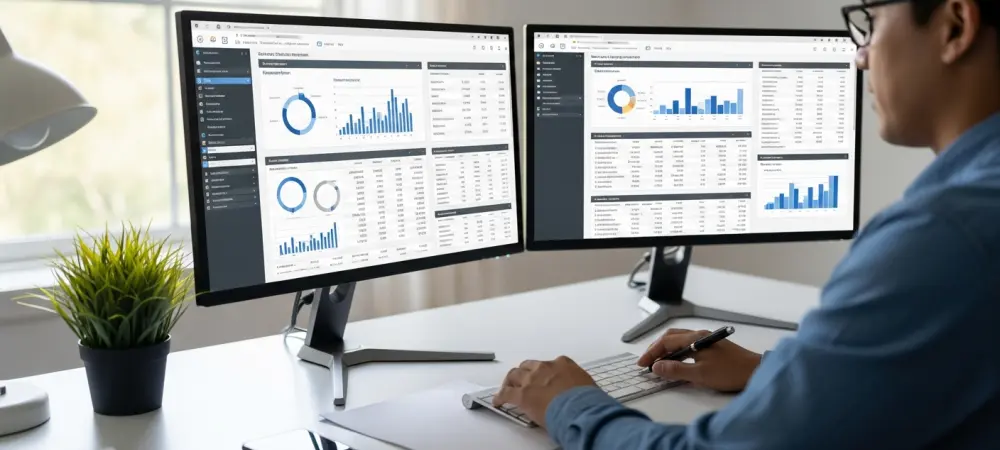
Navigating the intricate complexities of Canadian payroll legislation while simultaneously maintaining an accurate general ledger has historically been a significant bottleneck for growing small businesses. This operational friction often results from disconnected software systems that require constant manual intervention to ensure data integrity across different financial platforms. When payroll information exists in a vacuum, owners frequently struggle with delayed visibility, making it nearly impossible to gauge the true health of their enterprise in real time. The collaboration between Wagepoint and Xero represents a decisive shift toward holistic financial management by creating a direct bridge between payroll processing and cloud accounting. This synchronization allows for the effortless flow of sensitive information, effectively eliminating the silos that have traditionally plagued small business administration. By unifying these functions, the partnership offers a streamlined path toward greater fiscal clarity and simplified reporting.
Streamlining Operations: The Mechanics of Data Integration
The mechanics of this integration focus on the automated synchronization of payroll data points that typically consume hours of manual entry. Specifically, the system handles the transfer of gross wages, federal and provincial taxes, and various employee deductions directly into the accounting software with high precision. By automating the transmission of these figures, the platform significantly reduces the risk of clerical errors that could otherwise lead to costly compliance issues or inaccurate financial reporting. This level of connectivity ensures that every dollar accounted for in the payroll cycle is immediately reflected in the broader financial records without any additional human oversight. Furthermore, the integration supports a more granular view of labor costs, allowing businesses to track expenses with greater detail than before. This technical bridge serves as a foundation for a more reliable financial ecosystem where data consistency is maintained during every pay period. Beyond the mere transfer of numbers, the partnership enhances the overall user experience through the implementation of Single Sign-On (SSO) technology. This feature allows administrators to move between the payroll and accounting environments using a single set of secure credentials, effectively removing the friction of managing multiple logins. Such a cohesive digital environment was once the exclusive domain of large-scale enterprise suites, but this integration brings that level of sophistication to the small business sector without the associated high costs. The simplified navigation encourages more frequent monitoring of financial data, as the psychological barrier of switching between complex systems is removed. As a result, business owners can manage their operations with a sense of continuity that promotes better decision-making and reduced administrative fatigue. This transition toward a unified interface represents a significant leap forward in how Canadian entrepreneurs interact with their core tools.
Strategic Financial Management: Resolving Cash Flow Uncertainties
One of the primary frustrations for Canadian business owners is the laborious process of manual reconciliation at the end of each pay cycle. This task often involves comparing bank statements against payroll reports and accounting entries to ensure everything aligns perfectly, a process prone to human oversight and significant delays. The integration addresses this challenge by automating the creation of payroll journals, which ensures that all financial records are updated in real time as soon as a pay run is finalized. Consequently, the general ledger remains an accurate reflection of the company’s liabilities and expenses without the need for retrospective adjustments. This automation provides immediate clarity regarding the firm’s cash position, allowing leadership to understand their available capital at any given moment. By removing the guesswork from the reconciliation process, businesses can maintain a higher standard of financial hygiene that supports long-term stability and sustainable growth.
The timing of this technological advancement is particularly crucial given the economic pressures that many Canadian firms are currently navigating. In an environment characterized by fluctuating sales and occasional payment delays from clients, maintaining “cash flow confidence” has become a strategic priority for survival. The ability to see exactly how payroll obligations impact the bank balance allows for more proactive debt management and better preparation for upcoming tax cycles. When administrative efficiency is maximized, business owners can divert their focus from mundane data entry to more critical growth initiatives or customer engagement strategies. This shift in focus is essential in a tight economic climate where every hour saved can be reinvested into the business’s core value proposition. The integration effectively acts as a buffer against financial uncertainty by providing a clear, uninterrupted view of the organization’s liquidity, ensuring that entrepreneurs are never caught off guard.
Professional Advisory Services: Strengthening the Small Business Ecosystem
Accountants and bookkeepers also find themselves empowered by this collaboration, as the automated flow of data acts as a force multiplier for their advisory services. When the integrity of financial records is guaranteed through direct integration, these professionals can move away from basic bookkeeping and toward high-value strategic planning. Real-time access to payroll liabilities within the accounting platform allows advisors to provide more accurate forecasting and tax advice, helping their clients navigate the complexities of provincial regulations with greater precision. This proactive approach ensures that businesses are not only compliant but also optimized for future tax obligations and investment opportunities. By relying on a verified data stream, advisors can offer insights that are based on the most current information available, rather than working with outdated reports. This evolution in the role of the financial professional strengthens the entire small business ecosystem, fostering a culture of informed decision-making.
The alliance between Wagepoint and Xero established a robust framework that prioritized simplicity over unnecessary feature bloat. By focusing on the essential requirements of the Canadian market, the two organizations delivered a toolset that proved both scalable and reliable for over 30,000 businesses across the country. Companies that adopted this integrated approach saw a significant reduction in administrative overhead and a marked improvement in the accuracy of their financial forecasts. To leverage these benefits, businesses were encouraged to audit their existing workflows and migrate to the streamlined environment available through the official app store. This transition allowed for a more sustainable operational model where technology handled the repetitive tasks, leaving human creativity to drive expansion. Ultimately, the partnership set a new benchmark for financial automation, proving that sophisticated integration was accessible to even the smallest enterprises. Moving forward, the focus remained on refining these connections.