

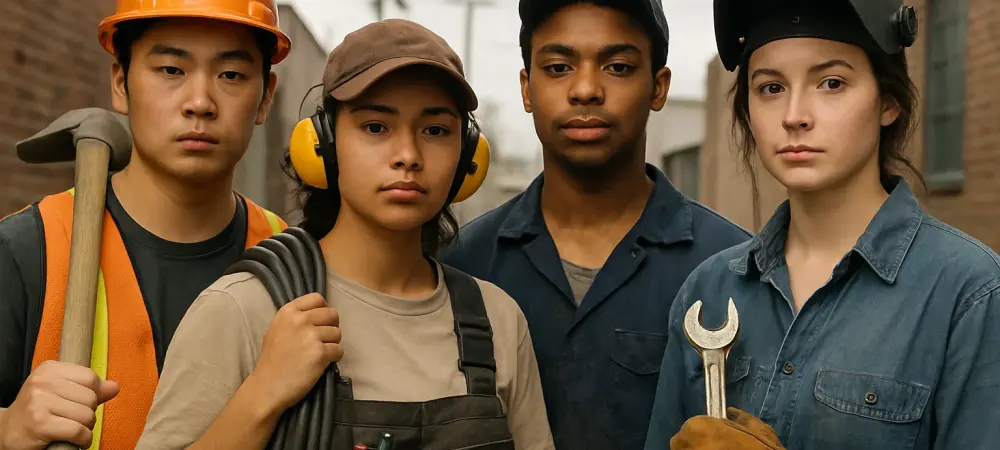
Imagine a generation raised on technology, fluent in digital tools, now turning away from corporate cubicles to wield hammers and operate machinery. A staggering 75% of Gen Z workers, according to a recent survey of 1,000 individuals by career platform Zety, fear that artificial intelligence (AI) will slash entry-level corporate jobs within the next five years. This anxiety, dubbed “AIxiety,” is driving an unexpected pivot toward blue-collar roles—jobs once considered outdated by many in this tech-savvy cohort. This shift isn’t just a fleeting reaction; it signals a profound rethinking of career stability in an era where automation looms large over traditional paths.
The significance of this trend cannot be overstated in today’s AI-driven job market. As algorithms and machines threaten to redefine industries, Gen Z is challenging the very notion of success by seeking security in hands-on trades over desk-bound roles. This movement reflects a broader quest for agency amid uncertainty, reshaping how stability and fulfillment are perceived by a generation often stereotyped as digitally dependent. It raises critical questions about the future of work and the value of conventional education in an unpredictable landscape.
This analysis delves into the forces behind Gen Z’s career pivot, exploring survey data that highlights their fears, real-world examples of their shift to blue-collar work, and expert insights on this evolving dynamic. It also examines the future implications of this trend for workforce structures and societal norms. Finally, it summarizes how these changes reflect deeper anxieties and aspirations, painting a picture of a generation adapting to a rapidly transforming world.
Understanding the AIxiety Pivot
Data on Gen Z’s Career Concerns
A comprehensive survey by Zety reveals a striking concern among Gen Z workers: 75% believe AI will significantly reduce entry-level corporate positions by the end of this decade. This fear of automation displacing traditional roles is not an abstract worry but a pressing driver of career decisions. The data paints a picture of a generation on edge, anticipating a future where digital tools outpace human labor in white-collar sectors, pushing them to rethink their professional trajectories.
Supporting studies amplify this unease. An April report from Indeed found that half of Gen Z respondents consider their college education irrelevant in the face of technological advancements, while a May survey by Resume Builder noted that 42% are already engaged in or pursuing blue-collar trades. Notably, over one-third of these individuals hold bachelor’s degrees, underscoring a disconnect between formal education and perceived job security. These figures highlight a pragmatic shift toward fields seen as more resistant to automation.
Comparatively, while AI anxiety spans generations, Gen Z’s response stands out as more action-oriented than that of Millennials or executives. Reports indicate that younger workers are more likely to pivot careers entirely rather than resist or adapt within existing roles. This pronounced reaction suggests a unique blend of skepticism and adaptability, setting Gen Z apart in navigating the uncertainties of an AI-dominated job market.
Real-World Shifts to Blue-Collar Roles
Across the country, stories emerge of Gen Z individuals swapping laptops for tool belts, entering skilled trades like plumbing, electrical work, and construction. In healthcare, young workers are training as technicians or aides, while others take up labor-intensive roles in manufacturing—sectors viewed as less vulnerable to AI disruption. These choices reflect a calculated move toward industries where human skill and presence remain irreplaceable, at least for now.
The appeal of blue-collar work lies in tangible benefits: higher starting wages in some trades compared to entry-level corporate jobs, abundant openings due to labor shortages, and the flexibility of project-based roles. Yet, barriers persist—physical demands can deter some, while limited paths for upward mobility raise concerns about long-term prospects. Societal stigma around manual labor also lingers, though attitudes are slowly shifting as economic realities take precedence over outdated perceptions.
Several initiatives are easing this transition. Vocational programs in high schools and community colleges are seeing increased enrollment, while companies in sectors like construction are launching apprenticeship programs tailored to younger workers. These efforts provide practical entry points, grounding Gen Z’s pivot in accessible opportunities. Such developments signal a growing infrastructure to support this career shift, bridging the gap between interest and execution.
Expert Perspectives on Gen Z’s Career Pivot
Zety career expert Jasmine Escalera describes the “AIxiety Pivot” as a strategic maneuver by Gen Z to reclaim control in a volatile job market. Far from a mere reaction to fear, this trend represents a deliberate choice to pursue fields where human input remains essential. Escalera notes that blue-collar roles offer a sense of agency, allowing young workers to sidestep the unpredictability of AI-driven layoffs in corporate environments.
Broader commentary from industry observers reinforces this view. Reports from human resources platforms suggest that AI disruption is fundamentally altering how generations perceive career security, with Gen Z leading the charge in redefining safe paths. Experts argue that this shift challenges employers to rethink talent acquisition, as younger workers prioritize stability over prestige, prompting a reevaluation of how value is assigned to different occupations.
On the flip side, specialists highlight both opportunities and hurdles in blue-collar fields. While job availability and immediate earning potential are clear advantages, issues like workplace safety, physical strain, and the need for continuous skill updates pose challenges. These insights underline Gen Z’s proactive adaptation to technological change, illustrating a balance between seizing new prospects and navigating inherent difficulties in non-traditional careers.
Future Implications of the Blue-Collar Trend
As Gen Z gravitates toward trades, workforce dynamics could undergo significant transformation. An increased demand for vocational training is likely, potentially shifting educational priorities away from four-year degrees toward certifications and apprenticeships. Schools and policymakers may need to expand programs that equip young workers with practical skills, aligning curricula with market needs over the coming years from 2025 onward.
This trend carries potential benefits, such as enhanced economic stability through diverse job options and filling critical labor gaps in essential industries. However, challenges loom, including the physical toll of manual work and lingering societal biases that undervalue trades compared to white-collar professions. Balancing these factors will be key to sustaining the momentum of this shift, ensuring it leads to long-term viability rather than short-term fixes.
Beyond Gen Z, AI anxiety could ripple through other generations and sectors, prompting similar reevaluations of career paths. This collective unease might fuel innovation in automation-resistant fields or, conversely, spark resistance to technological overreach in workplaces. The broader implication is a possible reimagining of labor markets, where human-centric skills gain renewed emphasis, reshaping how industries adapt to or push back against AI integration.
Redefining Career Success
Looking back, the journey of Gen Z through the maze of AI-driven fears revealed a generation compelled to redefine stability. Their skepticism of traditional education, with 65% doubting the protective power of college degrees, paired with a pragmatic embrace of blue-collar jobs, marked a pivotal response to looming automation. This shift, underpinned by data and real-world transitions, mirrored deeper anxieties about technological displacement while showcasing resilience in seeking alternative paths.
Reflecting on this, the importance of understanding such a pivot became clear as a lens into modern workforce tensions. It highlighted a broader narrative of adaptation, where aspirations for control and purpose outweighed conventional markers of success. The proactive steps taken—whether entering trades or upskilling—underscored a refusal to remain passive amid uncertainty.
Moving forward, stakeholders across education, industry, and policy should consider amplifying support for vocational pathways, addressing barriers like physical demands through better training and safety measures. Exploring hybrid models that blend tech literacy with hands-on skills could also prepare future workers for evolving demands. This moment offers an opportunity to champion Gen Z’s innovative strategies, fostering a labor landscape that values diverse definitions of achievement.