

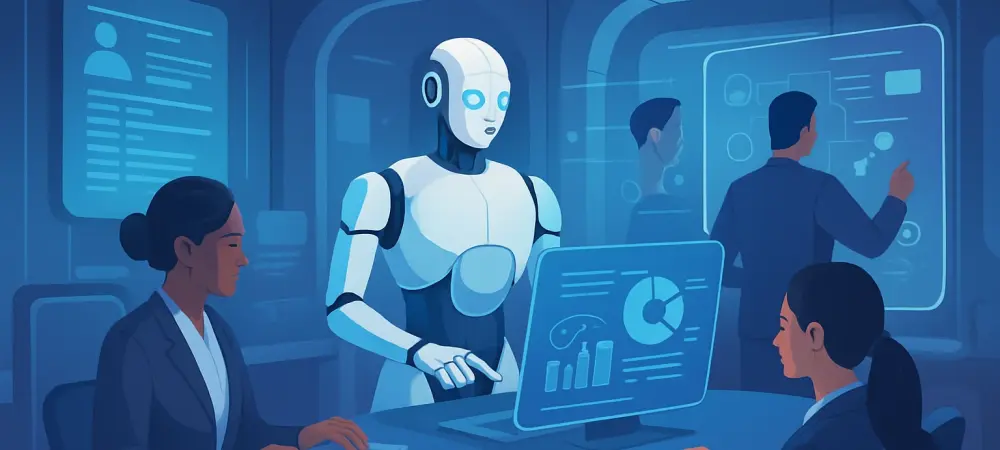
Imagine a workplace where decisions about hiring, promotions, and performance reviews are made not by a human manager, but by an algorithm designed to eliminate bias and maximize efficiency. This scenario is no longer a distant concept but a growing reality as artificial intelligence (AI) reshapes the landscape of workplace management, influencing fairness, productivity, and employee satisfaction in undeniable ways. With AI tools becoming integral to modern organizations, this analysis delves into the rising trend of AI adoption in management, exploring employee perceptions, real-world applications, expert opinions, and the future implications of this transformative technology.
The Rise of AI in Workplace Management
Adoption and Perception Trends
The integration of AI into workplace management has gained significant traction, with employees increasingly recognizing its potential to enhance fairness. A recent survey of over 900 U.S. workers revealed that two-thirds believe AI can reduce bias in critical areas such as hiring, firing, and budgeting, with 73% expressing support for AI-driven decisions in these domains. This growing acceptance highlights a shift in mindset, where data-driven tools are seen as a way to minimize human error and subjectivity in organizational processes.
Further insights show that over 50% of workers view AI as a source of unbiased feedback and equitable performance goals. Additionally, data indicates that 45% trust AI more than their co-workers for objective evaluations. These figures reflect a broader trend of confidence in AI’s ability to provide consistent and impartial outcomes, positioning it as a valuable asset in modern management structures.
This perception is not just anecdotal but backed by a consensus that AI’s analytical precision can address long-standing issues of favoritism and inconsistency. As organizations strive for greater transparency, the role of AI in decision-making is becoming a cornerstone of workplace reform, with employees increasingly open to its influence in shaping fairer systems.
Real-World Applications of AI in Management
AI’s practical deployment in workplaces is already transforming key management functions. Tools for performance analytics, for instance, allow companies to track employee productivity with unprecedented accuracy, using data to identify strengths and areas for improvement. Similarly, recruitment screening platforms leverage AI to evaluate candidates based on skills and qualifications, reducing the risk of unconscious bias in hiring processes.
In resource allocation, AI systems are optimizing budgets and schedules by analyzing historical data and predicting future needs. Generalized industry trends show companies adopting AI platforms for unbiased hiring, where algorithms prioritize merit over personal connections. Automated feedback systems are also gaining ground, providing employees with regular, data-backed insights into their performance without the filter of human judgment.
These applications align closely with the survey data highlighting AI’s potential to boost efficiency and fairness. By automating routine yet critical tasks, organizations can focus human efforts on strategic and interpersonal roles, creating a synergy that enhances overall workplace dynamics. The real-world impact of AI underscores its growing relevance as a tool for modern management.
Employee Perspectives: Balancing AI and Human Leadership
Support for AI’s Role in Fairness and Efficiency
Employees are showing a notable willingness to embrace AI in specific management roles, particularly where objectivity is paramount. Survey results indicate that 34% of workers are open to reporting to an AI manager, valuing its data-driven approach for decisions like promotions and feedback. This support stems from the belief that AI can eliminate personal biases that often cloud human judgment.
Moreover, 38% of respondents feel that AI could outperform human managers in making objective decisions. This perspective is rooted in the consistency and impartiality that AI systems offer, especially in evaluating performance metrics or allocating resources. For many, AI represents a pathway to a more equitable workplace where decisions are based on facts rather than opinions.
The enthusiasm for AI’s role in fairness and efficiency signals a cultural shift toward accepting technology as a partner in management. Employees appreciate the potential for streamlined processes and reduced errors, viewing AI as a complement to traditional leadership in areas where precision is critical.
Preference for Human Touch in Leadership
Despite the growing acceptance of AI, a significant portion of the workforce still prioritizes human leadership for its unique qualities. Survey findings show that 62% of workers prefer human bosses, especially for roles involving inspiration and emotional support. A striking 64% believe that only humans can truly motivate teams, underscoring the irreplaceable value of personal connection.
Human leaders are also seen as essential for navigating ethical dilemmas and emotional nuances that AI cannot fully address. Over half of the respondents assert that humans are better equipped to handle morally complex situations, where empathy and contextual understanding play a crucial role. This preference highlights a deep-rooted need for interpersonal skills in management.
The balance between AI and human leadership is evident in these perspectives. While technology excels in analytical tasks, the human element remains vital for fostering trust, creativity, and morale, suggesting that a fully automated workplace is neither desired nor feasible for most employees.
Concerns and the Need for Transparency
Alongside the optimism, there are valid apprehensions about AI’s integration into management. Approximately 39% of workers express concerns over potential surveillance or misuse of personal data by AI systems, fearing an erosion of privacy. Additionally, 29% worry that AI-led environments could become impersonal, leading to increased stress and disconnection. Transparency emerges as a critical factor in addressing these fears, with an overwhelming 85% of surveyed employees indicating that clear communication about how AI is used would significantly boost their trust in employers. This suggests that openness about data handling and decision-making processes can mitigate much of the unease surrounding AI adoption.
Addressing these concerns requires a proactive approach from organizations. By prioritizing ethical guidelines and ensuring employees understand AI’s role, companies can foster a sense of security and collaboration, paving the way for smoother integration of technology into daily operations.
Expert Insights on AI’s Integration in Management
Career experts emphasize the importance of a balanced approach to AI in workplace management. Keith Spencer, a noted career strategist, advocates for a model where AI supports rather than replaces human skills, ensuring that technology serves as a tool for enhancement rather than domination. This perspective aligns with the need to maintain a human-centric focus in leadership roles. Broader industry opinions reinforce the value of hybrid models that combine AI’s analytical prowess with human emotional intelligence. Thought leaders stress that while AI can handle data-intensive tasks with precision, it must be paired with human oversight to address ethical considerations and cultural nuances. This synergy is seen as the foundation for sustainable integration.
Experts also highlight the necessity of ethical oversight to ensure AI systems align with workplace values. Concerns about bias in algorithms or unintended consequences of automation call for continuous monitoring and adjustment. The consensus is clear: AI should augment human capabilities, not undermine the principles of fairness and empathy that define effective management.
The Future of AI in Workplace Management
Looking ahead, AI in workplace management is poised to evolve with more sophisticated tools tailored for personalized feedback and even conflict resolution. However, limitations in emotional contexts will likely persist, as algorithms struggle to replicate the depth of human understanding required in sensitive situations. Advancements will focus on refining AI’s supportive role rather than aiming for full autonomy. A hybrid model combining AI and human collaboration offers the promise of equitable and efficient workplaces, yet challenges such as privacy concerns and the risk of depersonalization remain. Organizations will need to navigate these hurdles by establishing robust policies on data usage and maintaining a strong human presence in decision-making processes. Striking this balance will be key to long-term success.
Across industries, the demand for leaders with AI literacy is expected to grow, alongside the enduring need for human-centric skills in management. As AI reshapes operational frameworks, its broader implications will require a workforce equipped to leverage technology while preserving the interpersonal connections that drive organizational culture. This dual focus will define the next era of workplace dynamics.
Embracing a Collaborative Future
Reflecting on the journey of AI in workplace management, it becomes evident that employees harbor a dual sentiment of enthusiasm for technology’s potential to enhance fairness and efficiency, coupled with a steadfast preference for human leadership in emotional and ethical realms. This nuanced balance shapes the discourse around AI’s role in organizations. Moving forward, the actionable step for employers and employees alike is to foster collaboration in integrating AI thoughtfully. Establishing transparent communication channels and ethical guidelines proves essential to building trust and ensuring technology complements human strengths. This approach lays the groundwork for more inclusive workplaces.
Ultimately, the focus shifts toward crafting policies that prioritize both innovation and humanity. By investing in training for AI literacy and maintaining a commitment to empathy in leadership, stakeholders aim to create environments where technology and personal connection thrive together, setting a precedent for future advancements.