

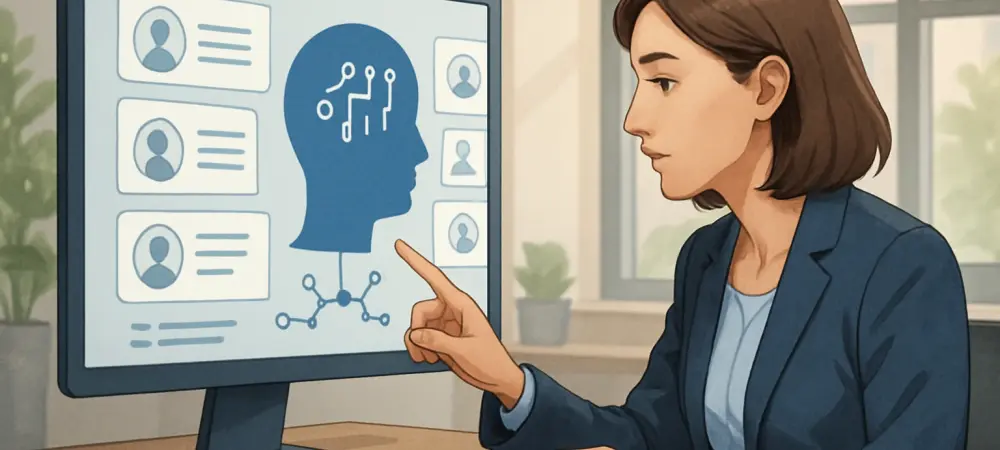
Introduction to AI in Human Capital Management
A staggering 70% of HR leaders report that artificial intelligence has already transformed their approach to workforce management, according to recent industry surveys, marking a pivotal shift in Human Capital Management (HCM). This rapid integration of AI moves HR from a traditionally administrative function to a strategic cornerstone in today’s fast-paced business environment. The adoption of intelligent systems is not merely about efficiency; it’s about redefining how organizations attract, engage, and retain talent in an era of hybrid work and skill shortages.
The significance of AI in HCM lies in its ability to turn raw data into actionable insights, enabling predictive workforce planning and personalized employee experiences. Automation, paired with machine learning, is freeing HR professionals from repetitive tasks, allowing focus on high-value interactions. This article explores the current landscape of AI applications in HCM, delves into expert perspectives on its evolving role, projects future advancements, and examines the critical balance between technological innovation and human connection.
The Rise of AI and Automation in HCM
Adoption Trends and Growth Statistics
The integration of AI into HCM is accelerating at an unprecedented pace, with forecasts from the Institute of Business Value (IBV) predicting that by 2027, nearly 90% of organizations will adopt advanced AI tools for HR processes. This trend reflects a broader movement in business to leverage technology for competitive advantage. From 2025 onward, the focus is on scaling AI solutions to address complex workforce challenges, with market reports indicating a compound annual growth rate of over 25% for AI-driven HR platforms through the next few years.
A key driver of this adoption is the measurable impact on operational efficiency. Industry studies show that AI reduces time spent on repetitive tasks like payroll processing and candidate screening by up to 40%, while cutting associated costs significantly. These savings allow HR teams to redirect resources toward strategic initiatives such as talent development and employee engagement, fundamentally altering decision-making processes.
Beyond efficiency, AI’s predictive analytics capabilities are proving transformative. Tools that analyze historical data to forecast turnover risks or skill gaps are becoming standard, with adoption rates climbing steadily. Such advancements empower organizations to make proactive decisions, ensuring they remain agile in a dynamic labor market.
Real-World Applications and Case Studies
AI’s practical applications in HCM span a wide array of functions, demonstrating its versatility. Platforms like Workday’s Skills Cloud utilize machine learning to map employee competencies and predict future workforce needs, enabling precise talent planning. Similarly, SAP SuccessFactors streamlines compliance and onboarding processes through automation, reducing errors and enhancing the new hire experience.
Specific case studies highlight the tangible benefits of these technologies. Unilever, for instance, has implemented AI-driven micro-learning programs that deliver bite-sized training content tailored to individual needs, resulting in improved retention rates. This approach not only boosts engagement but also ensures employees continuously upskill in alignment with organizational goals.
Another compelling example is Cisco’s use of sentiment analysis to tackle challenges in hybrid work environments. By analyzing employee feedback, the company identifies issues like “invisible overwork,” where remote workers feel overburdened without visibility. This AI-powered insight allows leadership to implement targeted interventions, fostering a healthier workplace culture. Additionally, tools like Cornerstone and IBM’s Watson Career Coach personalize learning and career guidance, showcasing how AI can cater to diverse employee needs across industries.
Expert Perspectives on AI’s Role in HCM
The growing reliance on AI in HCM is echoed by thought leaders who stress its strategic importance. Nadeem Khan, a prominent HR analyst, cautions that professionals who fail to embrace data analytics risk becoming obsolete in an increasingly data-driven field. This perspective underscores the urgency for HR to evolve alongside technological advancements, leveraging AI for informed decision-making.
Josh Bersin, another influential voice, argues that AI is no longer optional but a necessity for organizational competitiveness. His insights highlight how AI tools enable hyper-personalized employee experiences, from tailored learning paths to customized career development plans. Such personalization is seen as a key factor in driving engagement and loyalty among modern workforces.
Experts also emphasize the need for balance, advocating that technology should complement, not replace, human judgment. While AI excels at processing vast datasets, empathy remains a uniquely human trait essential for interpreting nuanced employee needs. The consensus is clear: AI must serve as an enabler, amplifying HR’s capacity to build trust and foster meaningful connections, thus reshaping organizational strategy with a human-centric focus.
Future Outlook: AI’s Potential in Shaping Workforce Intelligence
Looking ahead, AI’s trajectory in HCM points to groundbreaking advancements, particularly with the integration of generative AI tools. Early innovations by vendors like Workday and SAP showcase the potential of AI copilots to draft performance reviews or design adaptive career paths tailored to individual aspirations. These developments promise to make HR more responsive and dynamic in addressing employee needs.
The benefits of such advancements are manifold, including real-time workforce planning to mitigate skill shortages and enhance organizational agility. However, challenges loom large, particularly around data privacy and the transparency of AI algorithms. Ensuring ethical use of employee data will be paramount as reliance on intelligent systems grows, necessitating robust governance frameworks to maintain trust.
Across industries, AI’s influence could redefine employee well-being as a core driver of productivity. By identifying stress patterns or burnout risks through behavioral analysis, organizations can prioritize mental health initiatives. Yet, there’s a cautionary note about over-reliance on technology, as excessive automation risks diminishing the personal touch that underpins effective HR. Striking this balance will shape how workforce intelligence evolves in the coming years.
Conclusion: Balancing Innovation and Human Connection
Reflecting on the journey of AI in Human Capital Management, it becomes evident that this technology has reshaped HR into a predictive and strategic function. Automation has alleviated the burden of routine tasks, while personalized experiences have fostered deeper employee engagement. The insights gained from data-driven tools have empowered organizations to anticipate challenges and act decisively.
Looking toward actionable steps, businesses need to prioritize ethical AI adoption, ensuring transparency in how employee data is handled. Investing in training for HR teams to interpret AI insights with empathy has proven essential. As a future consideration, fostering a culture where technology amplifies human potential rather than overshadows it stands as the ultimate goal, guiding HCM into a new era of innovation and connection.