

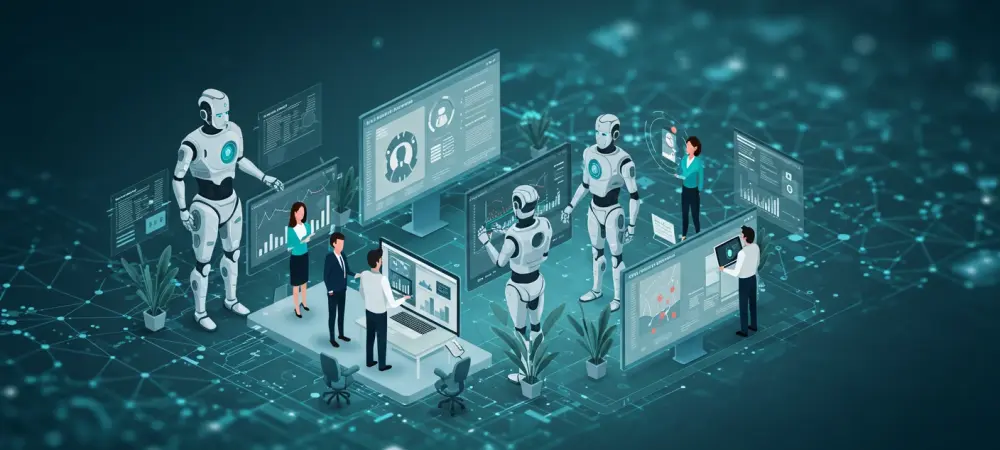
In an era where digital transformation dictates the pace of business, a staggering revelation emerges: over 70% of HR professionals report feeling overwhelmed by the sheer volume of tasks tied to managing a distributed workforce, regulatory demands, and talent acquisition, often with constrained resources. This mounting pressure underscores a critical need for innovative solutions that can alleviate operational burdens. As enterprises grapple with these complexities, AI-driven HR automation tools have surfaced as a transformative force, promising to streamline processes and redefine efficiency in human resources management.
The significance of AI in HR cannot be overstated, especially in addressing modern challenges such as remote work dynamics, stringent compliance requirements, and the shift from transactional duties to strategic priorities. These tools are becoming indispensable for organizations aiming to maintain a competitive edge while fostering employee satisfaction. This analysis delves into the surge of AI in HR operations, spotlighting real-world applications like Lyzr’s HR Agent Suite, incorporating expert insights, exploring future implications, and distilling key takeaways for enterprise leaders navigating this evolving landscape.
The Surge of AI in HR Operations
Adoption Trends and Market Growth
Recent industry reports paint a compelling picture of AI adoption in HR, with studies indicating that over 60% of large enterprises have integrated some form of AI into their HR functions as of this year. Projections suggest that investment in these technologies will grow at a compound annual rate of 15% from now through 2027, driven by the urgent need to address inefficiencies in traditional processes. This rapid uptake reflects a broader recognition among businesses that manual approaches to hiring, onboarding, and employee management are no longer sustainable in a fast-paced digital environment.
Moreover, the focus on automation is fueled by tangible returns, as companies adopting AI tools report significant reductions in time-to-hire and administrative overhead. Sectors with high employee turnover, such as retail and healthcare, are particularly aggressive in leveraging these solutions to manage large-scale workforce demands. The trend illustrates a strategic pivot toward technology as a means to enhance scalability and precision in HR operations across diverse industries.
A key driver behind this market growth is the increasing availability of accessible AI platforms tailored for HR needs. Enterprises are prioritizing solutions that integrate seamlessly with existing systems, ensuring minimal disruption while maximizing impact. This momentum signals a transformative shift, positioning AI as a cornerstone of modern HR infrastructure in the years ahead.
Real-World Applications: Lyzr’s HR Agent Suite
One prominent example of AI-driven innovation in HR is Lyzr’s HR Agent Suite, a comprehensive set of eight specialized agents designed to optimize various facets of human resources management. Tools like the AI Hiring Assistant streamline talent acquisition by shortlisting candidates based on precise job criteria, while the Resume Assistant enhances screening efficiency by aligning resumes with role specifications. These agents tackle enterprise challenges head-on, reducing manual effort in high-volume tasks.
Beyond recruitment, the suite addresses employee engagement and compliance through agents like the HR Helpdesk Agent, which handles routine inquiries on policies and benefits, and the Performance Review Agent, which standardizes feedback mechanisms. Additionally, the ESAT Survey Agent monitors satisfaction levels, and the Exit Interview Agent captures valuable insights from departing staff, ensuring a holistic approach to workforce management. Each tool maintains human oversight, preserving accountability in automated processes.
The adaptability of Lyzr’s suite further distinguishes it, as businesses can deploy individual agents or combine them for end-to-end automation. This scalability, coupled with no-code configuration options, allows organizations to customize solutions to specific needs without requiring extensive technical expertise. Such practical applications demonstrate how AI can transform HR from a reactive function into a proactive, strategic asset for enterprises navigating complex operational landscapes.
Expert Perspectives on AI-Driven HR Tools
Insights from HR technology leaders reveal a consensus on the profound impact of AI automation in reshaping workforce management. Industry analysts emphasize that these tools free up HR professionals to focus on high-value activities, such as fostering workplace culture and driving talent development, rather than being bogged down by repetitive tasks. This shift is seen as a critical step in elevating HR’s role within the broader business strategy.
A recurring theme among specialists is the necessity of balancing automation with human judgment. Experts caution that while AI excels at processing data and identifying patterns, decisions involving empathy and nuanced understanding must still involve human input. Transparency in AI algorithms and robust audit trails are highlighted as essential to maintaining trust, particularly in regulated sectors where compliance is non-negotiable.
Furthermore, thought leaders underscore the potential for AI to redefine HR as a data-driven function. By leveraging predictive analytics and personalized insights, these tools enable more informed decision-making around talent retention and employee growth. The expert consensus points to a future where AI not only streamlines operations but also empowers HR teams to anticipate challenges and craft innovative solutions aligned with organizational goals.
Future Outlook for AI in HR Automation
Looking ahead, advancements in AI-driven HR tools are expected to bring even greater personalization, particularly in areas like employee development plans tailored to individual career aspirations. Enhanced predictive analytics could further refine talent retention strategies by identifying at-risk employees before issues escalate, offering a proactive rather than reactive approach. Such innovations promise to deepen the strategic value of HR within enterprises.
The potential benefits of these advancements are substantial, including significant cost savings through reduced administrative burdens and improved scalability to manage growing workforces. However, challenges loom large, with data privacy concerns at the forefront as organizations handle sensitive employee information. Mitigating algorithmic bias and ensuring equitable outcomes remain critical hurdles, alongside the pressing need for workforce upskilling to interact effectively with AI systems.
On a broader scale, the integration of AI in HR could fundamentally alter employee-employer relationships by fostering more transparent communication and data-driven decision-making. Across industries, from tech to manufacturing, workplace dynamics may shift as automation reshapes roles and expectations. The long-term implication is a reimagined HR landscape where technology and human insight collaborate to build more resilient, adaptable organizations.
Conclusion and Key Takeaways
Reflecting on the journey through AI’s integration into HR, it becomes evident that rapid adoption has redefined operational efficiency, with practical solutions like Lyzr’s HR Agent Suite leading the charge in addressing enterprise challenges. Expert endorsements have validated the transformative power of these tools, while discussions on future possibilities have highlighted both opportunities and obstacles that lie ahead.
What stands out is the clear mandate for businesses to embrace AI as a means to modernize HR functions, ensuring they remain agile amid evolving workforce demands. A crucial next step involves investing in robust governance frameworks to address privacy and bias concerns, while prioritizing training programs to equip teams with the skills needed to leverage these technologies effectively.
Ultimately, the exploration points to a compelling horizon where AI not only solves immediate pain points but also paves the way for a more strategic, human-centric approach to HR. Enterprises are encouraged to take proactive measures, evaluating AI solutions tailored to their unique needs, to build a foundation for sustained growth and innovation in an ever-changing business environment.