

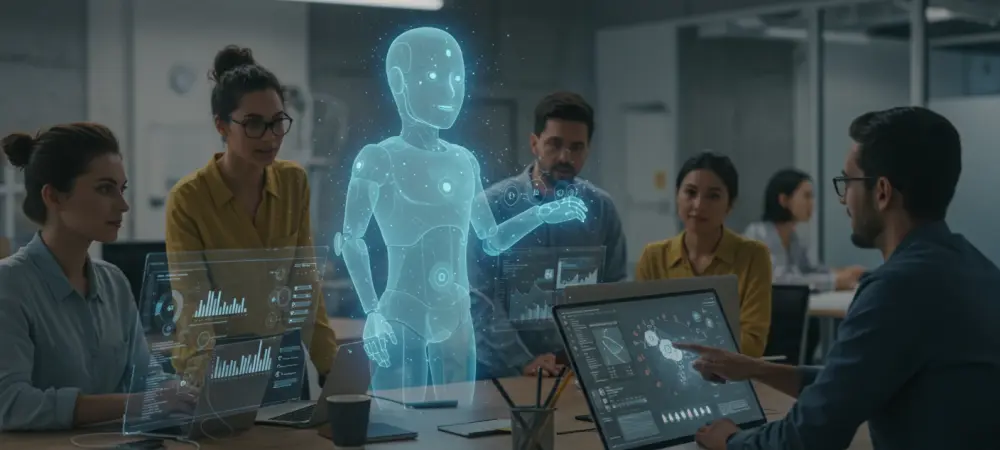
Opening the Future of Work with AI
Imagine a workplace where every employee has a tireless, empathetic partner that anticipates needs, resolves issues before they escalate, and personalizes support to individual preferences—all without needing a coffee break. This is no longer a distant vision but a reality driven by AI agents transforming employee experience (EX) in today’s dynamic workforce. These intelligent systems are revolutionizing how organizations foster engagement and productivity by embedding proactive assistance into daily operations. The significance of this trend cannot be overstated, as businesses increasingly recognize EX as a strategic driver of performance and retention. This analysis dives deep into the rise of AI agents, their real-world applications, insights from industry leaders, future implications, and actionable takeaways for navigating this transformative shift.
The Rise of AI Agents in Employee Experience
Growth and Adoption Trends
The adoption of AI agents in workplace settings has surged dramatically, reflecting a broader shift toward technology-driven support systems. According to Gallup’s meta-analysis of over 183,000 business units, teams with high engagement—often bolstered by advanced EX tools—achieve 23% greater profitability compared to their less engaged counterparts. This data highlights a compelling link between employee satisfaction and bottom-line results, pushing companies to invest in AI solutions that elevate workplace interactions. Over the coming years, from 2025 to 2027, projections suggest even wider integration as organizations prioritize scalable, personalized support to meet evolving workforce expectations.
Beyond profitability, the focus on EX as a business imperative continues to grow, with AI playing a pivotal role. Modern employees demand environments that nurture growth, connection, and purpose, and AI agents are uniquely positioned to deliver by automating mundane tasks and enabling meaningful work. Surveys indicate that companies adopting these tools see marked improvements in talent retention and adaptability, positioning them ahead of competitors still reliant on traditional, reactive support models. This trend underscores a fundamental shift in how workplace success is defined and achieved.
Real-World Applications and Case Studies
AI agents are already making tangible impacts across various facets of EX, demonstrating their versatility in addressing common pain points. From IT helpdesk support that instantly resolves technical glitches to HR query automation that provides swift answers on policies or benefits, these tools minimize downtime and frustration. For instance, AI-driven systems can troubleshoot software issues in real time or update employees on leave balances without the need for manual intervention, freeing up valuable time for strategic tasks.
Specific examples further illustrate the power of these solutions in action. Many global corporations have integrated AI platforms to streamline onboarding processes, ensuring new hires access training materials and company policies effortlessly through centralized knowledge hubs. Additionally, workflow automation tackles repetitive administrative duties, such as scheduling or document retrieval, allowing staff to focus on high-impact contributions. These use cases reveal how AI reduces operational friction and enhances satisfaction by embedding support directly into daily routines. A standout case involves a multinational tech firm that deployed an AI agent to manage IT support tickets. By proactively detecting recurring access issues and resolving them before employees raised formal complaints, the system slashed resolution times by nearly half. Such examples emphasize the potential of AI to not only react to problems but anticipate them, creating a seamless and empowering employee journey that drives efficiency across the board.
Insights from Industry Leaders on AI’s Role
Thought leaders across sectors are unanimous in viewing AI agents as more than mere tools—they are becoming informed colleagues that reshape how work gets done. Experts argue that the true value of these systems lies in their ability to personalize interactions and deliver context-aware responses, fostering a sense of trust and reliability among employees. This perspective marks a departure from viewing technology as a cold, impersonal force, instead positioning it as a vital partner in enhancing workplace dynamics.
However, challenges in implementation remain a key concern among industry voices. Leaders highlight the importance of ethical design to prevent AI from overstepping boundaries or mishandling sensitive queries, such as those related to personal leave or grievances. Ensuring that these systems are built with empathy and cultural alignment is critical to their success, as missteps can erode trust and hinder adoption.
Another focal point is the balance between rapid deployment and employee readiness. Experts caution that rushing AI integration without proper governance risks creating resistance or operational silos, often referred to as “shadow AI” when unauthorized tools proliferate. Strong frameworks and transparent communication are deemed essential to align these innovations with organizational values, ensuring they amplify rather than disrupt the human element of work.
Future Implications of AI Agents in the Workplace
Looking ahead, AI agents are poised to evolve into true “co-workers” with roles that extend far beyond basic automation. Imagine adaptive project partners that tailor suggestions based on team dynamics, or organizational memory keepers that preserve institutional knowledge for instant access. These systems could also act as bias-aware decision supporters, helping leaders make fairer, data-driven choices while fostering an inclusive culture.
The benefits of such deep integration are immense, promising enhanced collaboration and sparking innovation by freeing employees from repetitive burdens. However, challenges like maintaining trust and preventing unauthorized AI use loom large. Organizations must establish robust policies to address privacy concerns and ensure transparency in how data fuels these intelligent systems, safeguarding against potential misuse or skepticism.
Across industries, the broader implications of this trend suggest a redefinition of workplace strategy and culture. AI agents could fundamentally alter how teams operate, encouraging a symbiosis where technology handles precision at scale while humans drive vision and creativity. Addressing ethical and operational hurdles will be paramount to realizing this vision, ensuring that the integration of AI enhances rather than undermines the essence of human-centric workplaces.
Key Takeaways and Call to Action
Reflecting on the journey of AI agents in employee experience, their transformative impact stands as a beacon for workplace evolution. These tools redefine productivity and engagement by offering personalized, proactive support that directly boosts business performance. Their ability to anticipate needs and reduce friction proves instrumental in meeting the modern workforce’s demand for meaningful, connected environments.
As a next step, organizations are urged to initiate AI integration with a strategic mindset, focusing on building ecosystems where technology and humanity amplify each other’s strengths. Establishing clear governance and prioritizing empathy in design emerge as critical actions to ensure sustainable adoption. By embracing these principles, companies can navigate the complexities of innovation while safeguarding employee well-being.
Looking beyond immediate implementation, the broader consideration is to envision AI as a catalyst for long-term cultural transformation. Leaders are encouraged to explore how these agents can shape collaboration and fairness in decision-making, setting a foundation for workplaces that thrive on mutual enhancement. This forward-thinking approach promises to position organizations at the forefront of a rapidly changing landscape, ready to harness the full potential of AI-driven employee experience.