

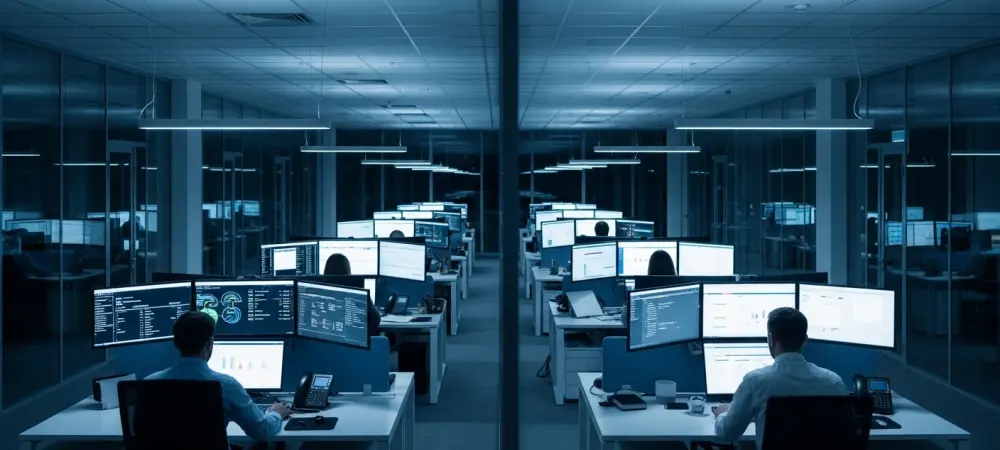
The Rise of Performative Work in Corporate Environments
The visual charade of appearing busy has transformed into a strategic survival mechanism for employees navigating a corporate landscape that often values digital presence over actual output. This shift is particularly evident in the current 2026 workforce, where “productivity theater” has become a pervasive cultural norm. The primary goal of this exploration is to dissect the underlying causes of this phenomenon, addressing the systemic pressures that compel professionals to simulate labor rather than perform it. By examining generational shifts, management styles, and economic realities, the following analysis provides clarity on why the modern office has become a stage for performative efficiency.
Through this discussion, the scope covers the breakdown of authenticity within professional hierarchies and the psychological toll of maintaining constant visibility. Readers can expect to gain insights into the disconnect between hours worked and value created, alongside actionable perspectives on how organizations might pivot toward more genuine metrics of success. This examination moves beyond simple critiques of individual behavior to highlight how corporate structures unintentionally incentivize deceptive work patterns.
Key Questions: Understanding Performative Productivity
Why Is Gen Z Leading the Charge in Productivity Theater?
The newest generation in the workforce entered the professional arena after observing years of relentless burnout among their predecessors. Having witnessed the collapse of “hustle culture” and the physical toll of constant overwork on older cohorts, younger professionals have adopted a more defensive posture toward their employment. This behavior is fundamentally a rational response to a system that they perceive as prioritizing corporate gains over individual mental health. For many, faking activity is not an act of laziness but a calculated effort to preserve energy and establish boundaries in an environment that demands constant availability.
The refusal to sacrifice personal well-being for a corporate structure seen as exploitative has led to an overwhelming percentage of Gen Z professionals admitting to simulated productivity. They prioritize a lifestyle that balances work with personal fulfillment, utilizing performative tactics to satisfy management’s need for visibility without draining their internal resources. This generational shift marks a departure from the traditional belief that higher effort leads to guaranteed stability, as these workers often view their contributions through a lens of transaction rather than loyalty.
How Does Presenteeism Drive Performative Work?
The concept of presenteeism remains a cornerstone of corporate culture, where physical or digital visibility is frequently used as a proxy for actual performance. Many organizations still rely on outdated tracking methods, such as monitoring active status on communication platforms or measuring total hours logged, rather than assessing the quality of deliverables. This reliance on visual cues forces employees to dedicate significant mental energy to maintaining an online presence, creating a environment where staying “green” on a messaging app becomes a task in itself.
This culture of visibility bias is not restricted to entry-level roles; it permeates the entire management chain. Middle managers often feel a heightened pressure to appear perpetually available to senior leadership, which then filters down to their direct reports. When managers engage in performative busy-ness to justify their own roles, they inadvertently signal to their teams that appearing busy is more valuable than completing tasks efficiently. This cycle of mimicry sustains a workforce that is more focused on the optics of activity than the substance of their accomplishments.
What Is the Efficiency Penalty and How Does It Suppress Output?
The “efficiency penalty” describes a pervasive dynamic where employees who complete their tasks ahead of schedule are not rewarded with rest but are instead burdened with additional work. In many modern offices, demonstrating high levels of productivity leads to an immediate increase in expectations without a corresponding rise in compensation or benefits. Consequently, professionals have learned to hide their speed, intentionally slowing their pace to match the standard eight-hour workday regardless of how quickly a task could actually be performed.
This lack of trust between employers and staff creates a perverse incentive structure that punishes high performers. Most workers suggest they would finish their responsibilities and log off if they felt secure in doing so, yet the fear of being seen as “available” prevents this transparency. The prevalence of digital surveillance software only exacerbates the issue, driving employees to perform meaningless digital tasks to fill time. Without a culture that encourages and rewards efficiency, organizations continue to lose the true potential of their most capable staff.
Why Do Economic Factors Influence Employee Effort?
The motivation to exceed standard expectations has eroded alongside the widening gap between productivity and financial compensation. In the current economic climate of 2026, many workers find that even significant professional contributions do not yield the same level of security or upward mobility seen in previous decades. When salary increases are largely offset by inflation, the financial incentive to go above and beyond the minimum requirements of a role vanishes. Employees increasingly view their labor as a commodity to be dispensed carefully, rather than an investment in a lifelong career.
Market instability further compounds this detachment, as widespread layoffs have shown that high performance does not always guarantee job safety. In an environment where even the most dedicated workers are subject to sudden termination, many professionals choose to conserve their energy for personal projects or secondary income streams. This economic reality has fostered a transactional mindset where performative productivity serves as a protective layer, allowing workers to maintain their positions while protecting themselves from the exhaustion of unrewarded labor.
Is the Traditional Eight-Hour Workday Obsolete in the AI Era?
The integration of advanced automation and artificial intelligence has highlighted the arbitrary nature of the standard eight-hour schedule. While these technologies significantly reduce the time required for data processing, reporting, and administrative tasks, corporate expectations for daily hours remain rigid. A significant portion of the workforce now completes their essential responsibilities long before the end of the day, yet they remain tethered to their desks to satisfy traditional time-based contracts. This disconnect creates a void that is almost exclusively filled by performative tasks and “theater.”
Knowledge work is rarely linear, meaning some days require intense concentration while others are naturally lighter. By clinging to a time-blocked workday, companies ignore the reality of modern efficiency and force employees to waste hours in a state of artificial activity. Shifting toward a Results-Only Work Environment would allow professionals to be measured by their output rather than their time spent. Such a transition would eliminate the need for productivity theater by aligning corporate goals with the technological realities of the current era.
Summary: Recapping the Impact of Performative Labor
Performative productivity remains a deep-seated issue that stems from a lack of alignment between corporate metrics and modern work realities. The current workforce recognizes that traditional visibility is no longer a reliable indicator of value, yet organizations continue to prioritize optics. This behavior is reinforced by the efficiency penalty and a disconnect between wages and effort, leading to a culture of simulated busy-ness. To address these challenges, management must shift toward outcome-based evaluations that respect the time and autonomy of the individual. Embracing flexibility and trust proves essential for reducing theater and fostering genuine engagement in the workplace.
Final Thoughts: Moving Toward a Results-Oriented Culture
The shift toward performative labor signaled a desperate need for structural reform within the modern office. It was clear that the reliance on outdated presenteeism failed to capture the true value of professional contributions in an automated age. By reflecting on the motivations behind “faking it,” leaders identified that a culture of surveillance only served to drive efficiency underground. The realization that trust and clear goals surpassed the need for constant visibility marked a turning point in organizational strategy. Ultimately, the focus transitioned toward meaningful outcomes, allowing the workforce to move past the stage of theater and into an era of authentic achievement.