

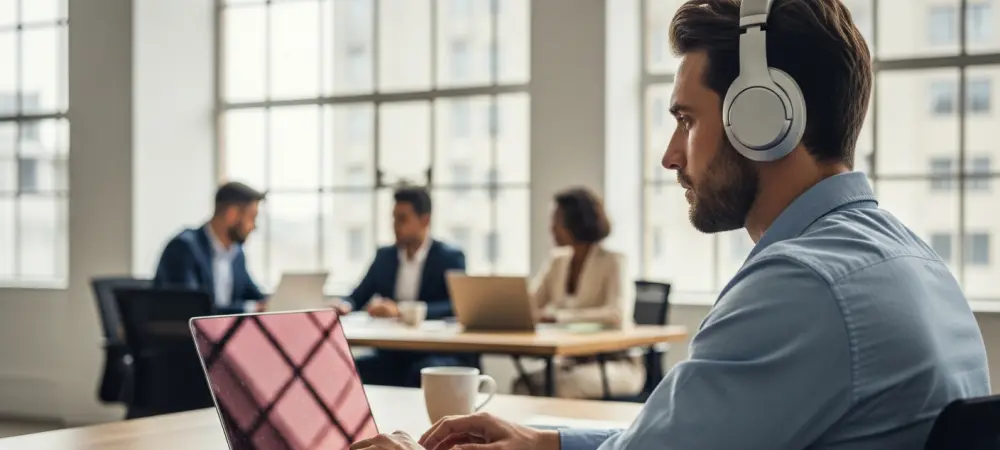
The persistent hum of a climate control system and the rhythmic tapping of keyboards often fade into the background, yet the subtle intrusion of a colleague’s half-heard conversation remains a primary disruptor of professional focus. While organizations invest heavily in ergonomic standing desks, biometric lighting, and ultra-high-speed internet, the invisible variable of sound is frequently left to chance. This oversight creates a silent friction in the workday where the cognitive effort required to ignore environmental noise competes directly with the mental energy needed for complex problem-solving.
Modern professionals are beginning to realize that the acoustic environment is not a static background element but a dynamic driver of individual output. The shift from viewing sound as a simple binary—noise versus silence—toward understanding it as a sophisticated tool for cognitive optimization marks a new era in workplace design. It is no longer enough to provide a desk and a pair of generic headphones; the workforce now demands an environment that respects the biological reality of how humans process information. Acceptance of “listening fatigue” as an unavoidable part of the professional experience is finally being challenged by data-driven acoustic strategies.
Beyond Ergonomics: Is Background Chatter Quietly Draining Your Professional Output?
The cognitive friction of trying to draft a complex proposal while an intelligible conversation drifts over a cubicle wall is more than a minor annoyance. Research suggests that the human brain is uniquely sensitive to the “intelligibility” of speech, meaning that it is far harder to ignore a voice than it is to ignore a steady mechanical drone. This creates a constant struggle for focus, as the auditory cortex automatically attempts to decode every syllable it hears, even when those syllables are entirely irrelevant to the task at hand.
This hidden struggle contributes to a steady decline in efficiency as the day progresses. When sound is managed haphazardly, employees are forced to utilize their executive function just to maintain a baseline of concentration. By shifting the perspective to view audio as a critical productivity variable, organizations can begin to address the root causes of mental exhaustion. The modern goal is to move past simple noise mitigation and toward a model where sound is calibrated to enhance, rather than hinder, the specific tasks being performed.
The Hidden Cognitive Tax of the Modern Acoustic Environment
The human brain possesses a biological predisposition to prioritize and process human speech over nearly all other auditory stimuli. This evolutionary trait, while useful for survival and social cohesion, becomes a significant “cognitive tax” in open-plan offices and hybrid environments. When background noise contains recognizable language, it acts as a structural barrier to reading comprehension and verbal reasoning. The brain cannot simply “turn off” its language processing centers, leading to a measurable decrease in the capacity of working memory.
Beyond the immediate loss of focus, the constant effort to filter out irrelevant auditory data leads to a broader decline in executive function. Workplace design is consequently transitioning toward a holistic model that treats acoustic quality as a vital wellness factor, comparable to air quality and lighting. Treating sound as a secondary concern is no longer viable in a high-stakes economy where mental clarity is the primary commodity. Providing a high-quality acoustic environment is becoming a hallmark of a healthy, high-performing corporate culture.
Why Silence Is Not the Solution for Focused Deep Work
A common misconception is that absolute silence is the ultimate goal for productivity, yet the myth of the silent office often masks a different set of problems. In a pin-drop environment, sudden and jarring sounds, such as a closing door or a cough, have a much higher impact and can easily shatter a state of deep work. Instead of seeking silence, many professionals are turning to “auditory masking” and self-selected focus sounds. These tools create a personalized immersion zone that provides a predictable and controllable soundscape, allowing the mind to settle into a rhythm.
The failure of “one-size-fits-all” audio solutions is becoming increasingly apparent as generic headphones ignore the vast differences in individual hearing sensitivity. Standard equipment often forces the brain to work overtime to decipher audio that is poorly balanced or low-quality, leading to what is now defined as “listening fatigue.” This mental exhaustion occurs when the listener must constantly compensate for auditory gaps, draining energy that should be reserved for high-level analysis and creativity.
The Neurological Case for Personalized Acoustic Profiling
Leveraging insights from the World Health Organization, it is clear that hearing profiles are as unique as fingerprints, with significant variations in frequency sensitivity across the population. This individualized nature of hearing means that two people listening to the same meeting may experience vastly different levels of clarity. The emergence of adaptive sound technology, such as the calibration systems developed by Audiodo, allows for a shift beyond simple volume adjustments. These systems utilize specific frequency calibration to match audio output to the unique sensitivities of each ear.
By reducing the total “listening effort” required during virtual meetings or periods of concentration, personalized audio preserves cognitive capacity for creative problem-solving. Research-backed evidence indicates that when audio is tuned to an individual’s hearing profile, the brain processes information more efficiently and with less stress. This neurological optimization ensures that the mental energy spent on “hearing” is minimized, allowing the energy for “thinking” to be maximized.
Implementing a Precision Audio Framework for Peak Efficiency
Transitioning to a precision audio framework requires a move from standard-issue equipment to hearing-calibrated solutions that address individual needs. Employees can begin by identifying their “focus frequencies” and utilizing tools that mask environmental distractions without adding to their cognitive load. This proactive approach allows for the creation of a mobile “acoustic bubble” that remains effective whether an individual is in a crowded office, a coffee shop, or a home environment. Managerial frameworks must also evolve to prioritize acoustic wellness as a core strategy for preventing employee burnout. Best practices for virtual communication now include utilizing personalized audio profiles to maintain engagement during high-stakes digital collaboration. When clarity is guaranteed by technology rather than forced by the listener’s effort, the quality of digital interaction improves significantly. Leaders who recognized sound as a strategic asset successfully fostered environments where focus was sustained and mental exhaustion was actively mitigated.
The implementation of these strategies transformed the understanding of sensory management in the modern office. It became clear that the most effective path forward involved the widespread adoption of frequency-calibrated audio profiles to protect employee energy. Organizations moved to integrate sensory wellness into their standard operating procedures, ensuring that technological tools matched the biological realities of their staff. By prioritizing individualized soundscapes, businesses established a sustainable foundation for long-term concentration and professional fulfillment.