

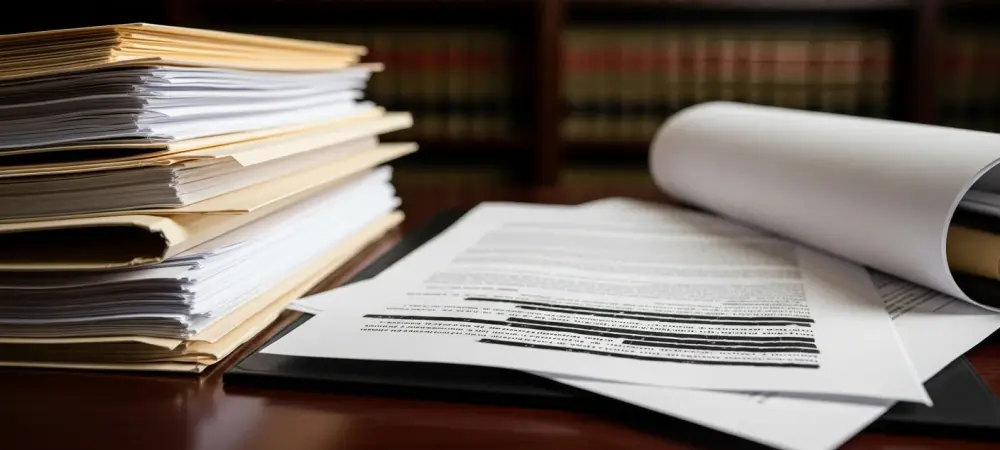
A federal agency’s mandate to root out discrimination has collided with a university’s duty to protect its employees, sparking a high-stakes legal battle that raises profound questions about privacy, religious freedom, and the haunting specter of historical persecution. The University of Pennsylvania is currently embroiled in a contentious dispute with the U.S. Equal Employment Opportunity Commission (EEOC), refusing to hand over records that the university claims would effectively create a government-compiled list of its Jewish employees. This confrontation, now before a federal judge, goes beyond a simple procedural disagreement, touching on the sensitive balance between investigating potential antisemitism and employing methods that, for many, echo the darkest chapters of history. At the heart of the matter is a fundamental question: When does a federal investigation into discrimination become a threat to the very people it aims to protect?
When Investigation Risks Becoming Endangerment
The conflict began in December 2023, when EEOC Commissioner Andrea Lucas initiated a sweeping investigation into a potential “pattern or practice” of antisemitism at the University of Pennsylvania. This probe did not arise from specific employee complaints filed with the agency but rather from the commissioner’s own initiative, drawing on public reports of campus tensions. The investigation is set against a national backdrop of heightened concern over antisemitism on American college campuses, particularly following the geopolitical events of recent years. The university, like many of its peers, has been a focal point of protests, debates, and allegations of a hostile environment, creating a charged atmosphere that regulators are now scrutinizing.
This federal scrutiny has created a profound dilemma, pitting the government’s authority to investigate workplace harassment against a university’s obligation to safeguard the private data of its community. For Penn, the issue is not merely about bureaucratic compliance; it is a matter of ethical principle and historical awareness. The university argues that turning over names, personal contact details, and affiliations based on religious identity crosses a dangerous line. This clash highlights a core tension in civil rights enforcement: how to gather necessary information to protect a vulnerable group without subjecting its members to new forms of risk and surveillance, thereby transforming a protective measure into a potential threat.
A Campus Caught Between Federal Powers and Employee Privacy
The catalyst for the current legal standoff is an expansive EEOC subpoena demanding highly sensitive information. The federal agency has requested complete membership rosters for Jewish campus organizations, personal contact information including home addresses for faculty in the Jewish Studies Program, and, perhaps most controversially, the identities of employees who participated in confidential listening sessions and an anonymous survey conducted by Penn’s own antisemitism task force. The EEOC’s position is that this data is essential for identifying and contacting potential victims and witnesses to build its case.
This demand for personal data is framed within the broader context of increasing federal oversight of higher education institutions concerning civil rights. Following a surge in reported antisemitic incidents nationwide, both the Department of Education and the EEOC have launched investigations into numerous universities. Penn’s case is particularly notable because it directly challenges the methods of the investigation itself, arguing that the process, intended to be a remedy, could inflict its own form of harm. The university’s resistance underscores a growing anxiety among academic institutions about the scope of government data requests and the potential for such information to be misused, especially when it pertains to religious or ethnic identity.
The Subpoena and the Standoff
The EEOC’s subpoena represents a comprehensive effort to map the landscape of Jewish life and antisemitism-related discourse at Penn. The agency is not only seeking the identities of those who have formally complained but also those who are merely members of specific academic departments or campus groups, as well as those who shared their experiences under a promise of anonymity. From the EEOC’s perspective, such a wide net is necessary to uncover the full extent of any potential “pattern or practice” of discrimination, which often relies on testimony from individuals who may not have filed formal complaints.
In a principled and forceful refusal, Penn has argued that full compliance would be an unconscionable act. The university’s legal filings explicitly invoke the “frightening and well-documented history” of governments compiling lists of Jewish citizens, stating that such actions have historically been precursors to persecution. While Penn has provided nearly 900 pages of other documents, including anonymized data from its task force and information on formal complaints (with names redacted at the employees’ request), it has drawn a firm line at handing over personally identifiable information that would reveal an employee’s faith or perceived ancestry. This partial compliance is intended to demonstrate good faith while holding fast to what the university considers a critical ethical boundary.
The War of Words in the Courtroom
In its legal motions, the EEOC has defended its data demands as standard and essential operating procedure. The agency contends that obtaining contact information for “likely victims and witnesses” is a routine part of any thorough investigation and has accused Penn of deliberately stalling the process. According to the EEOC, without direct access to these individuals, its ability to assess the work environment at the university is severely hampered. The agency frames Penn’s resistance not as a principled stand for privacy but as an obstruction of a legitimate federal inquiry into serious civil rights concerns.
Penn’s counter-argument, however, challenges the very foundation of the EEOC’s investigation. The university asserts that the probe is not rooted in concrete allegations from its workforce but rather in the “unspecified suspicions of a single Commissioner.” By highlighting the absence of formal employee complaints to the EEOC, Penn portrays the subpoena as an overly broad fishing expedition that lacks sufficient justification for its intrusive demands. This position has found support from allies in academia; organizations like the American Association of University Professors (AAUP) have filed court documents siding with Penn, arguing that the EEOC’s request sets a dangerous precedent for academic freedom and employee privacy that could have a chilling effect on campus life far beyond this single case.
A Proposed Solution and a Firm Rejection
Seeking a path forward that balances the EEOC’s investigative needs with its own privacy obligations, the University of Pennsylvania offered a significant alternative. The university proposed sending a direct notice to its entire workforce, informing every employee about the ongoing EEOC investigation into antisemitism and providing them with the agency’s direct contact information. Penn argued this method would be more effective and ethical, as it respects individual consent and allows any employee—Jewish or not—who has witnessed or experienced antisemitism to come forward voluntarily. This approach, the university claimed, would empower employees to share their stories without being singled out by a government-mandated list.
The EEOC, however, flatly rejected this compromise. The agency expressed concern that such a system would allow the university to act as a “filter,” potentially intimidating or influencing which employees decide to participate. In the EEOC’s view, allowing Penn to manage the notification process could create a chilling effect, making staff fearful of retaliation if they were to contact the federal agency. This fundamental disagreement over methodology has led to an impasse. The dispute is no longer just about whether an investigation should occur, but how it should be conducted, revealing a deep chasm between the two parties on the most ethical and effective way to protect employees from discrimination. The conflict underscores the difficulty of crafting investigative protocols that can shield vulnerable populations without inadvertently exposing them to new risks, leaving the courts to decide where the line should be drawn.
A Precedent Set in a Climate of Mistrust
The legal clash between the University of Pennsylvania and the EEOC ultimately highlighted a profound and unresolved tension in modern civil rights enforcement. By resisting the subpoena, the university forced a critical public conversation about the methods used to protect marginalized groups, arguing that the means must not undermine the end. The court’s eventual decision, regardless of the outcome, was destined to set a significant precedent for how federal agencies balance their investigative powers against the privacy rights and historical sensitivities of religious and ethnic minorities in the workplace.
The standoff did not occur in a vacuum; it reflected a broader societal anxiety about data privacy, government overreach, and the protection of vulnerable communities. The arguments presented by both Penn and its allies in the academic world resonated with concerns about how personal data, once collected, could be used or misused in the future. This case ultimately served as a powerful reminder that the fight against discrimination is complex, and the tools employed in that fight must be wielded with a deep understanding of both the present threat and the lingering shadows of the past.