

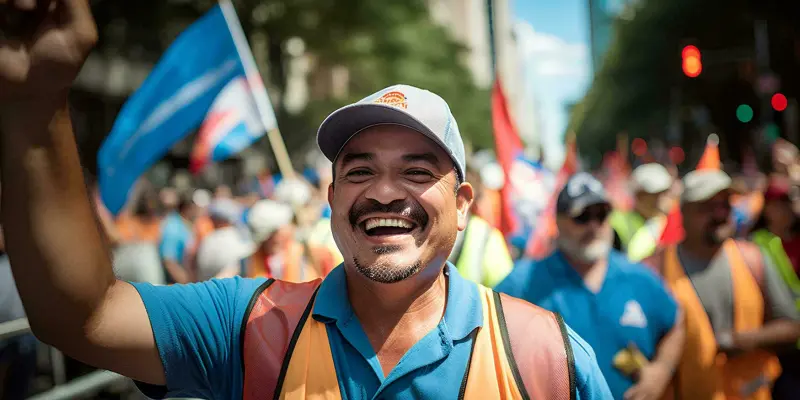
The National Labor Relations Board (NLRB) has recently made a groundbreaking decision to prohibit “captive audience” meetings, marking a significant shift in labor relations policy. This decision overturns a precedent that has been in place for over seven decades, fundamentally altering the landscape for employers, employees, and union organizing efforts in the United States. Captive audience meetings have long been a point of contention, where employers could mandate employee attendance to express anti-union sentiments. With the new ruling, the balance of power in workplace organizing campaigns takes on a whole new dimension, highlighting the continuous impact of political tides on labor laws.
Historic Decision
On November 13, 2024, the NLRB voted to ban captive audience meetings, a decision that stands out as a landmark ruling in labor relations. The vote was split along party lines, underscoring the deep political divisions that often influence labor policy. By overturning 76 years of precedent originating from the 1948 case of Babcock & Wilcox Co., the Board has significantly changed the tools available to employers during union organizing campaigns. These gatherings were one of the few avenues available to employers to counteract union organizing efforts, intended to directly communicate their stance to employees. However, the Board’s recent ruling deems these meetings an “extraordinary exercise and demonstration of employer power,” suggesting that they undermine the intent of the National Labor Relations Act (NLRA) to ensure employees are free from such domination.
The historic ruling is seen by many as an effort to rebalance the scales in favor of employees, ensuring they can make unionization decisions without undue influence from their employers. While proponents of the decision argue it safeguards worker rights and promotes a fairer organizing process, critics contend that it removes a critical communication tool for employers. This deep divide not only reflects differing views on labor policy but also highlights the intense political undercurrents influencing such decisions. The Board’s vote, resting along party lines, further underscores how labor policies can oscillate dramatically with shifts in political power.
Captive Audience Meetings Defined
Captive audience meetings are defined as mandatory gatherings organized by employers during an organizing campaign to express views against unionization. Historically, these meetings allowed employers to directly address their workforce, emphasizing the potential downsides of union representation. However, the NLRB’s decision to ban these meetings rests on the belief that they exert undue pressure on employees, thereby compromising their ability to make free and informed decisions regarding union representation. This perspective aligns with the views of labor advocates who have long argued that such meetings create a coercive environment, fundamentally at odds with the principles enshrined in the NLRA.
The ruling suggests that captive audience meetings inherently involve an unlawful threat to employees, as non-attendance could lead to discipline or other reprisals. Jennifer Abruzzo, the General Counsel of the NLRB, has been a vocal critic of these meetings, framing them as a practical manifestation of employer intimidation. In an April 2022 memorandum, Abruzzo argued that captive audience meetings undermine the principles of the NLRA by fostering an atmosphere of coercion and intimidation. Her influence is palpable in the Board’s decision, reflecting a broader intent to protect employee autonomy during union drives. The ban’s proponents believe this ruling will foster a more equitable environment where employees can make union-related decisions without fear of employer retribution.
Opposition from the General Counsel
Jennifer Abruzzo, the General Counsel of the NLRB, has played a significant role in shaping the Board’s recent decision. Her strong opposition to captive audience meetings was clearly articulated in an April 2022 memorandum where she argued that these meetings inherently involve an unlawful threat to employees. Abruzzo suggested that non-attendance at these meetings could lead to discipline or other reprisals, creating a coercive environment that undermines the intent of the NLRA. Her stance has had a profound influence on the Board’s recent decision, highlighting the importance of the General Counsel’s role in shaping labor policy. This decision marks a significant victory for pro-labor advocates and reflects a broader trend towards protecting employee rights in the workplace.
Abruzzo’s arguments have resonated with the Board, culminating in the historic ruling that now prohibits captive audience meetings. This move is seen as a crucial step in ensuring that employees can exercise their rights without experiencing fear or coercion. Her influence underscores the critical role that the General Counsel’s office plays in directing the NLRB’s priorities and actions. By articulating a clear, legally grounded opposition to captive audience meetings, Abruzzo has managed to reshape the discourse around workers’ rights and the appropriate boundaries of employer influence. This decision is not just a rejection of a long-standing practice but a broader affirmation of the need to scrutinize power dynamics in the workplace.
Dissenting Opinions
Despite the Board’s decision, there was notable dissent from Member Kaplan, who challenged the NLRB’s authority to prohibit captive audience meetings. Kaplan argued that the Board lacks the power to impose such a ban, emphasizing that the right to hold these meetings is constitutionally protected. He contended that circumventing this right to serve other goals is an overreach of the Board’s authority. Kaplan’s dissent highlights the ongoing debate over the balance of power between employers and employees in the context of union organizing. His arguments suggest that the prohibition of captive audience meetings may face legal challenges, as opponents of the ruling seek to defend the rights of employers to communicate their views on unionization.
Implications for Employers
The ban on captive audience meetings has significant implications for employers, who must now navigate new restrictions during union organizing campaigns. Despite the prohibition, employers still retain the right to hold voluntary group meetings, provided they meet specific conditions. These conditions include informing employees in advance that the meeting is voluntary, ensuring there are no negative consequences for non-attendance, and not taking attendance. Employers must also ensure that union-related topics are not included in mandatory work-related meetings. This requirement aims to protect employees from coercion and ensure that their decision-making process regarding union representation is free from undue influence.
The new guidelines present a challenge for employers, who must carefully navigate the legal landscape to avoid potential violations of the NLRA. Failure to comply with these guidelines can result in legal consequences and further scrutiny from labor boards, making it imperative for employers to understand and adapt to the new regulations swiftly. The burden now lies on employers to find effective and lawful ways to communicate their perspectives on unionization without infringing upon employee rights. This balancing act will require meticulous planning and a thorough understanding of labor laws, signifying a new era of cautious and compliant engagement with union organizing efforts.
Shift in Political Power
The changes in the NLRB reflect a broader trend of political influence on labor laws. The recent decisions align with the political stance of the current administration, highlighting the impact of presidential transitions on the Board’s composition and rulings. With President Biden’s administration, significant shifts in board decisions have favored pro-labor policies. However, the political landscape continues to evolve, as seen with President Trump’s return to office in 2025. President Trump’s administration has already signaled a willingness to roll back many of the pro-labor decisions made in recent years, including the ban on captive audience meetings. Immediate moves to reshape the Board, including appointing Marvin Kaplan as Chairman and the anticipated termination of General Counsel Jennifer Abruzzo, portend further shifts in labor policy.
This political volatility underscores the susceptibility of labor laws to the ebb and flow of political power. These changes often lead to a pendulum effect, where policies swing between pro-labor and pro-employer stances, depending on the administration in power. Businesses and unions alike must remain vigilant and adaptable, as the legal landscape of labor relations is continually reshaped by the prevailing political winds. The firing of Board member Gwynne Wilcox and the creation of a temporary lack of quorum on the Board add to the current uncertainty, suggesting that the near future will be fraught with legal challenges and adjustments in response to the shifting policies.
The Future of Captive Audience Meetings
The National Labor Relations Board (NLRB) has recently made a landmark decision to ban “captive audience” meetings, marking a major shift in labor relations policy. This ruling overturns a precedent that has stood for over seventy years and substantially changes the dynamics for employers, employees, and union organizing efforts in the United States. Captive audience meetings have long been a contentious issue, where employers could require employees to attend sessions to express anti-union views. With the new decision, the balance of power in workplace organizing campaigns is fundamentally altered, adding a new layer of complexity to labor laws. This development underscores the ongoing influence of political changes on labor legislation in the country. By prohibiting these mandatory meetings, the NLRB aims to provide a more equitable platform for union activities and employee rights, reflecting evolving perspectives on labor relations and workers’ rights. This decision could herald significant changes in how labor movements progress and how employers handle unionization efforts.