

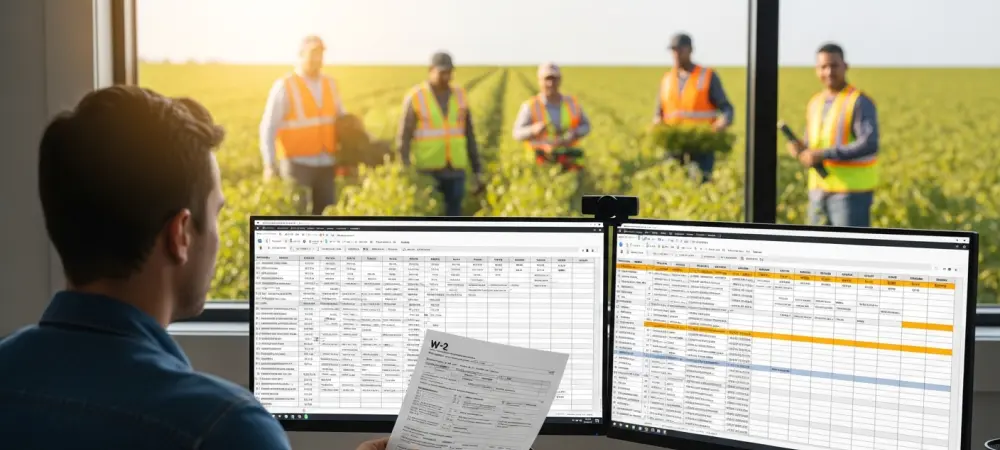
The ongoing transformation of the American agricultural landscape has elevated the H-2A temporary agricultural worker program from a secondary contingency into a vital infrastructure component for modern farms. As domestic labor shortages persist across the United States in 2026, agricultural producers are increasingly turning to this visa program to secure the reliable workforce necessary for planting, harvesting, and livestock management. This reliance, while essential for food security and operational continuity, introduces a dense layer of federal payroll and tax regulations that diverge significantly from standard domestic employment laws. Employers who fail to recognize these distinctions face considerable financial risks, including back taxes, interest, and substantial penalties from the Internal Revenue Service and the Department of Labor. Success in the current economic climate requires a deep understanding of how H-2A workers fit into the broader fiscal framework, moving beyond simple payroll processing to a more comprehensive strategy of regulatory alignment and proactive documentation.
Foundational Status: Payroll Classifications and Tax Exemptions
Employee Classification: Avoiding the Independent Contractor Pitfall
A fundamental requirement for maintaining a compliant H-2A program is the proper classification of the workforce under federal tax guidelines, which explicitly define these individuals as employees. Within the agricultural sector, there is sometimes a misconception that temporary or seasonal workers can be treated as independent contractors to simplify administrative burdens and avoid payroll taxes. However, the Internal Revenue Service applies a “right to control” test that almost always classifies H-2A workers as employees because the farm operator dictates the hours, provides the necessary tools, and oversees the specific methods of production. Consequently, every dollar paid to an H-2A worker must be documented and reported on a Form W-2 at the end of the year, rather than a Form 1099-NEC. Treating these seasonal professionals as outside the standard payroll system is a high-risk error that can trigger a comprehensive audit of the entire operation, potentially leading to the reclassification of other workers and the assessment of unpaid employment taxes dating back several years.
Beyond the basic classification, agricultural employers must also ensure that all compensation is correctly captured on Form 943, which is the specialized annual federal tax return for agricultural employees. Unlike general business employers who use Form 941 on a quarterly basis, the agricultural community utilizes Form 943 to consolidate their tax reporting for the entire calendar year. This distinction is critical because the software systems used for general business payroll often default to quarterly filings, which can lead to significant clerical errors when applied to a farm’s specialized labor pool. Maintaining separate ledgers for H-2A labor and domestic staff ensures that the specific exemptions and reporting mandates for visa holders do not get lost in a generalized system. As the industry continues to move through 2026 and into 2027, the precision of these records serves as the first line of defense during routine inspections by the Department of Labor’s Wage and Hour Division, which has increased its scrutiny of seasonal labor contracts.
FICA Exclusions: Capitalizing on Social Security and Medicare Savings
The most significant financial incentive for utilizing the H-2A program is the total exemption from Social Security and Medicare taxes, collectively referred to as FICA under the Internal Revenue Code. Specifically, Section 3121(b)(1) provides that service performed by foreign agricultural workers lawfully admitted to the United States on a temporary basis to perform agricultural labor is excluded from the definition of “employment” for FICA purposes. This exemption provides a substantial cost-saving measure for both the employer and the employee, as neither party is required to pay the 7.65% tax normally assessed on wages. For a large-scale operation with dozens of seasonal workers, this reduction in the total tax burden can translate into tens of thousands of dollars in retained capital that can be reinvested into farm technology or infrastructure. It is essential, however, that payroll managers manually verify that these taxes are not being withheld, as many automated payroll platforms are not pre-configured to recognize the specific FICA-exempt status of H-2A visa holders.
Confusion regarding this exemption frequently arises when an H-2A worker remains in the country for an extended duration or returns for multiple seasons, potentially triggering “resident alien” status for income tax purposes under the Substantial Presence Test. It is vital to understand that the FICA exemption for H-2A workers is tied to the specific visa type and the nature of the agricultural work being performed, rather than the worker’s residency status for income tax filing. Even if a worker is classified as a resident alien because they have spent more than 183 days in the United States over a three-year period, they remain exempt from Social Security and Medicare taxes as long as they are performing agricultural labor under the H-2A program. This nuance is often missed by general accounting firms, leading to overpayment of taxes that are difficult to recover once submitted to the federal government. Employers must maintain a rigorous protocol to ensure that the FICA exemption is applied consistently regardless of the worker’s individual tax residency calculations.
Administrative Mandates: Withholding and Reporting Requirements
FUTA Thresholds: Managing Indirect Costs for Domestic Labor
While the wages paid to H-2A workers are generally exempt from the Federal Unemployment Tax Act (FUTA), these employees still play a complicated role in determining an employer’s overall tax liability. Under current regulations, an agricultural employer becomes liable for FUTA taxes if they paid cash wages of $20,000 or more to farmworkers in any calendar quarter or if they employed 10 or more farmworkers during at least some portion of a day in 20 different weeks. Critically, H-2A workers are counted toward these “employee count” and “wage total” thresholds, even though the actual tax is not paid on their specific wages. This means that hiring a large team of H-2A workers can inadvertently push a small farm over the threshold, making the employer liable for FUTA taxes on the wages of all their domestic, non-H-2A employees. This indirect cost must be factored into the initial budgeting phase of the labor season to avoid unexpected year-end tax liabilities that could disrupt cash flow.
Navigating these thresholds requires a strategic view of the labor calendar, especially as operations expand their headcount to meet the demands of the 2026 growing season. If a farm is close to the threshold of 10 workers for 20 weeks, the administrative decision to hire one additional H-2A worker for a short period could trigger a 6.0% tax on the first $7,000 of every domestic employee’s wages. Although the effective FUTA rate is often reduced to 0.6% after state unemployment tax credits are applied, the cumulative cost for a large domestic staff can be significant. Employers should utilize specialized agricultural accounting software to track these metrics in real-time, allowing for better-informed hiring decisions that balance the need for labor with the resulting tax implications. By understanding that H-2A workers are “countable” but not “taxable” for FUTA purposes, producers can more accurately forecast their total cost of employment and manage their domestic payroll more effectively throughout the fiscal year.
Voluntary Reporting: Handling Income Tax and Missing Credentials
Federal income tax withholding for H-2A workers is unique because it is entirely voluntary, meaning the employer is not required to withhold these taxes unless the worker specifically requests it. For a withholding agreement to be valid, both the employer and the worker must agree to the arrangement, and the worker must provide a properly completed Form W-4. When completing this form, H-2A workers must follow specific rules designed for nonresident aliens, which generally require them to check the “Single” or “Married Filing Separately” status regardless of their actual marital status and prohibit them from claiming certain deductions. Many workers prefer voluntary withholding to avoid the burden of a large, unexpected tax bill when they file their annual returns, but it places an additional administrative responsibility on the farm’s payroll department to ensure the math is calculated correctly according to the unique nonresident alien protocols.
A common administrative hurdle in the H-2A process is the delay in receiving Social Security Numbers for new workers arriving from abroad. Agricultural employers are often tempted to delay payroll or misclassify workers as contractors while waiting for these credentials to arrive, but both actions violate federal labor and tax laws. The Internal Revenue Service provides specific guidance for this scenario, allowing employers to pay workers and report their wages using the worker’s visa information or a copy of their Social Security application while the permanent number is being processed. Furthermore, it is important to distinguish between taxable wages and the reimbursement of mandatory recruitment costs. Under the Fair Labor Standards Act and H-2A program rules, the employer is responsible for costs such as visa fees and border crossing expenses. These payments are considered employer business expenses rather than taxable income to the worker, and they should not be included in the gross wage calculation on the W-2 or subjected to any form of tax withholding.
Regional Variables: State Codes and Non-Cash Compensation
Local Jurisdictions: Aligning State Laws with Federal Guidelines
The consistency of federal tax exemptions for H-2A workers does not always extend to the state level, creating a patchwork of compliance requirements that vary by geography. Some states choose to mirror the federal tax code, granting H-2A workers exemptions from state income tax withholding and state unemployment insurance (SUI) contributions. However, other jurisdictions may mandate that all agricultural workers, regardless of their visa status, be covered by the state’s unemployment safety net or have state taxes withheld from every paycheck. For agricultural operations that move across state lines or have facilities in multiple regions, this discrepancy requires a highly localized approach to payroll configuration. A company that operates in a state with strict withholding laws must ensure their payroll system is updated to handle these local requirements while simultaneously maintaining the federal FICA exemption, a dual-track process that can be difficult to manage without specialized expertise.
In addition to income tax and unemployment insurance, some states have introduced specific labor laws that affect the net pay of H-2A workers, such as mandatory contributions to paid family leave or disability insurance funds. While these are not technically taxes in the traditional sense, they are often administered through the payroll system and require careful documentation to ensure the worker is not being overcharged and the employer is not out of compliance. As we move through 2026, many states are updating their agricultural labor statutes to provide more protections and benefits, often narrowing the gap between domestic and foreign worker regulations. Producers should conduct a comprehensive review of the state-specific tax and labor codes for every location where their H-2A employees perform work. Engaging with a local tax consultant or an agricultural labor association can provide the necessary insights to avoid regional penalties that could jeopardize the farm’s ability to participate in the H-2A program in future seasons.
Taxable Fringe Benefits: Documenting Housing and Transportation Costs
The provision of fringe benefits, such as housing, meals, and transportation, is a mandatory component of the H-2A program, yet the tax treatment of these benefits is subject to strict Internal Revenue Code standards. Housing provided to H-2A workers is generally excluded from taxable income under Section 119, provided that the housing is located on the employer’s business premises, is furnished for the convenience of the employer, and is a condition of employment. Because H-2A rules require the employer to provide housing at no cost to workers who cannot reasonably return to their permanent residence each day, these conditions are typically met. However, if an employer provides a housing allowance or pays for off-site hotel rooms without maintaining proper documentation, the value of that benefit could be reclassified as taxable wages. This reclassification would not only increase the tax burden for the worker but could also lead to accusations of underreporting wages, which carries severe legal implications.
Transportation costs and meal stipends also require meticulous record-keeping to maintain their non-taxable status. For transportation reimbursements to be excluded from a worker’s gross income, they must be managed through an “accountable plan,” which requires the employee to provide receipts or documentation of the expenses and the employer to only reimburse for actual business-related travel. If an employer simply pays a flat, undocumented travel stipend, that money may be viewed as supplemental wages subject to income tax withholding. Furthermore, as workers spend more time in the country, the Substantial Presence Test must be monitored to determine if they transition to resident alien status, which can change their eligibility for certain tax treaty benefits. Maintaining a rigorous pre-season audit of all payroll software and educating workers on their withholding options during the onboarding process are the most effective ways to ensure long-term stability and compliance in this increasingly complex regulatory environment.
Strategic Adaptation for Agricultural Compliance
Producers who successfully navigated the complexities of the 2026 labor season recognized that H-2A compliance was not a static task but a continuous process of adjustment and verification. By the time the harvest was completed, the most efficient operations had already implemented automated tracking systems that integrated visa expiration dates, FICA exemption toggles, and state-specific withholding rules into a single interface. These managers found that early intervention—specifically during the onboarding phase—minimized the need for corrective filings and protected the farm from the financial volatility of late-season audits. They also prioritized clear communication with their workforce, ensuring that every employee understood why Social Security taxes were not being taken out and how voluntary withholding could impact their final take-home pay. This transparency fostered a more stable labor environment and reduced the administrative friction that often accompanies international recruitment.
Looking toward the upcoming cycles of 2027 and 2028, the focus shifted from basic compliance to the optimization of labor costs through advanced fiscal planning. Farmers who analyzed their FUTA thresholds in advance were able to structure their domestic and H-2A hiring windows to minimize tax liabilities without sacrificing the man-hours needed for peak production. They also refined their documentation for fringe benefits, ensuring that every housing and transportation expense was tied to a clear business purpose and supported by the necessary receipts to withstand IRS scrutiny. By treating the H-2A program as a sophisticated financial instrument rather than just a source of manual labor, these agricultural leaders secured a competitive advantage in a tight market. The lessons learned from this period demonstrated that in the modern agricultural economy, the ability to manage a compliant and cost-effective payroll is just as important as the ability to manage the land itself.