

Faced with an unexpected 60-day layoff notice in the dead of winter, one marketing professional transformed a period of profound uncertainty into a case study on navigating the modern job market with unprecedented efficiency. This was not a story of luck, but of a meticulously crafted, data-driven strategy that leveraged artificial intelligence to turn a two-month countdown into a swift victory. The journey from redundant to re-employed in just a few weeks reveals a powerful new blueprint for job seekers aiming to conquer an increasingly automated and competitive landscape, proving that the right tools and tactics can dramatically shorten the path to a new role.
The 60-Day Countdown Turning a Layoff Notice into a Launchpad
The initial shock of a mid-January layoff notice quickly gave way to a calculated plan of action. Instead of succumbing to the anxiety that often accompanies such news, this professional viewed the 60-day window not as a deadline for departure, but as a runway for their next career launch. The core challenge was clear: how to cut through the noise of a saturated job market where thousands of applicants vie for the same positions. The solution lay in rejecting traditional, high-volume application methods in favor of a structured, tech-driven strategy designed for maximum impact and minimum wasted effort.
This modern approach fundamentally rethinks the job search process. By integrating AI from the very beginning, the goal was to systematize every step, from resume creation to interview preparation. The central question driving this experiment was whether such a methodical system could drastically shorten the time it takes to secure a quality position. The results demonstrated that by converting the job hunt into a series of strategic, data-informed decisions, a candidate can move from the sidelines to the payroll in record time, setting a new standard for job-seeking in 2026.
Why a Data-Driven Job Hunt Is No Longer Optional
The modern job applicant faces a formidable opponent: the digital black hole. Industry data reveals that over 75% of resumes are automatically filtered out by Applicant Tracking Systems (ATS) before a human recruiter ever sees them. This reality renders the old “numbers game” obsolete, where success was measured by the quantity of applications sent. In this environment, a scattergun approach of sending a generic resume to hundreds of openings is a recipe for frustration and burnout, as most applications are destined for an electronic void.
The paradigm has shifted toward quality over quantity. A successful job hunt now relies on strategic, precision-targeted applications that are tailored to bypass automated gatekeepers and resonate with human decision-makers. This requires a new toolkit where artificial intelligence is not merely a novelty but an essential co-pilot. Integrating AI allows job seekers to analyze job descriptions, optimize application materials for keywords, and focus their energy only on roles where they have a high probability of success, transforming the search from a game of chance into a strategic campaign.
The Strategic Playbook Deconstructing the Winning Formula
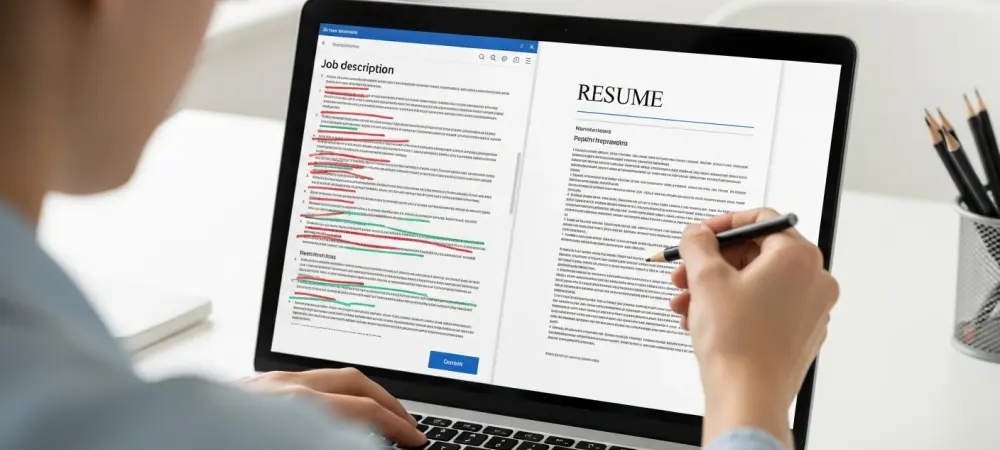
The foundation of this successful strategy was an AI-optimized master resume. Before a single application was sent, a comprehensive inventory of all past tasks, projects, and accomplishments was compiled. This raw data was fed into ChatGPT, which was prompted to act as a career coach. The AI then generated concise, action-oriented bullet points and, critically, identified and eliminated duplicate phrasing and redundant information that could be flagged by sophisticated ATS algorithms. This master document became a dynamic resource from which a unique, keyword-rich resume was tailored for each specific application, ensuring it spoke directly to the needs outlined in the job description.
With a powerful resume ready, the focus shifted from mass applications to precision targeting. The search was prioritized to favor local, hybrid, and newly posted jobs—specifically those less than 48 hours old—to capitalize on the window when recruiters are most engaged. Before applying, each job description was analyzed by AI to generate a “fit score” against the candidate’s master resume. Only roles that met an 80% or higher threshold were pursued. This disciplined filtering was supplemented by a multi-channel outreach strategy, where formal portal applications were followed by personalized messages to recruiters and hiring managers on professional networks, creating multiple touchpoints for each high-potential opportunity. The final piece of the playbook was rehearsing for success through AI-powered interview simulations. By feeding ChatGPT the job posting, the company’s website content, and the LinkedIn profiles of the interviewers, a realistic mock interview panel was created. The AI generated a series of behavioral and technical questions tailored to the specific role and company culture. The candidate practiced their answers, received an AI-driven score, and obtained concrete suggestions for refinement. This process demystified the interview, building immense confidence and reducing anxiety by allowing the candidate to anticipate questions and prepare compelling, company-specific responses.
The Human Element Insights from the Front Lines
The tangible results of this methodical approach speak for themselves. Out of 46 meticulously tracked applications, the strategy yielded nine initial interviews, which ultimately culminated in one successful job offer. This conversion rate stands in stark contrast to the hundreds or even thousands of applications typically required in a conventional job search. The efficiency gained by focusing only on high-fit roles was a significant factor. “By using AI to score job fits and customize my resume, I focused my energy only on roles where I had a genuine chance, which saved me from application burnout,” the professional noted, highlighting the mental and emotional benefits of the targeted system.
The impact of technology on interview performance was particularly transformative. The preparation went far beyond simply reading about the company. “The AI simulation was a game-changer,” the job seeker recounted. “It caught weaknesses in my answers I would have never noticed, and I walked into the real interview feeling prepared for anything they threw at me.” This firsthand account underscores how AI can bridge the gap between knowing one’s qualifications and effectively communicating them under pressure, turning a potentially stressful encounter into a confident conversation.
Your Action Plan Implementing the ChatGPT Job Hunt Method
To replicate this success, the first step is a comprehensive resume and ATS audit. Begin by prompting an AI tool like ChatGPT to act as a career coach, instructing it to analyze your current resume for redundant phrases, passive language, and overall compatibility with applicant tracking systems. Concurrently, create a “master inventory” document listing every skill, accomplishment, and responsibility from your career history. This repository will serve as the central source from which you will pull relevant, tailored information for each individual application, ensuring every submission is optimized. Next, implement a high-fit application strategy by setting up targeted alerts on platforms like LinkedIn, ZipRecruiter, and HiringCafe. Filter these alerts to prioritize roles posted within the last 24 to 48 hours to maximize visibility. For each promising role, use AI to analyze the job description against your master inventory, generating a fit score and extracting the employer’s key pain points. This analysis becomes the blueprint for your customized resume and a cover letter that directly addresses the company’s specific needs, positioning you as an ideal solution.
Finally, success hinges on establishing a disciplined daily routine that also prioritizes well-being. Commit to submitting three to five high-quality, targeted applications per day rather than dozens of generic ones. Dedicate scheduled time for proactive engagement on professional networks like LinkedIn to build your visibility. Crucially, enforce a strict 5 p.m. log-off and incorporate physical activity into your day. This structure was essential for maintaining the mental and emotional resilience needed to perform at a high level throughout the job search, proving that a healthy routine was as important as any technological tool.