

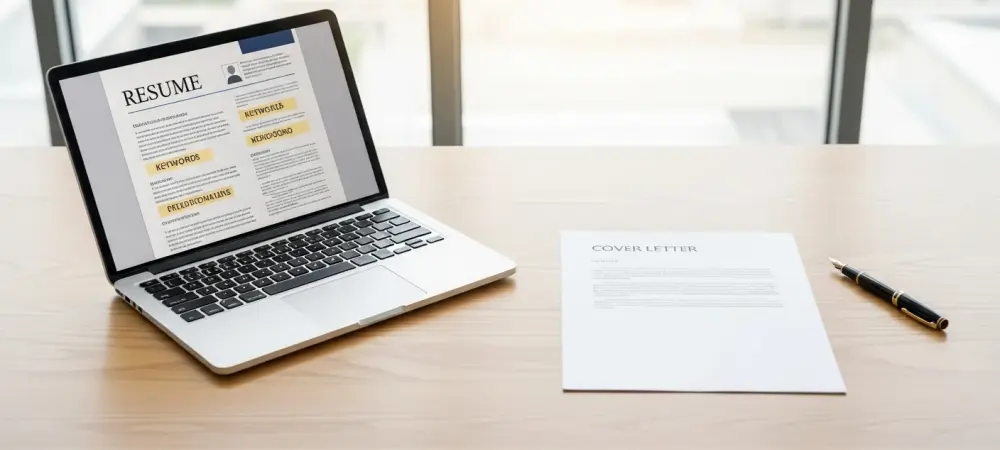
A single, explosive social media post questioning the modern-day relevance of cover letters has managed to crystallize the collective anxiety of job seekers everywhere, sparking a widespread and passionate debate about a long-standing professional tradition. The ensuing discussion pulled back the curtain on the opaque world of hiring, revealing a stark divide between those who see the cover letter as an essential narrative tool and others who dismiss it as an archaic formality. This article delves into the heart of this conflict, exploring the arguments from all sides, the tactical shifts in application strategies, and the situational realities that dictate whether this document is a career-making asset or a frustrating waste of time. It examines the intense confusion applicants face while navigating a job market filled with contradictory advice, offering a comprehensive look at one of the most contentious topics in today’s professional landscape.
The Application Black Hole: Why a Viral Post Ignited a Fierce Debate Over Cover Letters
The debate erupted from a viral Reddit post where a user detailed a personal experiment: after months of sending meticulously crafted cover letters with little success, they abandoned them entirely. Instead, they focused solely on optimizing their resume with keywords from the job description. The result, they claimed, was a dramatic increase in interview callbacks. This personal anecdote struck a chord with thousands, becoming a digital rallying cry for job seekers exhausted by the feeling of sending applications into a void. The post tapped into a deep-seated suspicion that these carefully written letters—often poured over for hours—were simply not being read by overwhelmed recruiters or were being filtered out by automated systems before ever reaching human eyes.
This conversation is more than just a complaint about a single document; it represents a major source of anxiety for anyone navigating the modern job market. Applicants are caught in a difficult position, grappling with whether to invest significant time and emotional energy into a personalized pitch or to adopt a high-volume, data-driven approach. The lack of a clear industry standard leaves many feeling like they are guessing at the rules of a game where the stakes are incredibly high. The debate’s intensity highlights a desperate search for clarity and efficiency in a hiring process that often feels impersonal and overwhelmingly complex.
The following sections will provide an in-depth exploration of this professional conundrum. It will break down the compelling arguments for why cover letters are considered obsolete by many, contrasted with the powerful instances where they have been the deciding factor in securing a job. Furthermore, the discussion will address the rise of new application tactics, including the use of AI, and analyze the situational factors that ultimately determine the value of this traditional yet embattled professional document.
Dissecting the Divide: Conflicting Voices in the Hiring Process
The ‘Victorian-Era Essay’: Why Many Are Declaring the Cover Letter Obsolete
The most potent argument against the cover letter is that it is an inefficient and outdated formality in an era defined by high-volume digital applications. Proponents of this view frame the document as a “Victorian-era essay” that is ill-suited for the pace of modern recruitment. In a system where a single job posting can attract hundreds of applicants, the belief is that recruiters simply do not have the time to read through paragraphs of prose for every candidate. Instead, they are more likely to perform a quick scan of the resume for essential qualifications and keywords, making the cover letter a superfluous attachment.
This perspective is bolstered by data-driven anecdotes, such as the one from the viral Reddit post, which suggest a higher callback rate can be achieved by focusing exclusively on resume optimization. This strategy treats the application process as a technical challenge rather than a creative one. The goal becomes aligning a resume’s language with the job description to successfully pass through Applicant Tracking Systems (ATS) and catch a recruiter’s eye in the crucial first few seconds of review. From this viewpoint, spending hours on a cover letter that may never be read is a poor return on investment, and a job seeker’s time is better spent applying to more positions with a perfectly tailored resume.
More Than a Formality: When a Personalized Narrative Makes All the Difference
In direct contrast, a significant contingent of professionals maintains that a well-crafted cover letter remains one of the most powerful tools for differentiation. While a resume lists qualifications, a cover letter tells a story, connecting a candidate’s experience to the company’s mission and the specific challenges of the role. This narrative element can be the very thing that makes an applicant stand out from a sea of similarly qualified candidates. Many hiring managers have shared stories of how a compelling, insightful, or even humorous cover letter directly led them to offer an interview to a candidate they might have otherwise overlooked.
The value of a cover letter is often highly industry-specific. In creative fields, for instance, it serves as a sample of a candidate’s writing ability and personality. In the nonprofit sector, it is considered crucial for assessing an applicant’s passion and genuine alignment with the organization’s cause, qualities that cannot be easily conveyed through a list of past job duties. For career changers, the cover letter provides an indispensable space to explain their transition and connect their seemingly unrelated past experiences to their future aspirations, bridging a gap that a resume alone cannot.
Navigating the ‘Hiring Hellscape’: The Crippling Effect of Contradictory Advice
The most frustrating aspect of the cover letter debate is the profound lack of a clear industry standard, which leaves job seekers caught in a crossfire of contradictory advice. For every recruiter who dismisses cover letters on a public forum, another hiring manager will state that they refuse to consider an application without one. This creates a deeply unpredictable and stressful environment where applicants are forced to gamble with their time and effort on every single application. The absence of consensus has led many to describe the job search as a “hiring hellscape” where the rules are constantly changing.
This chaotic reality challenges the very idea of a one-size-fits-all application strategy. A job seeker might meticulously tailor a cover letter for their dream job, only for it to be ignored, while a quick, resume-only application to another company lands them an interview. This inconsistency makes it nearly impossible for applicants to develop a reliable method, forcing many into a state of perpetual second-guessing. The core issue is that the perceived importance of a cover letter often comes down to the personal preference of an individual recruiter or hiring manager, an unknown variable that the applicant cannot control.
The Rise of the AI-Generated Letter: Procedural Checkbox or Strategic Tool?
The dawn of sophisticated AI writing tools has introduced a new dimension to the cover letter debate. Job seekers can now generate a passable, customized letter in seconds, fundamentally changing its purpose. What was once a deeply personal statement has, for many, become a procedural hurdle to be cleared with maximum efficiency. This trend raises a critical question: if a cover letter is required but can be created by a machine, what value does it truly hold? The practice suggests many now view it as a mere checkbox to be ticked in the application process.
This shift also intersects with the growing role of automation in hiring. There is speculation that Applicant Tracking Systems may scan cover letters for keywords or to check for consistency with the resume, making its presence, if not its prose, technically necessary. Consequently, the act of submitting a cover letter—regardless of how it was generated—may now be perceived by some systems or recruiters simply as a signal of a candidate’s thoroughness and effort. The AI-generated letter thus occupies a strange middle ground, serving as a low-effort way to satisfy a potential requirement without investing the time the document was originally intended to demand.
Crafting a Modern Application Strategy: A Practical Guide for Today’s Job Seeker
The intense debate ultimately reveals that the value of a cover letter is not absolute but highly situational. Its importance hinges on a combination of factors, including the industry, the size of the company, and the specific requirements of the role. In creative, mission-driven, or communication-heavy fields, a thoughtful letter remains a critical asset. Conversely, for high-volume technical roles at large corporations, the focus is more likely to be on the quantifiable skills listed on a resume. Acknowledging this nuance is the first step toward building a more effective and less draining job search strategy. Therefore, today’s job seeker must become a strategist, deciding where to invest their limited time and energy for maximum impact. A practical approach involves creating a tiered system: for top-priority roles at companies one is passionate about, a fully customized, deeply researched cover letter is a worthwhile investment. For second-tier opportunities, a templated but still personalized letter might suffice. For long-shot or mass-market applications, focusing solely on resume optimization and perhaps including a brief introductory note in the application portal is the most efficient path. This method helps conserve energy while ensuring that the most effort is directed where it has the highest probability of making a difference.
The Enduring EnigmRedefining Value in an Evolving Job Market
The fierce and ongoing debate over the cover letter is not just about a single document; it is a symptom of the broader opacity and inconsistency plaguing the modern recruitment process. The lack of clear standards and communication from employers creates a breeding ground for confusion and anxiety, forcing applicants to rely on anecdotal evidence and conflicting advice to navigate their careers. The cover letter has become a focal point for this frustration because it represents a significant investment of a job seeker’s most valuable resources: time and hope. In this ambiguous landscape, the most critical skills for any job seeker are adaptability and strategic thinking. Rather than searching for a single, universal rule that does not exist, a more successful approach involves assessing each opportunity individually and tailoring the application effort accordingly. This means staying informed about industry norms, leveraging technology wisely, and protecting one’s own well-being by refusing to pour maximum effort into every single application.
Ultimately, this enduring enigma raises a thought-provoking question about where the responsibility for a solution truly lies. While job seekers continue to adapt their methods, perhaps the real path toward a more efficient and humane hiring process rests not with the applicants, but with employers. Providing clearer expectations in job postings about what they truly value in an application would not only demystify the process but also allow candidates to present their best, most relevant selves, benefiting everyone involved.