

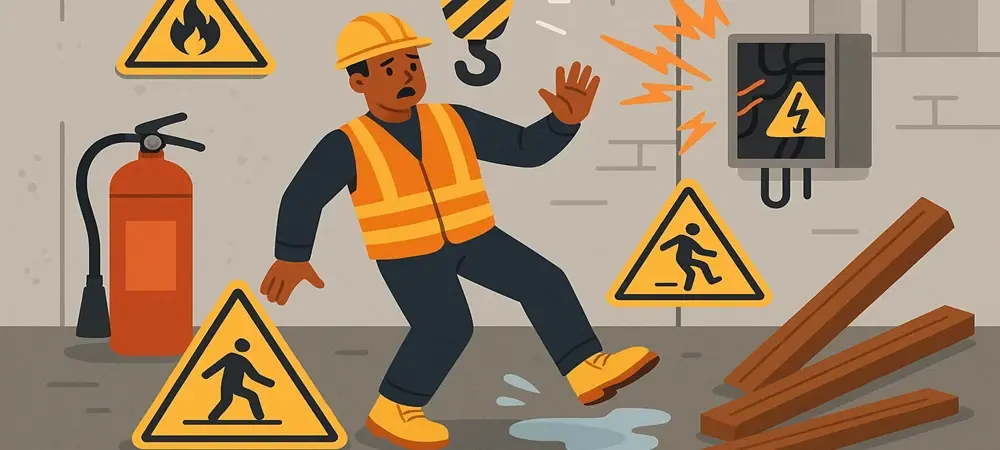
Recent technological advancements have opened up new possibilities for enhancing safety and cost-efficiency in workplaces, particularly in high-risk industries. Artificial Intelligence (AI) is at the forefront of this transformation, offering real-time safety and risk management solutions that traditional safety measures struggle to match. Voxel, a company specializing in AI for workplace safety, has successfully secured $44 million in Series B funding with the goal of advancing its innovative safety platform. This significant financial backing, led by NewRoad Capital Partners and supported by investors such as Eclipse, Rite Hite, and Tokio Marine, highlights the growing confidence in AI’s potential to revolutionize workplace safety and cost management. Voxel’s platform integrates seamlessly with existing security systems to offer real-time insights and predictive capabilities. This allows for substantial reductions in workplace incidents through the proactive identification of potential hazards and incident prevention, subsequently positioning AI as a transformative force in the future of workplace safety and operational costs.
Revolutionizing Workplace Safety
The protocols and strategies used in workplace safety are undergoing radical changes as AI functionality improves dramatically. Voxel’s platform exemplifies this shift by autonomously detecting and addressing unsafe behavior through the use of computer vision combined with AI. This approach shifts the paradigm from reactive to proactive management, and the data supporting its efficacy is compelling. The system not only promises a safer environment but has also demonstrated tangible results, with some sites experiencing a remarkable 91% reduction in recordable injuries. Beyond reducing injuries, Voxel’s platform supports improved financial management, as evidenced by a case where one site reported cost savings of $2.2 million over just two years. The global challenge of workplace safety remains substantial, as reports indicate around 2.78 million work-related deaths on an annual basis. These sobering statistics accentuate the insufficiencies of traditional safety protocols and underscore the urgent need for innovative solutions, making AI-driven platforms like Voxel’s indispensable allies in modern safety strategies. AI’s role in workplace safety extends beyond mere detection to include deep analytical insights that empower organizations to refine their safety programs and protocols continuously. Voxel’s strategic use of AI helps craft an environment where safety measures evolve based on real-time data and robust analytics. These solutions are not meant to replace human oversight but are designed to empower safety managers with comprehensive tools that enhance decision-making and operational efficiency. Industry leaders recognize Voxel not merely as a service provider but as a valued partner in safety and risk management, a sentiment that is reflected in their growing client base. The company has seen impressive market penetration, securing new Fortune 500 clients as it registers a substantial 147% year-over-year revenue growth. This growth highlights the increasing reliance on AI systems to deliver not just safety but also operational efficiency and cost savings—a nod to how AI will continue to shape the future of workplace environments.
Enhanced Efficiency and Cost Reduction
Integrating AI into workplace safety protocols does more than just prevent accidents; it leads to streamlined operations and significant cost efficiencies. Voxel’s pioneering platform not only provides predictive safety measures but also generates actionable insights that directly impact an organization’s bottom line. By optimizing safety protocols, the platform significantly reduces the frequency of accidents, thereby decreasing costs associated with workplace disruptions, legal challenges, and worker compensation. This dual benefit of enhanced safety and cost management is an attractive proposition for companies globally, especially those in high-risk industries seeking to maintain profitability while upholding stringent safety standards. The ability of AI to perform these functions consistently and effectively offers a seismic shift in traditional operational strategies, marking AI’s potential role as indispensable in optimizing both safety and cost-efficiency.
With the infusion of new capital, Voxel aims to further enhance its AI capabilities, refine computer vision models, and broaden its data insights. This advancement will not only solidify its market position but also expand its reach across various high-risk sectors. As Voxel continues to innovate, its platform’s capabilities will grow more robust, offering increasingly comprehensive solutions and reinforcing the critical role of AI in shaping future workplace environments. The company’s proactive approach is transforming organizations’ safety and operational strategies, ensuring that workplaces are not only safer but more financially prudent. This evolution is not confined to just preventing accidents but extends to fostering an overall ecosystem that supports sustainable industrial growth, setting new benchmarks in operational excellence through AI-driven solutions.
Looking Ahead in AI-Driven Safety
Recent advancements in technology are revolutionizing safety and cost-efficiency in workplaces, especially in high-risk sectors. At the forefront of this change is Artificial Intelligence (AI), offering real-time solutions in safety and risk management that traditional methods struggle to compete with. A standout in this field, Voxel, a company dedicated to AI-driven workplace safety solutions, has recently secured $44 million in Series B funding. This funding round, spearheaded by NewRoad Capital Partners and backed by investors like Eclipse, Rite Hite, and Tokio Marine, underscores the growing trust in AI’s ability to reshape workplace safety and cost management. Voxel’s platform flawlessly integrates with existing security systems, providing real-time insights and predictive analytics. This integration significantly curtails workplace incidents by proactively identifying and preventing potential hazards, all while positioning AI as a transformative influence on the future of workplace safety and operational efficiency.