

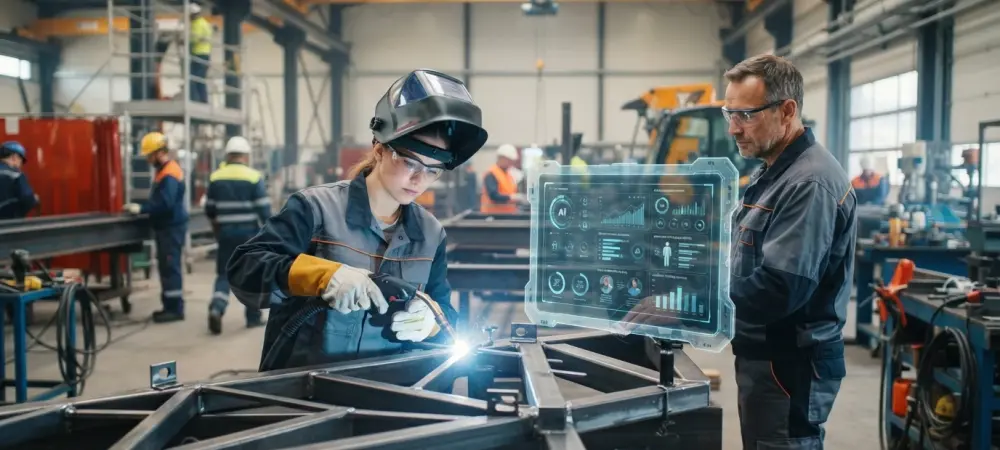
The days of relying on a grease-stained resume to judge a master electrician’s ability are rapidly coming to an end as digital ecosystems replace paper trails in the workshop. The traditional resume, a staple of hiring for decades, is proving to be an increasingly unreliable narrator in the high-stakes world of skilled trades. While a CV can list years of employment in HVAC or electrical work, it offers zero proof of a technician’s ability to troubleshoot a complex circuit or repair a commercial boiler under pressure. By 2027, the industry is set to undergo a radical shift as companies move away from static documents in favor of demonstrated knowledge. This transition, led by innovators like The Blue Collar Recruiter, marks the beginning of an era where what a candidate can actually do matters far more than what they claim to have done.
This shift represents a fundamental reconfiguration of how human talent is valued in the physical world. For too long, the blue-collar sector struggled with a disconnect between the tactical nature of the work and the administrative nature of the hiring process. Hiring managers often found themselves gambling on a candidate’s competence, only to discover deficiencies after a technician was already dispatched to a job site. The movement toward a more empirical vetting process ensures that the focus remains on the quality of the workmanship, which is the true currency of the trades.
The End of the “Paper Professional” in the Blue-Collar World
The shift away from traditional documentation is not merely a matter of convenience but a necessity born of the unique demands of technical labor. In the past, a well-formatted resume could mask a lack of fundamental skills, leading to a phenomenon known as the paper professional. These individuals looked excellent on paper but struggled when faced with the unpredictable variables of a residential plumbing emergency or a commercial electrical failure. By 2027, the industry has recognized that the only way to stabilize the workforce is to replace these narratives with verifiable performance data.
As specialized recruitment firms integrate more sophisticated testing into their initial screening, the definition of a qualified candidate is changing. Instead of focusing on where someone worked, employers are now looking at how someone performs. This transparency benefits both the employer and the highly skilled laborer, as it allows top-tier talent to stand out based on their technical merit rather than their writing skills. This evolution is effectively bridging the gap between historical experience and current capability.
Bridging the Gap Between Technical Mastery and Digital Vetting
As the labor market for skilled trades becomes more competitive, the cost of a bad hire is skyrocketing. Service-based businesses cannot afford the downtime or the safety risks associated with technicians who lack the necessary field experience. The challenge has always been the manual nature of vetting; recruiters have historically spent countless hours scanning for keywords that may or may not reflect reality. The emergence of specialized AI tools represents a response to this inefficiency, aiming to solve the unique problems of industries like plumbing, facilities maintenance, and residential HVAC.
The focus is shifting toward candidate intelligence, which is a marriage of high-tech data and human expertise designed to stabilize the workforce. By utilizing sophisticated algorithms to analyze how a technician approaches a problem, companies can predict field performance with a level of accuracy that was previously impossible. This predictive power allows businesses to hire with confidence, knowing that the person they are bringing onto the team has already proven their technical mastery in a controlled, digital environment.
Core Pillars: The 2027 AI Recruitment Ecosystem
The recruitment landscape is now built upon several core pillars that ensure a higher standard of technician quality. AI is moving beyond simple keyword matching to analyze a candidate’s professional history in direct correlation with their performance on trade-specific assessments. This ensures that a Master Electrician label is backed by verified technical proficiency rather than just tenure. Instead of broad-spectrum sourcing, new platforms use granular requirements to generate a compatibility score. This allows hiring managers to prioritize applicants who are a precise fit for the specific nuances of a role, such as multi-family maintenance versus industrial repair.
Integrity-driven assessment environments have also become a standard part of the process. To ensure remote testing remains a valid measure of talent, AI platforms now incorporate rigorous monitoring features, such as tab-switch tracking and timed segments. These tools prevent external assistance, ensuring the data collected is an honest reflection of the candidate’s abilities. Additionally, predictive skills gap analysis allows companies to identify exactly where a candidate might need additional training, enabling them to build customized onboarding plans before the new hire’s first day on the job.
Expert Perspectives: The “Intelligence Layer”
Industry leaders, including TBCR CEO Troy Latuff, emphasize that the goal of AI integration is to provide intelligence rather than just information. There is a strong consensus that AI will not replace the human recruiter but will instead act as a supportive layer that removes guesswork from the equation. By synthesizing technical scores, resume history, and job-match percentages into a single, digestible Comprehensive AI Candidate Report, recruiters are empowered to focus on the human elements of the job. This high-tech, high-touch approach is becoming the gold standard for maintaining quality in a fast-paced hiring environment.
The introduction of this intelligence layer has fundamentally changed the conversation between recruiters and business owners. Instead of debating the merits of a candidate’s background, they can now discuss the specific technical strengths and weaknesses identified by the data. This level of clarity fosters a more collaborative relationship, as the recruiter acts as a consultant who provides a multidimensional view of talent. The machine handles the complex data comparison, while the human expert determines if the technician has the right attitude and safety awareness for the specific team.
Strategies: Transitioning to AI-Driven Hiring
Companies looking to stay competitive must prioritize platforms that offer deep-dive technical evaluations over those that simply provide a high volume of unvetted leads. Utilizing unified recruitment ecosystems ensures that data flows seamlessly from the initial headhunting phase to the final interview preparation. Integrated tools like RecruitWare ensure no candidate data is lost in transition, providing a consistent trail of evidence throughout the hiring journey. This structured approach allows for a more organized and professional experience for both the candidate and the hiring manager. Developing evidence-based onboarding is another critical strategy for success. Using the data from AI-driven skills gap analysis can shorten the time it takes for a new technician to become profitable. Businesses addressed deficiencies immediately through targeted training rather than waiting for mistakes to happen in the field. Ultimately, the most successful firms balanced technology with professional judgment, using AI to filter for technical competence while relying on human experience to assess soft skills. The transition toward these digital systems proved to be the most effective way to secure the long-term health of the skilled trades workforce. This new paradigm of hiring replaced the old uncertainty with a foundation of verified skill and strategic growth.