

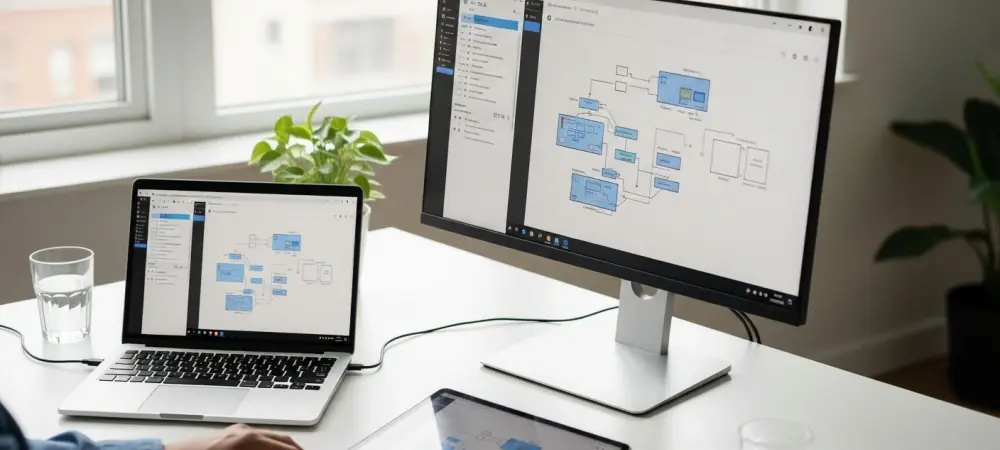
The traditional landscape of technical recruitment has undergone a radical transformation as companies move away from prohibiting artificial intelligence toward evaluating how effectively candidates can integrate these tools into their problem-solving workflows. In this current professional environment, the “take-home” assignment is no longer a simple test of syntax or basic logic; it has evolved into a comprehensive assessment of an engineer’s ability to orchestrate complex systems using high-level cognitive tools. Hiring managers today assume that every top-tier applicant is leveraging large language models to accelerate their output, yet the distinction between a mediocre candidate and a standout professional lies in the intentionality behind that usage. Simply generating code through a prompt is insufficient for the standards of 2026. True proficiency involves architectural depth, areas where AI requires human oversight.
Part 1: Strategic Integration
Step 1: Radical Transparency
The successful integration of generative tools into a recruitment project begins with a commitment to radical transparency regarding the methodology used throughout the development cycle. Instead of obscuring the role of artificial intelligence, candidates gain a distinct advantage by providing a detailed appendix or a “prompt log” that outlines how specific models contributed to the final submission. This documentation serves as a proxy for a technical conversation, demonstrating that the developer remains in control of the creative process rather than acting as a passive recipient of model outputs. It clarifies the distinction between automated boilerplate generation and the critical decision-making required for unique business logic. By explaining why certain AI-suggested optimizations were accepted or rejected, an applicant showcases critical thinking that transcends mere technical execution and builds long-term trust with the engineering team.
Step 2: System Optimization
Leveraging artificial intelligence effectively requires a strategic focus on the areas where these models provide the highest return on investment, particularly in secondary tasks like unit testing and documentation. While the core logic of an assignment should reflect the developer’s unique perspective, utilizing specialized agents to generate comprehensive test suites or edge-case validations ensures a more robust and polished final product. This division of labor allows the human candidate to dedicate more cognitive bandwidth to complex architectural trade-offs and performance tuning that models might overlook. Furthermore, utilizing AI for refactoring legacy-style code or applying modern design patterns can significantly elevate the quality of the codebase within the strict time constraints often imposed by hiring cycles. The developer must ensure that every generated line remains consistent with the project style and meets security protocols.
Part 2: Advanced Execution
Step 3: Technical Validation
One of the most critical aspects of utilizing advanced language models in a high-stakes interview scenario is the implementation of a rigorous verification and validation layer. Even the most sophisticated models are prone to subtle logical fallacies or the introduction of deprecated dependencies that can compromise the integrity of a technical submission. The candidate must act as the ultimate arbiter of truth, performing line-by-line code reviews and executing the software in multiple isolated environments to catch potential hallucinations. This stage of the process is where the true value of the human engineer is most visible, as it requires an intuitive understanding of how different components interact under load. A candidate who identifies and corrects an AI-generated error before submission demonstrates more skill than one who submits a “perfect” but unverified solution. This practice provides concrete evidence of technical depth and a proactive mindset.
Step 4: Narrative Synthesis
Looking back at the shifts in the recruitment industry, the move toward AI-augmented take-home assignments represented a necessary adaptation to the rapid pace of modern software development. Candidates who successfully navigated this transition focused on actionable outcomes, ensuring their submissions were not only functional but also modular and highly readable. They prioritized the development of a strong personal brand centered on problem-solving rather than just coding proficiency. In the end, the most effective strategies involved a combination of prompt engineering and traditional manual oversight to create a final product that felt both innovative and grounded in engineering best practices. The ability to articulate the “why” behind an AI-assisted design became the ultimate metric for success. This evolution ensured that the human element remained at the center.