

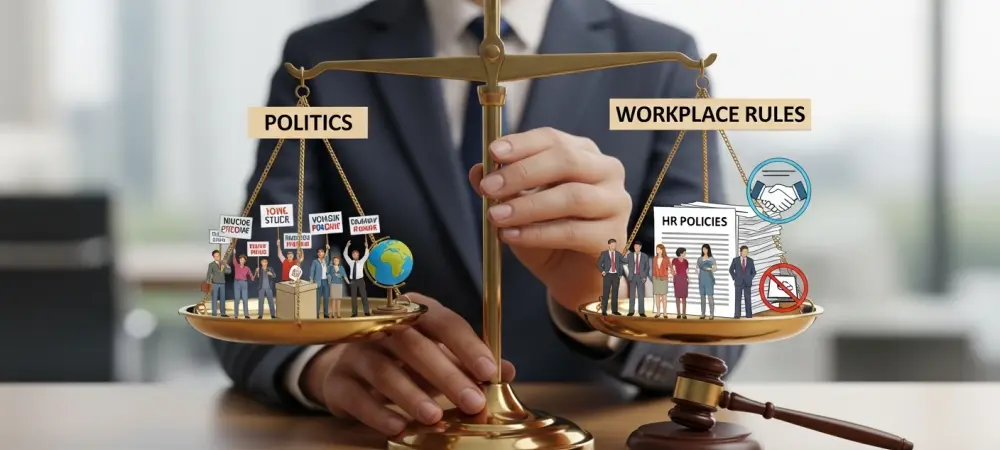
Navigating the Intersection of Politics and Work: A Modern Workplace Dilemma
Imagine walking into a workplace buzzing with tension, where a simple statement on a uniform sparks heated debates among coworkers and draws the scrutiny of management. In today’s polarized climate, such scenarios are becoming all too common as employers grapple with the delicate dance of allowing political expression while maintaining a neutral and productive environment. The stakes have never been higher, with political discussions infiltrating break rooms and boardrooms alike, challenging the traditional boundaries of workplace behavior. This dilemma is not just a passing concern but a defining issue for modern organizations striving to harmonize employee voices with operational stability.
The significance of this tension has been amplified by recent high-profile events, such as the charged atmosphere surrounding major U.S. elections. These moments ripple through workplaces, shifting employee-employer dynamics and often exposing deep divisions. Employers find themselves navigating uncharted waters, balancing the risk of alienating staff against the need to uphold a cohesive company image. Key concerns include safeguarding employee rights to free expression, crafting policies that withstand legal scrutiny, and adhering to frameworks like the National Labor Relations Act (NLRA), which protects certain forms of workplace speech. Each decision carries weight, shaping not just internal culture but also public perception.
Moreover, social movements and public discourse have further complicated this landscape. Employees increasingly feel empowered to voice opinions on issues like racial justice or political reform, often influenced by broader societal debates. This shift raises expectations for workplaces to be platforms for dialogue, yet it also tests the limits of neutrality. As these forces converge, employers must adapt to a reality where political expression is no longer confined to personal spaces but is a tangible factor in daily operations.
Current Trends and Insights into Workplace Political Expression
Emerging Challenges in Managing Political Speech
As political polarization intensifies across the nation, workplaces are becoming battlegrounds for ideological clashes. Employees bring diverse perspectives to the table, often fueled by deeply personal beliefs about social justice, governance, or economic policies. This trend creates friction, as what one person views as a stand for equality might be seen by another as divisive or inappropriate for a professional setting. The challenge for employers lies in fostering an environment where these differences don’t derail teamwork or productivity.
Adding to this complexity is the pervasive role of digital platforms and social media. Employees now have unprecedented reach to share political views, whether through a quick post or a viral thread, often blurring the line between personal and professional spheres. While this opens opportunities for meaningful dialogue, it also risks amplifying conflicts that spill back into the workplace. A single online comment can ignite internal disputes or even attract external criticism, putting pressure on companies to respond swiftly and thoughtfully.
Despite these hurdles, there’s a silver lining. The diversity of viewpoints, when managed well, can enrich workplace culture by encouraging critical thinking and empathy. However, maintaining cohesion amid such variety demands proactive strategies from leadership. Without clear boundaries, the potential for misunderstandings grows, making it imperative for organizations to address these emerging challenges head-on with policies that respect individual expression while prioritizing collective harmony.
Legal and Cultural Shifts Shaping Policies
Recent legal cases have cast a spotlight on how political speech is governed in the workplace, offering critical lessons for employers. Take the notable instance of a Home Depot employee displaying a “BLM” message on their uniform, a case that underscored the tension between protected activity under the NLRA and an employer’s business interests. The judicial outcome highlighted that while employees have rights to express certain views, companies can impose restrictions if justified by specific, non-speculative concerns like safety or public image.
Beyond the courtroom, cultural norms are evolving at a rapid pace, pushing organizations to rethink their approach. There’s a growing expectation for businesses to align with societal values, whether through supporting social causes or ensuring inclusivity in their policies. Courts and regulatory bodies are increasingly adopting context-driven perspectives, evaluating cases based on local conditions and timing rather than applying rigid standards. This shift suggests that employer policies must be flexible enough to adapt to unique circumstances while remaining legally defensible.
Looking ahead, these legal and cultural currents are likely to redefine workplace rules over the next few years. As public attitudes continue to shape expectations, companies may face pressure to be more transparent about their stances on political issues. Staying ahead of these changes requires vigilance, ensuring that policies not only comply with current laws but also resonate with the values employees hold dear. The future of workplace political expression hinges on this delicate alignment.
Confronting Obstacles in Balancing Free Speech and Business Needs
Navigating the tightrope between employee free speech and business priorities presents a formidable challenge for employers. On one hand, respecting individual rights to political expression fosters a sense of agency among staff; on the other, unchecked discourse can breed discord, disrupt workplace safety, or tarnish a company’s reputation. Striking this balance often feels like an uphill battle, especially when controversial messages resonate beyond the office walls and into the public eye.
The risks are tangible, as seen in real-world situations like the Home Depot case, where a political message on an apron sparked legal and internal strife. Such incidents can create rifts among employees, with differing views leading to tension or even hostility. Additionally, businesses face the threat of public backlash if their handling of these situations appears inconsistent or biased. Safety concerns also loom large, particularly in customer-facing roles where political statements might provoke confrontation.
To mitigate these obstacles, employers can adopt several practical measures. Clear policy communication sets expectations from the outset, reducing ambiguity about what is permissible. Engaging employees through open forums helps address concerns before they escalate, while consistent enforcement of rules prevents accusations of favoritism. By learning from past examples, companies can craft solutions that honor both individual expression and the overarching need for a stable, professional environment.
Understanding the Legal Landscape of Workplace Political Speech
The legal framework surrounding political speech in the workplace offers both protections and limitations, with Section 7 of the NLRA standing as a cornerstone. This provision safeguards employees’ rights to engage in concerted activities for mutual aid or protection, which can include certain political expressions tied to workplace conditions. However, this right is not absolute, and employers often find themselves navigating a complex web of regulations to ensure compliance while protecting their interests.
Central to this landscape is the “special circumstances” doctrine, which permits employers to restrict protected speech when it conflicts with legitimate business needs, such as maintaining a neutral public image or ensuring safety. Judicial decisions frequently hinge on context, weighing the specific circumstances of each case. Critiques of the National Labor Relations Board’s oversight in certain rulings underscore the importance of thorough, evidence-based evaluations when restricting employee expression.
Compliance remains a critical focus for employers crafting policies on political speech. Documenting justifications for restrictions—whether based on safety, customer relations, or operational harmony—can bolster a company’s position in legal disputes. As the regulatory environment continues to evolve, staying informed about precedents and context-driven rulings is essential. This legal clarity not only protects businesses from liability but also helps create fair, transparent guidelines for employees to follow.
Future Directions for Politics in the Workplace
As social trends continue to evolve, heightened political awareness among employees is poised to shape workplace policies in profound ways. Movements advocating for equity and justice are likely to sustain momentum, encouraging more staff to speak out on issues that matter to them. This shift could push employers to rethink traditional neutrality, prompting policies that allow for greater expression while still safeguarding operational goals.
Potential disruptors, such as new legal precedents or swings in public opinion, may further redefine employer obligations in the coming years. For instance, a landmark ruling could set stricter standards for justifying speech restrictions, or a cultural pivot might demand more corporate transparency on political matters. These uncertainties underscore the need for adaptability, ensuring that policies remain relevant amid changing expectations and legal interpretations.
On a broader scale, global economic and cultural conditions will also play a role in how companies address political speech across diverse workforces. Multinational organizations, in particular, must navigate varying norms and laws, tailoring approaches to fit regional contexts. Fostering inclusive dialogue and pioneering innovative policy frameworks will be key to meeting these challenges, ensuring that workplaces remain spaces of respect and understanding despite political differences.
Crafting a Path Forward: Strategies for Employers
Reflecting on the insights from legal cases and emerging trends, it’s evident that context plays a pivotal role in managing workplace political expression. Employers must tailor their approaches to specific environments, considering factors like timing, location, and community sentiment when enforcing rules. The lessons from past disputes, such as the nuanced balance struck in notable rulings, highlight that one-size-fits-all solutions fall short in addressing the intricacies of this issue.
To move forward, actionable strategies can guide employers through this complex terrain. Developing clear, consistent policies on political speech provides a foundation for fairness, while proactive communication ensures employees understand the rationale behind these guidelines. Training managers to handle sensitive discussions with tact and impartiality can prevent conflicts from escalating, creating a supportive environment for dialogue.
Looking back, the journey to balance employee rights with business interests revealed the importance of adaptability and empathy in policy design. The next steps involve fostering a culture of mutual respect, where differences are navigated with care rather than contention. By investing in education and open communication, employers can transform potential conflicts into opportunities for growth, building workplaces that thrive on diversity of thought while maintaining a shared commitment to productivity and unity.