

The Current Landscape of AI in Recruitment
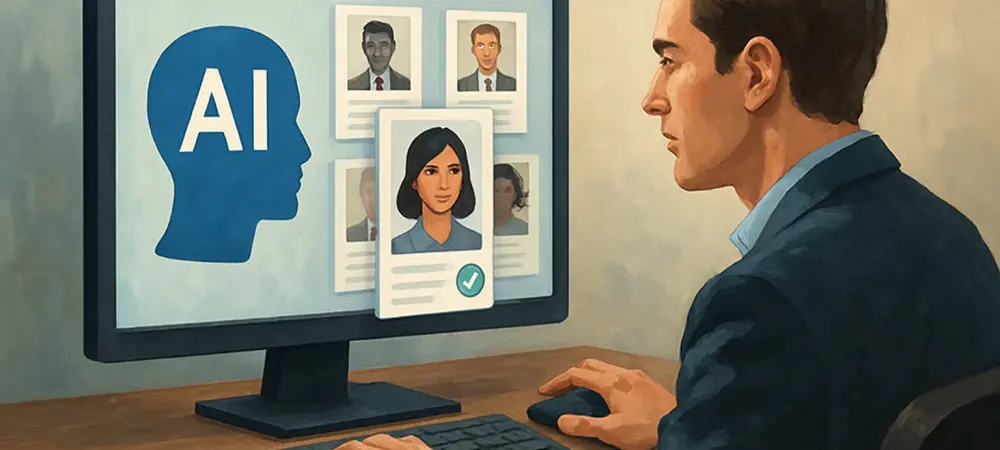
Imagine a world where a single algorithm can sift through thousands of resumes in mere seconds, identifying the perfect candidate before a human recruiter even glances at the list. This is no longer a distant vision but a reality in 2025, as artificial intelligence (AI) fundamentally transforms the recruitment and hiring landscape across industries globally. AI has emerged as a cornerstone of modern workforce strategies, reshaping how companies approach talent acquisition and challenging the very foundation of traditional hiring models.
A staggering 75% of companies now integrate AI into their hiring decisions, positioning it as a critical “hiring gate” that filters roles and candidates before human intervention. This shift reflects a broader trend where technology dictates staffing priorities, with many organizations reevaluating positions based on automation potential. Key industry players, including insights from major reports by firms like Zip and Accenture, alongside corporate giants such as Amazon, highlight AI’s pervasive influence on recruitment processes, signaling a departure from manual, intuition-driven methods.
The significance of AI extends beyond mere efficiency, impacting the structure of workforce planning itself. As companies increasingly rely on data-driven tools for decision-making, traditional models centered on human judgment are being sidelined. This evolution underscores a pivotal moment for the industry, where embracing AI is no longer optional but essential for staying competitive in a rapidly changing market.
Key Trends and Data Driving AI Adoption in Hiring
Emerging Trends in AI Integration
The pace of AI adoption in recruitment is nothing short of remarkable, with 70% of organizations either testing or actively using AI tools in their processes. Among these, 17% have already implemented AI widely across multiple functions, demonstrating a commitment to embedding technology at every level of talent management. This rapid integration signals a transformative shift, as businesses prioritize automation to streamline operations and reduce costs. A notable trend accompanying this shift is the growing demand for AI fluency among employees. Over half of executives—56% to be precise—consider proficiency in AI and automation a top skill for future hires, reflecting a strategic pivot toward technology-centric roles. This emphasis on digital competency is reshaping job descriptions and candidate expectations, pushing companies to seek talent capable of navigating complex AI systems.
Parallel to this, workforce dynamics are undergoing significant changes, with a noticeable decline in roles like consulting, analysis, and contingent labor. In contrast, IT departments are experiencing growth to support the deployment and governance of AI systems, highlighting a reallocation of resources toward tech infrastructure. Organizational priorities are clearly tilting toward building capabilities that align with a digital-first future, redefining the very nature of work.
Market Insights and Projections
Delving into specific data, 17% of companies now require proof that a role cannot be performed by AI before approving new hires, illustrating the stringent filters technology imposes on recruitment. This metric underscores how AI is not just a tool but a gatekeeper in modern hiring practices. Such policies reflect a cautious approach to workforce expansion, balancing human talent with automated solutions.
Looking ahead, industry forecasts paint a complex picture of AI’s impact on the job market. Prominent voices, such as Amazon’s CEO Andy Jassy, predict a reduction in corporate workforce numbers due to AI-driven efficiencies, while Anthropic’s CEO Dario Amodei warns of unemployment risks potentially reaching 20% within the next one to five years. These projections suggest a looming disruption, particularly for entry-level white-collar positions, which could face significant displacement.
The broader implications of these insights point to a job market in flux, where AI’s potential to automate routine tasks could redefine career pathways. As organizations prepare for these shifts, the focus is increasingly on strategic planning to mitigate risks while capitalizing on technology’s benefits. This dual perspective shapes a narrative of cautious optimism, where innovation must be tempered with foresight.
Challenges and Complexities of AI in Recruitment
The integration of AI into recruitment is not without its hurdles, particularly the risk of job displacement in roles vulnerable to automation. Entry-level and non-technical positions are especially at risk, as AI tools become adept at handling repetitive tasks previously performed by humans. This trend raises critical questions about the future of work for many employees who may find their skills obsolete.
Beyond displacement, there exists a palpable uncertainty for workers in automatable roles, compounded by the challenge of adapting to a tech-driven landscape. Many lack the resources or opportunities to transition into new fields, creating a gap between current capabilities and future demands. This situation necessitates a proactive approach to address the potential fallout from AI’s widespread adoption. To counter these challenges, solutions such as upskilling programs and strategic workforce planning are gaining traction among forward-thinking organizations. By investing in training initiatives, companies can equip employees with the skills needed to thrive alongside AI systems. Additionally, thoughtful planning ensures a balance between leveraging technology and preserving human capital, aiming to soften the impact of automation on the workforce.
Regulatory and Ethical Considerations in AI Hiring Practices
Navigating the regulatory landscape surrounding AI in recruitment presents a significant challenge for organizations striving to remain compliant. Concerns over data privacy and algorithmic bias are at the forefront, as AI systems often process sensitive personal information and risk perpetuating inequities if not carefully monitored. Establishing guidelines to address these issues is becoming a priority for regulators worldwide. Compliance with emerging standards is crucial to ensure that AI use in hiring remains fair and ethical. Organizations must adopt practices that prevent discrimination and protect candidate rights, aligning with legal frameworks designed to govern technology’s role in decision-making. Failure to adhere to these standards could result in reputational damage and legal repercussions, underscoring the stakes involved.
Transparency and accountability are equally vital in maintaining trust in AI-driven hiring processes. Companies are encouraged to disclose how algorithms influence decisions and provide mechanisms for recourse in cases of unfair treatment. By fostering an environment of openness, businesses can build confidence among candidates and stakeholders, ensuring that AI serves as a tool for equity rather than exclusion.
The Future of AI in Recruitment and Workforce Planning
Peering into the horizon, the trajectory of AI in recruitment promises further innovation, with emerging technologies poised to redefine talent acquisition strategies. Tools leveraging advanced machine learning and natural language processing are expected to enhance precision in candidate matching and predictive analytics. Such advancements could streamline hiring even further, offering unprecedented efficiency.
Global economic conditions, regulatory shifts, and consumer preferences for tech-savvy workforces will undoubtedly shape AI’s integration into recruitment. As markets evolve, organizations must adapt to fluctuating demands, balancing the push for automation with the need to maintain a human touch in hiring. This dynamic interplay will likely drive the development of hybrid models that combine technology with personal interaction.
Growth areas, particularly in IT expansion, signal opportunities for job creation even as automation reshapes other sectors. However, achieving a balance between efficiency gains and job security remains a critical concern. The challenge lies in harnessing AI’s potential to drive progress while safeguarding livelihoods, ensuring that the future of work benefits both businesses and their employees.
Conclusion: Balancing AI’s Promise and Challenges in Hiring
Reflecting on the insights gathered, it becomes evident that AI has carved a transformative path in recruitment, acting as a critical filter and a catalyst for efficiency across industries. The rapid adoption of AI tools and the prioritization of digital fluency among hires mark a significant departure from traditional practices, reshaping workforce strategies in profound ways.
Looking back, the dual nature of AI stands out—while it drives innovation and streamlines operations, it also poses risks of job displacement and economic uncertainty. These challenges underscore the need for actionable steps to mitigate negative impacts, ensuring that technology serves as an enabler rather than a barrier.
Moving forward, organizations are urged to invest in upskilling initiatives to prepare employees for a tech-centric future, while adopting ethical AI practices to maintain fairness in hiring. Strategic partnerships between businesses, educational institutions, and policymakers could further support this transition, fostering a workforce equipped to thrive alongside automation. This balanced approach promises sustainable growth, aligning the benefits of AI with the imperative to protect human capital.