

The contemporary job market operates in an environment where a candidate’s digital presence can be manufactured with startling precision using advanced generative algorithms. Traditionally, the primary hurdle for human resources departments centered on the identification and attraction of top-tier talent through competitive compensation and brand positioning. However, a new and more insidious challenge emerged this year as the distinction between a legitimate applicant and a sophisticated fabrication began to blur. Confirming the actual identity of individuals moving through the recruitment funnel is no longer a secondary administrative task but a primary security requirement. As digital transformation accelerates throughout 2026 and toward 2028, organizations are forced to confront the reality that a resume is no longer a reliable proof of existence. With current projections suggesting that up to 25% of global candidate profiles could be fraudulent by 2028, the stakes for corporate integrity have never been higher. This evolution marks a transition from simple resume embellishments to a sophisticated era of synthetic identity fraud, where artificial intelligence is leveraged to compromise hiring integrity. By understanding the mechanisms of AI-powered deception, businesses can better prepare for a future where a candidate’s digital persona may not match their physical reality. This shift necessitates a complete overhaul of traditional vetting mindsets to ensure that the individuals entering the workforce are who they claim to be and possess the skills they advertise.
The New Frontier of Digital Deception in Global Recruitment
The rise of remote work has fundamentally altered the baseline of trust in global recruitment, creating a vacuum that sophisticated fraudsters are eager to fill. In this landscape, the geographical barriers that once limited hiring pools now serve as a veil for those seeking to exploit digital vulnerabilities. Traditional verification methods, which relied heavily on manual checks and physical presence, are proving inadequate against the sheer volume of AI-generated data. Consequently, companies are finding themselves in a technological arms race, attempting to deploy screening tools that can keep pace with the rapid advancement of generative models.
This new frontier is characterized by a move toward decentralized workforces, where the initial point of contact is almost exclusively digital. While this has expanded the talent pool for many organizations, it has also introduced a level of anonymity that was previously unseen in the corporate world. Fraudulent actors leverage this anonymity to flood recruitment systems with highly optimized profiles designed to bypass automated filters. As a result, the burden of verification shifted from confirming qualifications to confirming the very existence of the applicant, making identity trust the cornerstone of modern human capital management.
The Evolution of Deception: From Resume Padding to Synthetic Personas
Historically, hiring teams were primarily concerned with verifying the accuracy of a candidate’s stated experience or educational credentials. The typical “white lie” on a CV was often limited to inflated job titles or extended employment dates to cover gaps in history. Today, the threat landscape is significantly more complex, involving the creation of synthetic digital footprints that include AI-generated work histories and fabricated online presences. These are not merely isolated instances of dishonesty; they represent a coordinated effort to deceive organizations through high-tech means that mimic the signals of a high-achieving professional.
These background factors matter because they have fundamentally altered how fraud is perceived at the executive level. Recent industry research highlights a growing consensus that synthetic identity fraud is now a high-level threat to corporate security. Unlike traditional lies, these fabricated candidates enter the process with perfectly curated resumes and photos that appear entirely credible to standard screening software. This historical shift from human-led exaggeration to machine-led fabrication requires organizations to treat every digital interaction with a higher degree of skepticism than in previous years.
Navigating the Complexities of AI-Driven Candidate Fraud
The Rise of Deepfakes and Real-Time Impersonation
The proliferation of generative AI has introduced tools that allow fraudsters to manipulate video and audio in real-time with frightening accuracy. As video interviewing became a standard industry practice, it also became a primary target for exploitation by those using deepfake technology. Fraudsters now utilize these tools to impersonate other professionals or to digitally alter their appearance during live interactions. This makes it increasingly difficult for recruiters to determine if the person they are interviewing is the same individual represented by the credentials on file or even a real person at all.
This technological sophistication presents a critical challenge for human resources departments that rely on face-to-face digital interaction as a proxy for trust. When a candidate uses a deepfake during a technical assessment, the company may unknowingly hire someone who lacks the necessary skills, leading to immediate productivity losses and potential project failures. Furthermore, the use of voice cloning can bypass even the most seasoned recruiters, making the unverified link between a digital profile and a physical human the primary vulnerability in modern recruitment.
Identity Appropriation and the Risk of Laptop Farms
Another emerging trend is identity appropriation, where bad actors use the legitimate credentials and digital footprints of real professionals to gain employment. Once hired, these individuals can gain access to sensitive intellectual property, payroll systems, and internal networks under the guise of a trusted employee. This is not just a hiring mistake; it is a significant security breach that can lead to data exfiltration or systemic sabotage. The risk is magnified in remote environments where physical oversight is impossible, allowing the impostor to operate undetected for months.
Furthermore, the rise of laptop farm operations presents a unique risk to corporate stability and resource allocation. In these scenarios, one person or a small group secures multiple jobs through fraudulent means and then either outsources the work to unauthorized third parties or provides back-door access to internal systems. These operations effectively turn a corporation’s payroll into a revenue stream for criminal enterprises. The comparative analysis of traditional fraud versus these new methods reveals a disturbing trend where modern AI-powered fraud is often about gaining systemic access for malicious long-term purposes.
Technical Vulnerabilities and Document Injection Attacks
Hiring teams are also facing document injection attacks, where candidates submit manipulated digital assets—such as diplomas or identification documents—instead of authentic, live-captured versions. Because these documents are often generated by AI to mimic specific security features like holograms or watermarks, they can easily bypass basic digital verification controls. Approximately 74% of fraud experts anticipate a significant rise in voice cloning and deepfake fraud through 2028, suggesting that current screening methods are quickly becoming obsolete in the face of such innovation.
A common misunderstanding among many HR professionals is that standard background checks are sufficient to catch these bad actors. However, most legacy background checks only validate that an identity exists in a public or private database; they do not confirm that the person on the screen is the rightful owner of that identity. Addressing these complexities requires a new methodology that focuses on “liveness” and behavioral anomalies rather than just static document verification. Without this shift, organizations remain vulnerable to sophisticated injection techniques that exploit the gap between digital submission and physical reality.
Future Trends: The Shift Toward Continuous Identity Trust
The future of recruitment will likely be defined by a shift away from viewing identity verification as a one-time administrative hurdle at the beginning of the hiring process. Instead, experts predict that identity trust must be established early and maintained continuously throughout the employee lifecycle. We are likely to see the integration of defensive AI that analyzes candidate behavior in real-time to flag anomalies that human reviewers might miss, such as mismatched IP locations or unusual biometric signatures. This continuous monitoring ensures that the person hired remains the person performing the work.
Technological and regulatory changes will also play a massive role as we move toward 2028. As AI fraud becomes more automated, the regulatory environment will likely tighten, requiring companies to prove they have taken reasonable steps to verify their workforce to protect consumer data and privacy. Speculative insights suggest that digital identity wallets, built on decentralized ledgers, may eventually replace the traditional resume. These would provide an immutable record of a professional’s history, significantly reducing the opportunity for fabrication and ensuring that credentials are tied to a verified biometric anchor.
Strategic Recommendations: Building a Secure Hiring Pipeline
To combat these evolving threats, organizations must implement a multi-layered defense strategy that prioritizes verification at every stage. Verification should begin at the application stage to prevent fraudulent profiles from ever entering the talent pipeline, rather than waiting until the final offer stage. Hiring teams must move from evaluating individuals in isolation to looking for broader patterns of risk, such as recently created email addresses, inconsistent behavioral signals during the interview process, or metadata discrepancies in submitted documents.
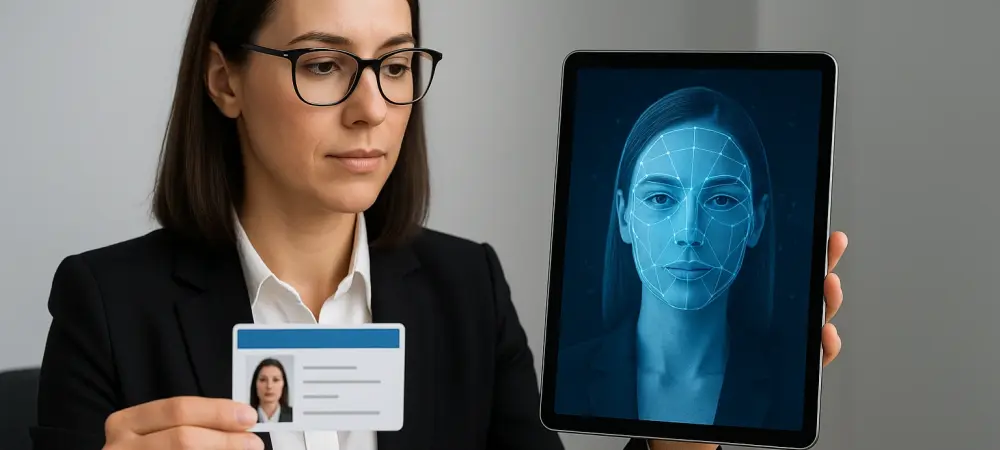
Furthermore, biometric verification paired with liveness detection is becoming a foundational requirement for any secure hiring process. By requiring candidates to prove they are physically present and not a digital representation, companies can effectively neutralize deepfake-assisted fraud. However, it is essential to balance these security measures with a positive candidate experience to avoid losing top-tier talent. Organizations should strive for mobile-friendly, seamless verification paths that do not discourage legitimate applicants while still maintaining a high security posture through back-end AI analysis.
Final Assessment: The Transformation of Recruitment Trust
The central findings of the analysis demonstrated that identity verification moved from a recruitment task to a critical security function. The transition from simple resume padding to synthetic personas required a total reimagining of how trust was established in the digital workspace. Organizations that recognized these threats early adopted multi-layered strategies involving biometric liveness detection and behavioral analysis to safeguard their intellectual property. This shift effectively transformed the hiring process into a perimeter defense mechanism against sophisticated global fraud networks.
By treating candidate identity with the same level of scrutiny as financial credentials, businesses successfully mitigated the risks posed by laptop farms and identity appropriation. The strategy involved moving away from static background checks and toward a model of continuous identity trust that persisted throughout the employee’s tenure. This approach not only protected corporate assets but also ensured that the culture of the workforce remained authentic and reliable. Ultimately, the ability to accurately verify who a person was became just as important as verifying what they could do, creating a more resilient corporate environment.