

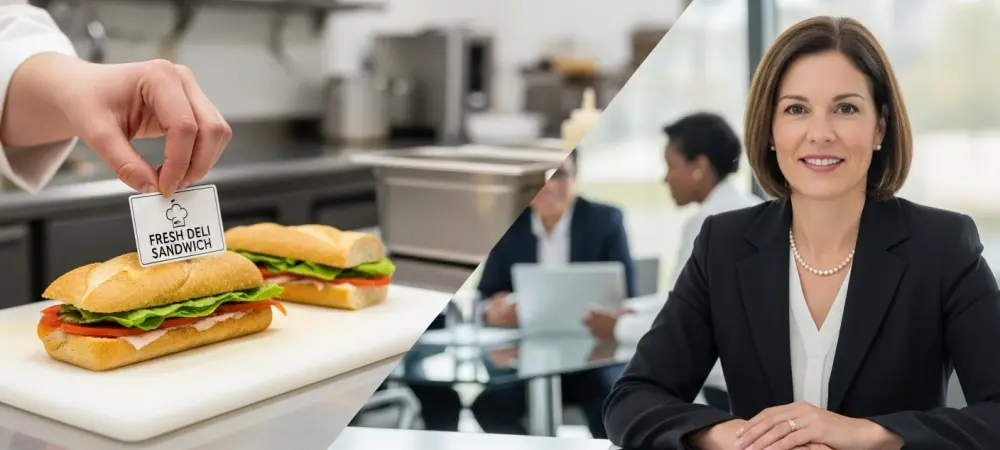
What if the path to a high-powered leadership role started not in a boardroom, but with the humble task of printing labels for sandwiches? This is not a hypothetical scenario but the real-life story of Jo Smillie, a 36-year-old professional from the Midlands, UK, who transformed an entry-level gig into a position as Head of HR Shared Services at CEVA Logistics. Her journey through the logistics industry shatters the mold of conventional career progression, proving that determination and hands-on learning can turn unexpected beginnings into extraordinary success. Let’s explore how a seemingly mundane start fueled a climb to strategic leadership.
Why Jo Smillie’s Story Resonates Today
In a world where traditional education is often seen as the golden ticket to professional achievement, Jo Smillie’s unconventional rise offers a refreshing perspective. Logistics, a sector employing over 2 million people in the UK alone, remains under the radar for many job seekers despite its wealth of opportunities. Her trajectory from an administrative role to senior HR leadership underscores a vital message: alternative paths like apprenticeships and ground-level jobs can rival university degrees in building impactful careers. This narrative matters now more than ever, as industries grapple with talent shortages and crave adaptable, real-world-tested leaders.
Moreover, her experience addresses pressing challenges in logistics, such as employee retention and operational efficiency. With the industry evolving rapidly, the demand for leaders who can navigate both strategic and interpersonal demands is soaring. Jo’s story serves as a beacon for aspiring professionals, showing that success in this dynamic field often comes from grit and a willingness to embrace every challenge as a stepping stone.
The Unlikely Start: Lessons from a Sandwich Factory
Jo Smillie’s career kicked off in a role many might overlook—printing labels for packed sandwiches. Far from dismissing it, she remembers this position with fondness, citing it as a formative experience that taught meticulous attention to detail. Each label was a small but essential piece of a larger supply chain, instilling in her the importance of precision and contributing to a broader system. This seemingly trivial job sparked curiosity about operational processes, nudging her toward subsequent roles in administration and stock management.
Those early positions weren’t just about tasks; they built critical organizational skills. Handling inventories and coordinating schedules honed her ability to manage chaos, a talent that later became indispensable in HR. What stands out is how these foundational experiences in logistics planted seeds of discipline and problem-solving, proving that even the smallest roles can offer big lessons for future leadership.
Pivoting to People: The HR Transition
As Jo moved into HR as a Coordinator, the focus shifted from processes to people. Tackling everyday employee concerns exposed her to the human side of logistics, where empathy became as crucial as efficiency. This role was a crash course in navigating interpersonal dynamics, laying the groundwork for understanding workforce needs in a high-pressure industry.
Her evolution continued as a Resourcing Business Partner, where talent acquisition and strategic hiring took center stage. Matching the right skills to the right roles in a sector known for tight deadlines tested her analytical thinking. Each step in HR expanded her perspective, showing that managing people in logistics requires balancing operational demands with personal growth—a duality that shaped her approach to leadership.
Rising to Lead: From Apprenticeships to Shared Services
A pivotal chapter came when Jo stepped into the role of Early Careers Apprenticeship Manager. Here, she designed programs that echoed her own journey, advocating for practical learning over purely academic routes. Championing apprenticeships, she helped others see the value in hands-on experience, reflecting her belief that real-world challenges build unmatched resilience.
By 2022, her ascent reached new heights with a promotion to Head of HR Shared Services. Overseeing payroll, compliance, and team development, she now juggles operational precision with visionary strategy. This role mirrors a broader trend in logistics: the need for leaders who can seamlessly blend technical expertise with mentorship, a balance Jo mastered through years of climbing the ranks with purpose.
Voices That Echo Growth and Insight
Jo’s reflections add depth to her journey, painting a vivid picture of logistics as a fast-paced arena. She describes daily hurdles as chances to push boundaries, admitting that her first leadership stint felt intimidating yet forced her to adapt quickly. “Every challenge was a chance to grow,” she notes, highlighting agility as a non-negotiable skill in her current role.
Adding weight to her story, Bethany Windsor, Programme Director at Generation Logistics, praises Jo’s path as a shining example of workplace learning’s power. Windsor points out that such journeys cultivate not only technical know-how but also confidence and grit—qualities logistics desperately needs. Industry data backs this up, showing the sector’s diverse roles, from compliance to tech integration, offer fertile ground for varied career paths.
Crafting Your Own Climb: Lessons to Apply
Jo Smillie’s story isn’t just inspiring—it’s a practical guide for carving out a career in logistics or HR. Start by seeking hands-on roles, whether through apprenticeships or entry-level positions. Much like Jo’s choice at 18 to opt for an apprenticeship over university, direct exposure to real challenges often accelerates growth and builds networks that open doors. Adaptability is another cornerstone. Logistics thrives on change, and embracing varied tasks—even those outside comfort zones—prepares one for leadership. Tackling payroll issues or compliance puzzles with a proactive mindset, as Jo did, sharpens problem-solving under pressure. Additionally, prioritizing relationships by mentoring team members can elevate both morale and performance, mirroring her focus on personalized development sessions.
Finally, harness data and feedback to drive improvement. In her senior role, Jo uses analytics to refine HR processes, a habit worth adopting at any level. Whether streamlining onboarding or addressing inefficiencies, small, data-driven tweaks signal strategic thinking. These steps, rooted in her experience, offer a roadmap for anyone ready to turn humble starts into towering achievements.
Reflecting on a Remarkable Path
Looking back, Jo Smillie’s ascent from printing sandwich labels to leading HR shared services at a global logistics firm stood as a testament to the power of perseverance. Her journey through uncharted career territory demonstrated that logistics held untapped potential for those willing to learn on the job. Each role she tackled added a layer of skill and insight, culminating in a leadership style that valued both strategy and empathy.
For those inspired by her story, the next step was clear: dive into industries like logistics with an open mind. Exploring alternative paths, whether through apprenticeships or ground-level roles starting now through 2027 and beyond, could uncover unexpected opportunities. Her legacy encouraged a mindset of continuous growth, urging aspiring leaders to seek challenges, build connections, and never underestimate the value of starting small.