

The Evolving Landscape of the American Labor Market
The October employment report reveals a US labor market characterized by unexpected resilience and a broad-based recovery that far exceeded initial expectations regarding job creation. While economists predicted a modest increase of 65,000 positions, the economy actually added 165,000 new jobs, bringing the unemployment rate to a steady 4.1 percent. This statistical success, however, masks a more complex reality where growth is unevenly distributed across different demographic and industrial sectors. Understanding the nuances between foreign-born and native-born contributions is essential to grasping the current economic momentum.
Demographic shifts are playing a central role in this landscape, particularly as businesses adapt to new technological integrations. The recovery is currently defined by a bifurcation where top-level growth figures often obscure underlying structural frictions, such as varying participation rates and the disruptive influence of automated systems. By analyzing the manufacturing sector and AI-heavy industries like information and financial services, it becomes possible to see how the workforce is being reshaped in real-time. This analysis aims to highlight how these shifts are creating a market that favors flexibility over traditional stability.
Examining Key Performance Indicators and Workforce Contributions
Labor Force Participation and Net Employment Gains
Foreign-born workers have emerged as the primary engine for recent labor supply growth, accounting for all net gains in labor force participation over the last quarter. This surge in immigrant labor effectively reversed a contraction observed during the early stages of the current administration’s second term. While this segment provided much-needed elasticity to the market, native-born workers experienced a noticeable decline in participation since July, creating a void that immigrant labor has essentially filled to keep the economy moving forward.
This dynamic suggests that the domestic labor supply is becoming increasingly dependent on foreign-born talent to maintain economic momentum. Moreover, the volatility often associated with immigration enforcement and labor outflows has historically created ripples in hiring trends, yet the current data indicates a period of stabilization where these workers are becoming integral to the supply chain. In contrast, the native-born population remains in a state of flux, struggling to reclaim the participation levels seen in previous years despite the abundance of available roles in growing sectors.
Sector-Specific Impacts and Artificial Intelligence Integration
Technological adoption is further complicating the employment picture, with artificial intelligence serving as a catalyst for significant sectoral shifts. The information and financial services sectors, which are heavily exposed to AI-driven automation, have faced consistent job losses as companies prioritize algorithmic efficiency over traditional administrative headcount. Conversely, the professional and business services sector added 70,000 jobs in October alone, driven largely by a demand for consulting and temporary staffing roles that support these ongoing technological transitions.
Manufacturing Stability and Industrial Growth Metrics
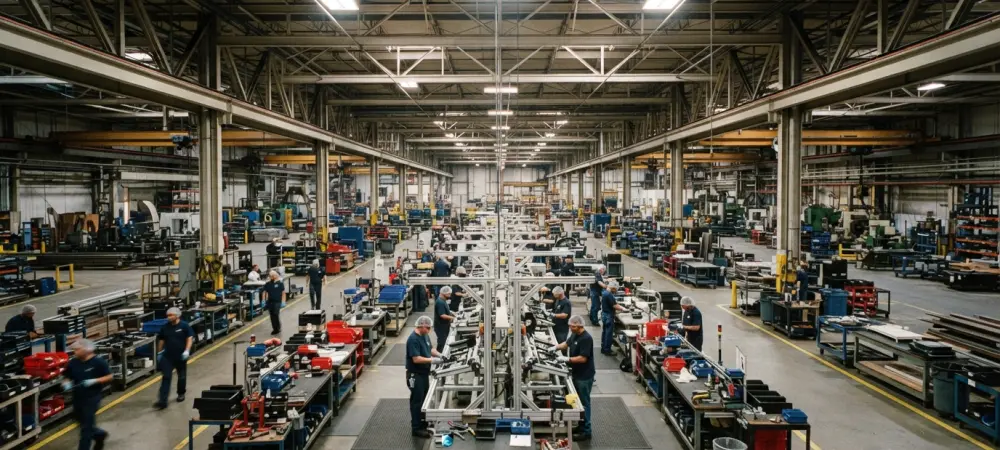
Manufacturing is also carving out a unique path toward stability, recovering from an initial loss of 93,000 jobs during the early phase of the current political cycle. Since December 2025, the industrial sector has added 101,000 positions, signaling that domestic production and tariffs are beginning to yield tangible employment outcomes. Although this recovery remains gradual, it provides a much-needed anchor for the workforce, offering more consistent growth metrics compared to the volatility seen in service-oriented industries.
Structural Challenges and Market Considerations
Despite the positive headline figures, the duration of unemployment has reached levels that suggest deep-seated friction in the market. The median duration of unemployment now stands at 11.9 weeks, while the average has climbed to 27.1 weeks, representing some of the highest figures on record excluding the pandemic years. This creates a paradox where layoffs remain historically low, yet displaced workers find it increasingly difficult to re-enter the market or find suitable matches for their specific skill sets.
Practical obstacles continue to hinder the seamless integration of different worker groups, particularly for those in declining sectors. Technical difficulties in matching displaced professionals with new roles in high-growth areas like professional and business services are creating a bottleneck. The friction between low layoff rates and high re-entry difficulty indicates that while the market is creating jobs, the barriers to accessing them are higher than ever for the average job seeker.
Strategic Summary and Workforce Recommendations
Strategic navigation of this market requires a focus on sectors that are currently expanding rather than those in the midst of AI-driven contraction. Job seekers and investors should prioritize the professional and business services arena over finance or information sectors, which continue to shed roles. While the 4.1 percent unemployment rate is a strong indicator of health, specific workforce segments require tailored approaches to ensure long-term stability and success in an evolving economy that relies heavily on foreign-born labor.
Ultimately, the labor market demonstrated a remarkable ability to absorb structural shocks while maintaining a trajectory of growth through the end of the year. The heavy reliance on foreign-born labor proved to be a critical bridge during periods of native-born withdrawal, ensuring that the labor supply met the demands of a modernizing economy. As manufacturing stabilized and AI-driven shifts redefined professional roles, the workforce transitioned toward a new equilibrium that favored adaptability and specialized services over traditional administrative functions.