

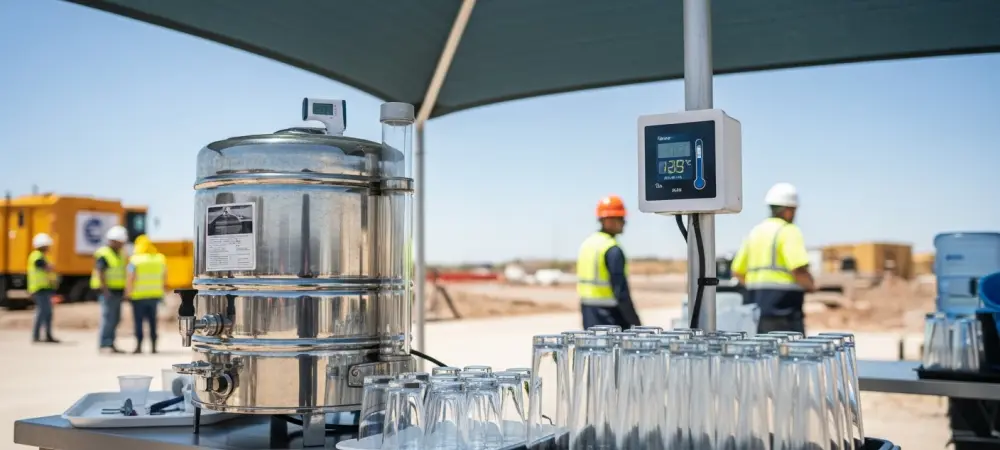
Record-breaking thermal surges have transitioned from isolated meteorological anomalies into recurring seasonal challenges, prompting modern enterprises to realize that the traditional “business as usual” mindset creates substantial hazards. While a spike in temperature might once have been viewed as a mere logistical inconvenience, it now represents a fundamental shift in the biological and psychological capacity of a workforce to perform safely. For the contemporary employer, managing these atmospheric shifts is no longer an optional comfort measure but a critical intersection where operational continuity meets legal liability.
The Scorching Reality of Modern Business Operations
Thermal stress impacts cognitive function and physical endurance, leading to increased error rates and potential injury across various sectors. When the body struggles to regulate its internal temperature, concentration levels plummet and irritability rises, creating a volatile environment that threatens both staff harmony and productivity. Failure to address these concerns compromises the integrity of the professional environment and puts long-term organizational sustainability at risk.
Furthermore, the psychological toll of working in extreme heat can lead to long-term burnout and decreased morale if not handled with empathy. Businesses that ignore the mounting mercury often see a corresponding spike in absenteeism and turnover as employees seek safer conditions elsewhere. Adapting to this reality requires a proactive shift in how managers perceive the relationship between weather patterns and worker output.
Understanding the Regulatory Landscape: The Employer’s Duty of Care
The current legal framework, notably the Workplace (Health, Safety and Welfare) Regulations 1992 and the Management of Health and Safety at Work Regulations 1999, requires the maintenance of a “reasonable” environment. While statutes are explicit about minimum temperatures—setting the floor at 61 degrees Fahrenheit for offices and 55 degrees Fahrenheit for manual labor—the law remains silent on an absolute upper limit. This regulatory gap does not offer a free pass to ignore rising heat; instead, it underscores a broad responsibility toward safety.
This silence on a maximum ceiling necessitates a more rigorous interpretation of the overarching duty of care to provide adequate ventilation and fresh air. Legal compliance is not merely about staying above a minimum threshold but ensuring that the atmosphere does not become hazardous. Consequently, the burden of proof often falls on the employer to demonstrate that they took every feasible step to keep the workplace comfortable as external temperatures soared.
Identifying High-Risk Environments and Individual Vulnerabilities
Effective heat management requires a nuanced risk assessment that looks beyond a standard thermometer reading to the actual conditions on the ground. A climate-controlled corporate suite faces vastly different hazards compared to a commercial bakery or an outdoor construction site where solar radiation is intense. Assessing the “feels like” temperature, which accounts for humidity and airflow, is essential for accurately gauging the danger posed to personnel.
In addition to environmental factors, personal variables such as age or underlying health conditions must be integrated into any safety plan. Older employees or those with cardiovascular issues are significantly more susceptible to heat stroke and exhaustion during a thermal surge. A blanket policy that fails to account for these individual vulnerabilities can lead to catastrophic health outcomes and increased legal exposure for the firm.
Expert Analysis: The Push for Legally Defined Temperature Limits
Labor advocates, including the Trades Union Congress, have intensified calls for standardized maximums, proposing 86 degrees Fahrenheit for general work and 80 degrees Fahrenheit for strenuous labor. These proposed caps aim to provide the clarity that current statutes lack, moving the industry toward a more objective safety standard. Proponents argue that a hard limit would simplify enforcement and provide workers with a clear right to seek relief when conditions become unbearable.
Legal experts such as Sue Dowling have noted that the absence of a hard limit does not diminish a business’s legal responsibility to its staff. Instead, the lack of specific numbers necessitates a more vigilant, proactive approach to monitoring employee well-being and using situational judgment. Professional guidance suggests that maintaining a “comfortable” atmosphere is a dynamic task that requires constant feedback and adjustment rather than a set-and-forget policy.
A Practical Blueprint for Heat-Resilient Workplace Management
To mitigate legal and physical exposure, businesses should adopt a multi-layered strategy that focuses on infrastructure and policy adjustments. Enhancing cooling systems with high-efficiency fans and utilizing reflective window shading can drastically reduce solar gain within a building. Additionally, relaxing dress codes or suspending heavy uniform requirements provides immediate relief to those working in demanding conditions without requiring massive capital investment. Prioritizing hydration and recovery through increased rest breaks ensures that employees have the opportunity to regulate their body temperature. Shifting physically demanding tasks to cooler morning hours or allowing remote work to reduce the strain of commuting are also highly effective strategies. By combining these operational changes with open communication, a company can maintain safety while keeping the business running effectively.
Strategic businesses realized that the most effective response to rising mercury involved more than just cooling equipment; it required a cultural shift toward transparency and flexibility. These entities successfully implemented thermal safety training that empowered workers to recognize early signs of heat exhaustion in their peers. By moving toward a proactive model, companies protected their most valuable assets while ensuring that productivity remained stable even during the most severe weather events. Future successes depended on the integration of smart building technology and predictive weather modeling to stay ahead of the heat.