

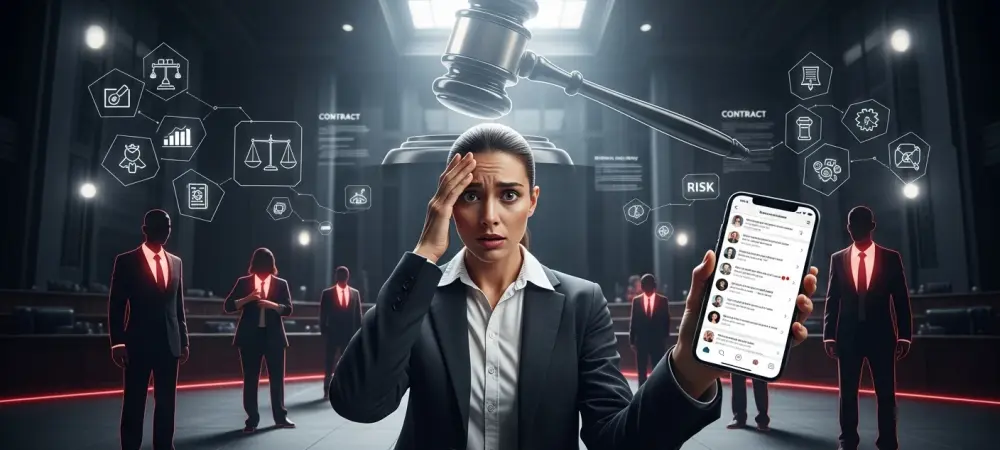
The widespread adoption of internal ambassador initiatives has transformed the traditional corporate hierarchy into a decentralized network of content creators who wield significant influence over brand perception in the digital marketplace. Organizations have moved away from the era of polished, high-budget commercials toward a more raw and relatable form of storytelling that leverages the personal narratives of their own staff. This shift is driven by a desire for authenticity, as consumers are increasingly likely to trust the word of an actual employee over a faceless corporate entity. However, this transition has occurred so rapidly that the legal infrastructure within many companies has failed to keep pace with the complexities of digital labor. By encouraging workers to post about their daily routines, project milestones, and company culture, organizations are inadvertently stepping into a jurisdictional gray area where traditional employment protections and modern social media dynamics collide. When an employee picks up a smartphone to record a “behind the scenes” look at their workplace, they are no longer just an individual sharing a moment; they are effectively acting as an agent of the company. This dual role creates a significant risk profile that extends far beyond simple brand management. Legal departments are now finding themselves tasked with untangling the implications of these programs on wage and hour laws, intellectual property rights, and workplace discrimination standards. The reality is that an unmanaged influencer program can quickly become a source of systemic liability, particularly when the lines between professional duties and personal hobbies become blurred. To maintain the benefits of this modern marketing strategy, companies must adopt a more disciplined approach to how they categorize, compensate, and control the creative output of their internal talent.
Financial and Classification Compliance
Managing Wage, Hour, and Overtime Obligations: Tracking Digital Labor
A primary legal challenge associated with these programs resides in the rigorous application of the Fair Labor Standards Act, which mandates that all non-exempt employees receive compensation for any work performed on behalf of the company. In the context of digital content creation, the boundary between personal expression and compensable labor becomes dangerously thin when an employee is tasked with promoting a brand. Even seemingly minor tasks, such as scrolling through social media trends for inspiration, drafting captions, or engaging with comments during evening hours, constitute work that must be tracked and paid. When organizations fail to implement precise time-tracking mechanisms for these digital activities, they open themselves to substantial liability for unpaid wages and potential class-action litigation. The difficulty is further compounded when content creation happens sporadically throughout the day, often on mobile devices that are not integrated with official time-logging software. Without a clear policy that strictly prohibits off-the-clock content production or provides a robust method for reporting that time, a company remains vulnerable to claims that it allowed or encouraged invisible labor to go unrewarded, a practice that regulatory bodies increasingly monitor with high levels of scrutiny.
Furthermore, the structure of compensation for these initiatives adds a layer of complexity to the payroll department’s responsibilities, particularly concerning the calculation of overtime. Many companies offer performance-based incentives, such as bonuses for high engagement rates or stipends for viral posts, which must be factored into the employee’s regular rate of pay for overtime purposes. If a staff member works forty-five hours in their primary role and earns a special “influencer bonus” during that same period, the extra pay must be included when determining the overtime rate for those five additional hours. Failure to perform these recalculations can lead to systemic underpayment, which is often detected during routine audits or through disgruntled employees seeking back pay. Organizations must integrate their marketing incentive programs with their human resources and payroll systems to ensure that every dollar paid to an internal influencer is properly categorized and taxed. Ignoring these financial nuances does not just risk a fine; it undermines the entire economic viability of the program by introducing unpredictable costs that can outweigh the marketing benefits achieved through the content.
Preventing Employment Status Misclassification: The Control Test
The tendency for companies to treat internal influencers as independent contractors for their social media activities represents a significant legal risk that can lead to aggressive regulatory enforcement. To avoid the overhead costs of benefits, workers’ compensation, and payroll taxes, some organizations attempt to sign separate “freelance” agreements with their own staff for content creation services. However, the Department of Labor and the IRS utilize a multi-factor test to determine worker status, focusing heavily on the degree of control the employer exerts over the work process. If a company provides a content calendar, requires specific hashtags, or mandates a pre-approval process for every post, the individual is legally acting as an employee regardless of what the contract says. Misclassification in this area can trigger expensive back-tax assessments and penalties for failing to provide standard labor protections, such as unemployment insurance and sick leave. As the legal definition of employment continues to evolve to cover the gig economy, companies that exert too much creative control over their internal ambassadors will find it nearly impossible to defend an independent contractor classification in court.
Beyond the tax implications, misclassification also affects how a company manages its broader workforce and maintains its legal standing within the industry. When a worker is deemed an employee for their influencer activities, the organization becomes vicariously liable for any legal infractions they commit while acting in that capacity, such as defamation or copyright infringement. By attempting to distance themselves through contractor agreements, companies often lose the ability to implement the strict behavioral guidelines and oversight necessary to prevent such incidents. This creates a paradoxical situation where the organization wants the benefits of a controlled brand message but attempts to shed the legal responsibility that comes with that control. To mitigate this risk, modern enterprises should assume that any content created by current staff members falls under the umbrella of their existing employment relationship. This proactive approach allows for better integration of corporate policies and ensures that the company is fully prepared to handle the legal and financial obligations that come with a dedicated and loyal internal creator base.
Workplace Standards and Equal Opportunity
Protecting Labor Relations and Professional Conduct: The Ambiguity of Voice
The National Labor Relations Act guarantees employees the right to engage in concerted activity, which often includes discussing wages, benefits, and working conditions in public forums. When a company launches an influencer program, it usually demands a high level of brand loyalty and “toxic positivity,” which can directly conflict with these federally protected rights. For instance, if an internal influencer uses their platform to mention that they are unhappy with a recent shift in health benefits, the company may feel inclined to discipline them for violating brand guidelines. However, such disciplinary actions can be viewed as an illegal attempt to silence protected speech, leading to investigations by the National Labor Relations Board. To avoid these pitfalls, social media policies must be carefully drafted to distinguish between commercial advocacy and personal expression regarding labor conditions. Overly broad rules that prohibit any negative mention of the workplace are frequently struck down as unenforceable, making it essential for organizations to focus their restrictions on the protection of trade secrets and the prevention of harassment rather than general sentiment or workplace discourse.
In addition to labor relations, the informal and often spontaneous nature of social media content can inadvertently lead to violations of professional conduct and anti-harassment policies. A video that is intended to be humorous or relatable might inadvertently mock a colleague, highlight an unsafe working condition, or perpetuate stereotypes that create a hostile work environment. When a supervisor or a high-level executive interacts with such content—perhaps by liking or sharing a post that contains borderline inappropriate material—it can be interpreted as a corporate endorsement of that behavior. This creates a significant legal vulnerability in harassment lawsuits, as the digital paper trail provides ready-made evidence of management’s awareness or approval of a non-compliant culture. Companies must establish clear boundaries for what constitutes professional behavior on social media, treating the digital space as an extension of the physical office. Comprehensive training for both the creators and their managers is required to ensure that the quest for viral engagement does not bypass the fundamental requirements of a respectful and inclusive professional environment.
Mitigating Discrimination Risks in Participant Selection: Fairness in Exposure
Selecting who gets to be the “face” of a company on social media is not merely a marketing decision; it is a human resources process that must adhere to equal employment opportunity laws. Many influencer programs are built on subjective criteria, such as who is most “camera-ready” or who possesses a certain aesthetic that aligns with current social media trends. When these subjective choices result in a program that lacks diversity or appears to favor a specific demographic, the company may face claims of discrimination under Title VII of the Civil Rights Act or the Age Discrimination in Employment Act. If participation in the program leads to tangible benefits, such as extra compensation, rapid promotion, or exclusive access to senior leadership, the exclusion of certain groups becomes even more legally problematic. Organizations must ensure that the opportunity to participate is publicized across the entire workforce and that the selection process is based on objective, non-discriminatory factors. This might include a person’s tenure, their technical expertise in a specific area, or their demonstrated ability to adhere to corporate communication guidelines.
To build a defensible selection process, documentation and transparency are the most effective tools available to the modern employer. Keeping detailed records of why specific individuals were chosen and why others were not can provide a crucial defense if the program’s composition is ever challenged by a regulatory agency or a private litigant. Furthermore, an inclusive influencer program actually serves the brand better by reflecting the true diversity of the global workforce, which resonates more deeply with a broad customer base. Companies that rely on a narrow, homogenized group of ambassadors risk not only legal action but also a disconnect with a public that increasingly values representation and equity. By treating the influencer program as a professional development opportunity rather than a popularity contest, an organization can foster a more motivated and engaged staff. This structured approach helps ensure that the program remains a source of positive brand growth rather than a catalyst for internal friction or high-stakes litigation centered on systemic bias and unfair treatment.
Privacy and Intellectual Property Considerations
Safeguarding Data and Image Rights: Managing the Background
The decentralized nature of filming in active workplaces introduces a persistent risk of accidental data breaches and the exposure of proprietary information. An employee filming a “day in the life” segment in a research laboratory or a corporate office may inadvertently capture sensitive documents, patient records, or unreleased product prototypes on their camera. In high-security environments like healthcare or finance, a single social media post can lead to a violation of strict federal privacy regulations, such as HIPAA, or result in the loss of trade secret status for a critical innovation. Once information is published to a public platform, the company’s ability to claim it as confidential is often legally forfeited, as the information is no longer a secret. To prevent such disasters, organizations must establish “no-filing zones” and implement a mandatory review process for any content that shows active workspaces. Training must emphasize that while the foreground of the video might be the focus, the legal department is most concerned with what is happening in the background, where a stray computer monitor or a whiteboard could jeopardize the company’s entire intellectual property portfolio.
Beyond corporate data, the use of an employee’s image and likeness for commercial purposes requires a formal legal framework to protect both the individual and the organization. While many people are initially excited to be featured in company content, their perspective may change if the relationship sours or if they feel their image is being used in a way they did not intend. State laws regarding the “right of publicity” vary significantly, with some requiring explicit, written consent for any commercial use of a person’s name or face. A verbal agreement or a general “consent to photograph” clause in an initial hiring packet is often insufficient to cover the specific requirements of a long-term influencer campaign. Companies should secure dedicated publicity releases that clearly outline how the content will be used, where it will be distributed, and whether the company retains the right to use the footage after the employee has left the organization. Without these protections, a former employee could legally demand the removal of highly successful marketing campaigns, leading to significant disruption and the loss of valuable digital assets that the company spent months or years developing.
Managing Personal Account Jurisdictions: The Exit Strategy
Using personal social media profiles for corporate promotion creates a complex jurisdictional dispute over who owns the account and the audience that was built using company resources. When an employee uses their private TikTok or LinkedIn profile to post brand-sponsored content, the lines between their personal identity and their professional role become inextricably linked. This leads to difficult legal questions when the employee departs: does the company have a right to the account, the followers, or the specific posts that were made during their tenure? Many states have enacted social media privacy laws that prohibit employers from demanding access to personal account passwords or requiring the deletion of personal content. To avoid these messy disputes, it is essential to establish clear boundaries at the beginning of the program, specifying which accounts are considered personal and which are corporate-controlled.
These challenges extend to the post-employment phase, where the lack of a clear exit strategy can lead to protracted legal battles over non-compete and non-disparagement agreements. If a former internal influencer immediately begins promoting a direct competitor, the original employer may feel that their trade secrets or specialized marketing training are being misappropriated. Conversely, the former employee may argue that their personal brand is their own and that the company has no right to restrict their future income. Detailed separation agreements should address these specific scenarios, outlining the ownership of content and the rules for future digital conduct. Organizations that proactively define these terms are better positioned to protect their brand reputation while respecting the individual rights of their departing staff. By treating the digital footprint of the influencer as a formal business asset with clear ownership structures, companies can mitigate the risks of account hijacking, follower loss, and the public airing of grievances that often accompany the end of a high-profile employment relationship.
The companies that navigated this complex legal environment most successfully established clear frameworks that separated personal expression from corporate advocacy. They implemented comprehensive training programs that educated employees on the boundaries of trade secret protection and the nuances of fair labor standards. By drafting specific contracts that addressed account ownership and content rights, these organizations prevented messy disputes when internal influencers eventually departed the company. Leaders also integrated their influencer programs with payroll systems to ensure that every minute spent on creative development was documented and paid. Ultimately, the most successful initiatives were those that balanced the desire for authentic marketing with a rigorous commitment to legal compliance and ethical workforce management. These steps protected the enterprise while allowing individual creativity to flourish without the looming threat of litigation or regulatory intervention. In a digital-first economy, the formalization of internal influencer roles proved to be the only way to sustain long-term growth and brand integrity.