

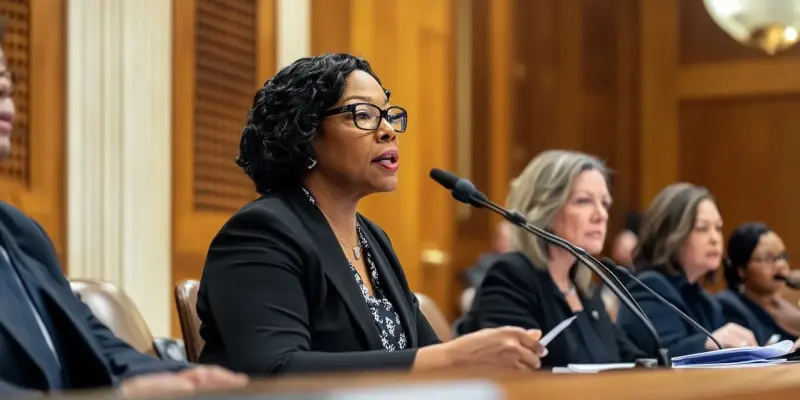
Under President Trump, the Equal Employment Opportunity Commission (EEOC) has experienced sweeping changes that have significant implications for HR professionals and organizations across the United States. This new era at the EEOC, marked by shifts in leadership, policy, and enforcement priorities, demands a strategic response from HR departments to ensure compliance and mitigate risks.
New Leadership at the EEOC
President Trump’s return to the White House has brought about notable changes in the leadership of the EEOC. As expected, Trump dismissed Karla Gilbride, the EEOC’s General Counsel, who was appointed for a four-year term in 2023. In her place, Trump appointed Andrew Rogers as the acting general counsel. Furthermore, in an unprecedented move, Trump removed two commissioners before their terms expired. Commissioner Charlotte Burrows was set to serve until 2028, while Commissioner Jocelyn Samuels’ term was due to end in 2026.
Trump appointed Andrea Lucas as Acting Chair of the EEOC. Lucas, a vocal critic of Diversity, Equity, and Inclusion (DEI) initiatives, outlined her priorities for the agency in her statement. Her focus includes rooting out unlawful DEI-motivated race and sex discrimination, protecting American workers from anti-American national origin discrimination, defending the biological and binary reality of sex, including women’s rights to single-sex spaces at work, and protecting workers from religious bias and harassment, including antisemitism. Her priorities align with President Trump’s executive orders on DEI and gender ideology, signaling a significant shift in the EEOC’s direction.
EEOC’s Stance on Gender Ideology
One of President Trump’s first executive orders upon returning to office was titled “Defending Women From Gender Ideology Extremism and Restoring Biological Truth to the Federal Government.” This order asserts that U.S. policy recognizes only two sexes, male and female, and differentiates “sex” from “gender identity.” It directs federal agencies and personnel to use the term “sex” rather than “gender” in all official policies and documents and defines “gender identity” as a personal sense of self. The order requires agencies to update regulations, forms, and communications accordingly.
In compliance with this order, Andrea Lucas announced several steps the EEOC has taken. The agency removed the “pronoun app” in employees’ Microsoft 365 profiles, which allowed pronouns to appear alongside display names. It ended the use of the “X” gender marker during the intake process for filing discrimination charges and directed modifications of discrimination charge forms to remove “Mx.” from prefix options. The EEOC also began reviewing the content of its mandatory “Know Your Rights” poster and removed gender ideology-promoting materials from both its internal and external platforms. The agency further placed a banner on materials undergoing review for compliance with this new mandate.
Evaluate DEI Programs
With the EEOC’s new focus on “evenhanded enforcement” of employment civil rights laws, HR professionals must reassess their DEI programs. Whether your organization decides to scale back or enhance its DEI initiatives, it is crucial to ensure that hiring, promotion, and workplace programs comply with the EEOC’s current regulatory environment. Employers should also prepare for potential EEOC investigations and legal challenges, especially if their DEI policies explicitly consider race or sex.
Notably, legal expert Kimberly Cheeseman, Co-Head of Litigation and Disputes at Norton Rose Fulbright, has highlighted potential ramifications stemming from an upcoming Supreme Court case, Ames v. Ohio Department of Youth Services. The case will determine if a majority plaintiff needs to meet a heightened standard of evidence to support a reverse discrimination lawsuit. If the Court rules in favor of the plaintiff, Cheeseman predicts a surge in reverse discrimination lawsuits. HR departments should mark their calendars for the oral arguments set for February 26 and closely monitor the case’s outcome for implications on their DEI programs.
Examine Workplace Policies and Training
As the EEOC revises definitions of sex, gender, and related terms, organizations need to ensure their policies and training programs reflect these changes. The EEOC’s guidance on harassment, discrimination, and accommodation will likely be updated to align with the new definitions, necessitating revisions to current training modules. Specific areas to watch for updates include guidance on transgender restroom use and accommodations related to the Pregnant Workers Fairness Act (PWFA) involving abortions.
Organizations should stay vigilant and proactive in modifying their workplace policies to comply with the EEOC’s new guidelines. By doing so, they can mitigate risks and ensure a fair and compliant work environment for all employees.
Verify Compliance with Federal Posting and Documentation Requirements
During President Trump’s tenure, the Equal Employment Opportunity Commission (EEOC) has undergone significant transformation, affecting HR professionals and organizations nationwide. This new period at the EEOC is characterized by changes in leadership, policy, and enforcement priorities. As a result, HR departments must adopt strategic measures to ensure they remain compliant and mitigate risks.
The EEOC’s shift in direction under Trump has led to different enforcement strategies and altered priorities, which means that HR professionals need to stay vigilant and adapt to these changes to protect their organizations. This involves a thorough understanding of the new policies, as well as the ability to implement them effectively within the workplace.
Organizations should focus on compliance training, regular policy reviews, and effective communication with employees about their rights and responsibilities under the new regulations. Paying attention to the EEOC’s updates and guidance is crucial to navigating this evolving landscape.
In summary, the changes at the EEOC under President Trump require a proactive approach from HR departments. By staying informed and flexible, HR professionals can ensure their organizations remain compliant and minimize potential risks associated with the EEOC’s revised focus and enforcement tactics. The key to success in this new era is diligence, adaptability, and a strong commitment to upholding employment laws.