

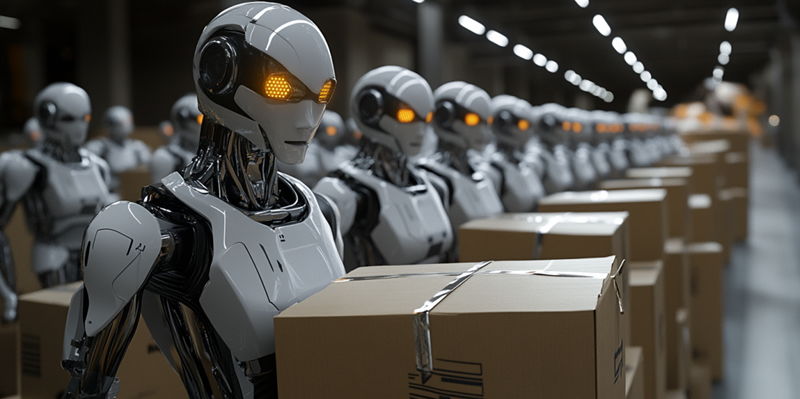
Earlier this month, a thought-provoking scenario was introduced when Chris Philips, the shadow secretary of state, proposed that businesses hire robots instead of migrant workers to mitigate the need for low-wage migrant labor. This suggestion aligns with Prime Minister Keir Starmer’s recent commitment to revise immigration laws, but it has sparked a heated debate about the practicality and ethics of replacing human employees with automation. The discussion underscores broader concerns about technological integration and its impact on the labor market.
Criticism from HR Experts
Diverse Skills and Perspectives
Key figures in the HR sector, including Khyati Sundaram, CEO of Applied, and Vanessa Ganguin, managing partner of Vanessa Ganguin Immigration Law, have countered Philips’ proposition. Sundaram emphasized that robots lack the soft skills, creativity, and diverse perspectives that human workers bring to the table. These qualities, she asserts, are crucial for fostering innovation and maintaining a competitive edge in various industries. Furthermore, Sundaram highlighted that human workers contribute to a company’s culture and can adapt to changing circumstances in ways that robots cannot.
Vanessa Ganguin, on the other hand, pointed out the impracticality of replacing an entire workforce with robots in the near future. She argued that developing and deploying advanced robotics technology at a scale sufficient to replace human labor would require enormous investments and extensive timeframes. Additionally, Ganguin stressed the importance of skilled international tech talent for the UK’s tech sector, cautioning against policies that might undermine the country’s ability to attract and retain such valuable expertise. Together, Sundaram and Ganguin’s perspectives underscore the multifaceted challenges and considerations of Philips’ proposal.
Ethical and Practical Challenges
Jim Moore from Hamilton Nash added another layer to the debate, arguing that the decision to invest in technology over hiring workers shouldn’t be binary. Instead, he suggested that businesses should base their decisions on a careful analysis of their specific needs and long-term strategies. He emphasized the importance of balancing technological investment with ensuring fair treatment and competitive pay for all workers, regardless of their origin. Moore’s stance highlights the ethical considerations surrounding workplace automation and the necessity for businesses to prioritize human welfare alongside technological advancements.
Moreover, an amendment to immigration legislation proposes stricter penalties for companies that exploit foreign labor, indicating a focus on preventing exploitation rather than blocking legitimate employment. This legislative direction suggests that ethical recruitment practices should be a priority, emphasizing the need to protect vulnerable workers while ensuring that businesses operate fairly and responsibly. Moore’s and Ganguin’s insights collectively propose a more nuanced approach to the integration of technology in the workforce, advocating for policies that support both human and technological development.
Integrating AI and Automation
Supporting Existing Workers
The discussion around automation extends beyond simply replacing human labor with robots. Both Sundaram and Moore advocate for using AI to support existing workers rather than replacing them. They point out that AI can be a valuable tool for augmenting human capabilities, allowing employees to focus on more strategic and creative tasks. However, they also caution that AI systems could amplify historical biases if not adequately supervised and regulated. Thus, integrating AI requires careful planning and oversight to ensure that it enhances, rather than undermines, workforce diversity and inclusion.
Sundaram emphasized that diverse human skills and perspectives are invaluable, and that technology should be integrated in ways that enhance these qualities rather than replace them. By using AI and automation to streamline repetitive tasks, employees can devote more time to activities that require emotional intelligence, critical thinking, and problem-solving skills. This approach not only enhances productivity but also fosters a more innovative and dynamic workplace culture. Incorporating AI in a supportive role ensures that human workers remain at the center of business operations, leveraging technology as a tool for empowerment.
A Balanced Approach to Technological Integration
Earlier this month, Chris Philips, the shadow secretary of state, introduced a thought-provoking idea suggesting that businesses could employ robots instead of migrant workers in an effort to reduce the dependence on low-wage migrant labor. This proposal is in line with Prime Minister Keir Starmer’s recent pledge to overhaul immigration laws. However, it has sparked significant debate about the feasibility and ethics of replacing human employees with robots.
The discussion underscores a broader conversation about the integration of technology and its implications for the labor market. Advocates argue that using robots can increase efficiency and reduce labor costs, which could be beneficial for business growth. On the other hand, critics are concerned about the potential displacement of human workers and the ethical considerations of relying on automation over human employment.
Moreover, the debate touches on the societal impacts of such a shift, including the future of work and the need for new types of job training. As technological advancements continue to evolve, the consequences for the workforce and the economy are prompting deeper reflection and discussions among policymakers, business leaders, and the public.