

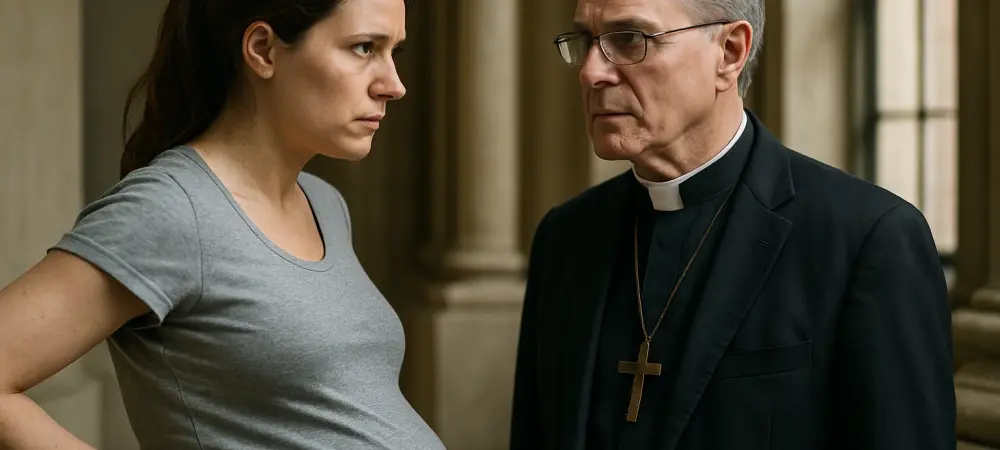
I’m thrilled to sit down with Ling-Yi Tsai, a renowned expert in employment law and religious freedom litigation. With decades of experience navigating complex legal landscapes, Ling-Yi has a deep understanding of workplace protections and the intricate balance between religious exemptions and employee rights. Today, we’ll dive into a recent federal court decision involving the U.S. Conference of Catholic Bishops (USCCB) and the Pregnant Workers Fairness Act (PWFA), exploring its implications for both religious organizations and workers. Our conversation will touch on the scope of the law, the specifics of the court’s rulings, and the ongoing tension between federal regulations and religious beliefs.
Can you break down what the Pregnant Workers Fairness Act (PWFA) is and why it’s been making headlines recently?
The Pregnant Workers Fairness Act, or PWFA, is a federal law that went into effect in 2023, designed to ensure that pregnant workers receive reasonable accommodations in the workplace. Think of things like extra breaks, modified duties, or time off for medical appointments—basically, support to help them keep working safely during pregnancy. It builds on existing laws like the Americans with Disabilities Act but focuses specifically on pregnancy-related needs. The reason it’s been in the news lately is due to controversy over how the U.S. Equal Employment Opportunity Commission (EEOC) interprets the law. The EEOC included accommodations for things like abortion as part of pregnancy-related conditions, which has sparked significant pushback from religious organizations and some states who argue it oversteps the law’s intent and infringes on their beliefs.
What was the federal judge’s decision on September 3, 2025, regarding the U.S. Conference of Catholic Bishops, and how does it impact them?
On September 3, 2025, a federal judge issued a ruling that blocked the EEOC from enforcing the PWFA against the USCCB in ways that would require them to provide accommodations for abortions, contraception, sterilization, artificial reproductive technologies, or surrogacy if those conflict with their religious beliefs. This decision is specific to the USCCB, unlike broader rulings we’ve seen before, and it means they’re exempt from certain mandates under the EEOC’s interpretation of the PWFA. Essentially, they don’t have to facilitate or accommodate procedures or services they morally oppose, which is a significant win for their religious freedom argument in this context.
This wasn’t the first ruling on this issue for the USCCB. Can you walk us through what happened earlier in May 2025 and how it compares to the recent decision?
Absolutely. Back in May 2025, the same judge, David Joseph, made a broader ruling on the PWFA as it related to elective abortions. That decision vacated the EEOC’s rule on a nationwide basis—not just for the USCCB, but for everyone—saying the agency couldn’t require accommodations for elective abortions under the PWFA. It was a sweeping move that challenged the EEOC’s authority across the board. The September 3 ruling, however, is narrower. It focuses specifically on the USCCB and expands the exemptions to include medical abortions and other procedures like contraception and surrogacy. So, while May’s ruling had a national impact on one issue, the recent order is more tailored but covers a wider range of accommodations for this particular group.
The USCCB pushed for an expansion of these exemptions to cover medical abortions and other procedures. What drove their urgency in seeking this broader protection?
The USCCB argued that without these expanded exemptions, they were facing what they called “irreparable harm.” Their position was that complying with the EEOC’s interpretation of the PWFA would force them to violate their deeply held religious beliefs by accommodating procedures they oppose. They also tied this to practical concerns, like their ability to apply for federal contracts and grants. To get those, they must certify compliance with federal law, and they felt that being out of step with the EEOC’s rules—even if under protest—put them at risk of losing funding or facing legal penalties. It was a mix of moral conviction and real-world operational challenges that fueled their push for broader protections.
The EEOC seemed taken aback by the USCCB’s urgency in this case. Can you shed light on their perspective and what they meant by calling this an “emergency of the Bishops’ own making”?
The EEOC’s stance was essentially that the USCCB was creating a crisis where there didn’t need to be one. When they called it an “emergency of the Bishops’ own making,” they meant that the USCCB was pushing for immediate court intervention despite the EEOC already agreeing not to enforce the PWFA in ways that would require accommodations for abortions during ongoing appeals or until a new rule was in place. The EEOC felt they had offered a reasonable compromise, signaling they wouldn’t pursue action against the USCCB on these specific issues for the time being. So, from their view, the urgency and legal fight seemed unnecessary or self-imposed since a temporary resolution was on the table.
The judge didn’t restrict the EEOC from accepting charges or issuing right-to-sue notices in this case. Why does that matter for employees and the broader context of the PWFA?
This part of the ruling is crucial because it preserves a key piece of the enforcement process for employees. Even though the USCCB has these exemptions, workers can still file complaints with the EEOC if they believe their rights under the PWFA are being violated. The EEOC can accept those charges, notify the employer, and issue right-to-sue notices, which allow employees to take their case to court if the agency doesn’t resolve it. This balances the religious exemptions granted to the USCCB with the rights of workers to seek redress. It means the door isn’t completely shut for employees to challenge perceived violations, even if the USCCB is shielded from certain enforcement actions by the EEOC itself.
Looking ahead, what is your forecast for how the tension between religious exemptions and workplace protections like the PWFA will evolve in the coming years?
I think we’re going to see this tension continue to play out in courts and legislatures for the foreseeable future. The PWFA is just one piece of a larger puzzle where workplace laws are increasingly intersecting with religious freedom claims. On one hand, there’s a strong push to expand protections for workers, especially in areas like pregnancy and family planning, which are deeply personal. On the other, religious organizations and employers are asserting their rights to operate according to their beliefs, often backed by recent Supreme Court precedents favoring religious liberty. I expect more targeted lawsuits like this one, where specific groups seek tailored exemptions, alongside broader challenges to agency rules. Legislatively, we might see bills attempting to clarify the scope of laws like the PWFA, but getting consensus in a polarized environment will be tough. Ultimately, the balance will likely hinge on how courts interpret the limits of accommodation versus the sincerity and burden of religious objections. It’s a space to watch closely.