

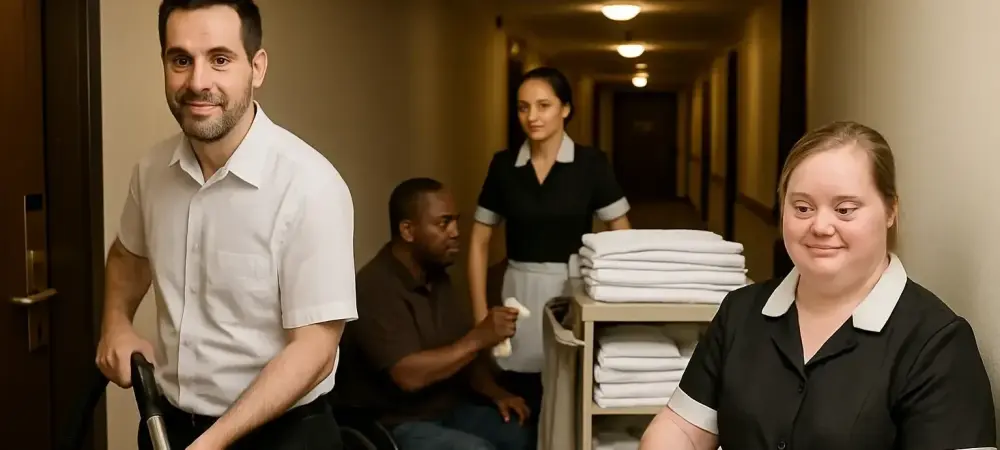
The hospitality sector is clearly under strain. Could the key to solving hotel labor shortages lie in an often-overlooked talent pool? Amidst a bustling high season, some hotels face an uphill battle, struggling to meet guest needs with understaffed teams. What’s contributing to this crippling shortage? Is there an unexpected reservoir of talent ready to address these challenges?
Understanding the Crisis
The hotel industry is grappling with a significant labor shortage, impacting service quality and efficiency. This challenge, exacerbated by the recent pandemic, has left many businesses struggling to recruit and retain staff. Broader economic trends indicate a shift towards more diverse workforces as businesses seek innovative solutions for ongoing staffing issues. The shortage is not just about numbers; it’s about finding skilled workers who enhance cultural diversity and operational effectiveness.
Exploring a Promising Workforce
Individuals with intellectual and developmental disabilities are emerging as a potential answer to this staffing crisis. Their current employment rates are alarmingly low, despite their capabilities matching many roles in the hospitality sector. Case studies have shown that several hotels integrating these individuals have benefited in unforeseen ways. Beyond merely filling gaps, their inclusion has fostered a collaborative workplace culture, boosted employee loyalty, and decreased turnover rates.
Insights from Experts
According to research from Penn State University’s School of Hospitality Management, employing individuals with disabilities does more than solve hiring problems; it transforms work environments. Experts advocate for a diverse and inclusive workforce, suggesting that collaboration with this group can lead to a stronger sense of community within organizations. Stories from hotels that have embraced this workforce highlight increased camaraderie and improved customer experience.
Steps Toward Inclusion
For hotels interested in this approach, the path to inclusivity begins with structured steps. Incorporating job coaches and modifying job designs are essential. Job coaches facilitate seamless integration, ensuring both communication and task execution align with the capabilities of all employees. Additionally, harnessing government incentives, along with tailored training programs, ensures that the hiring process is mutually beneficial. Developing a supportive infrastructure not only aids new employees but strengthens the entire workforce.
Moving Forward
As the hospitality industry continues its recovery from recent setbacks, addressing labor shortages remains critical. Employing individuals with intellectual and developmental disabilities presents a multifaceted solution. While providing an immediate answer to staffing gaps, it also enhances team dynamics and enriches workplace culture. As hotels implement these practices, they witness improvements not only operationally but also in terms of customer satisfaction and workforce stability. Looking ahead, these initiatives promise a more adaptable and diverse future for the industry.