

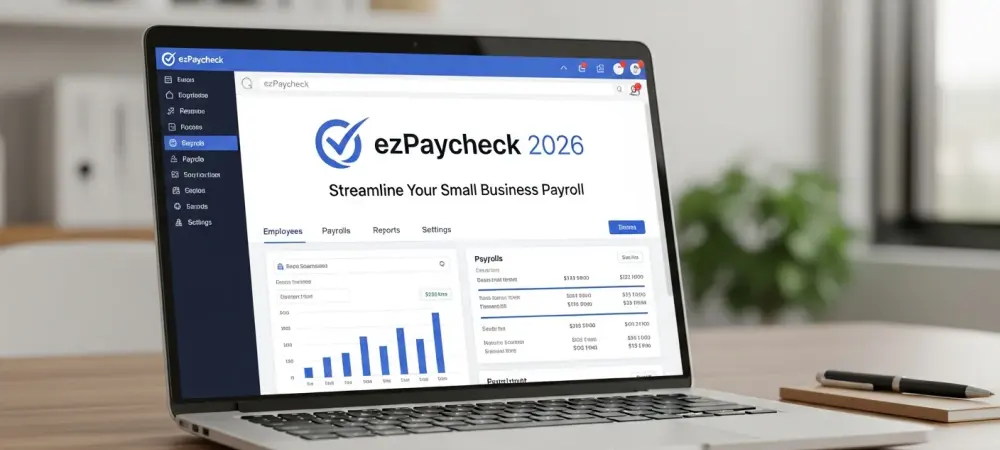
Small business owners frequently face the daunting task of navigating an increasingly complex web of federal and state tax regulations while attempting to maintain operational efficiency. This specific challenge often leads to administrative bottlenecks that distract from core business growth and innovation. Unlike enterprise-level corporations that possess dedicated human resources departments, smaller ventures require software solutions that offer both sophistication and simplicity. The arrival of ezPaycheck 2026 addresses these concerns by providing an integrated platform designed to handle diverse payroll needs without the recurring subscription costs associated with many modern cloud services. By centralizing employee data, tax tables, and payment processing, the software allows managers to regain control over their financial timelines. This shift toward self-contained management tools reflects a broader trend among entrepreneurs who prioritize data sovereignty and predictable overhead costs in an era of fluctuating digital service pricing and constant connectivity requirements.
Local Control in a Cloud-Dominant Era
Strategy 1: Maintaining Local Data Sovereignty
In a landscape where data breaches and third-party outages are becoming more frequent, the preference for localized software solutions has seen a significant resurgence among tech-savvy business leaders. By hosting payroll data on internal hardware, companies effectively eliminate the risks associated with storing sensitive employee information on external servers. This architecture ensures that the business maintains absolute ownership over its financial records, providing a level of privacy that multi-tenant cloud platforms often struggle to guarantee. Moreover, a local installation means that payroll can be processed even during internet service interruptions, preventing delays in employee compensation. The 2026 version of this software emphasizes this autonomy by offering robust encryption protocols that work in tandem with the user’s existing network security measures. This approach not only safeguards social security numbers and banking details but also simplifies compliance with localized data protection laws that vary significantly across different states.
Logistics 2: Enhancing Physical Payment Systems
Efficiency in physical document production remains a cornerstone of small business operations, particularly for those who still utilize paper checks as a primary or secondary method of payment. The software integrates seamlessly with standard laser printers, allowing for the creation of professional checks on blank stock, which significantly reduces the ongoing expense of purchasing pre-printed forms. Beyond simple check printing, the system manages the complex layout requirements for stubs, ensuring that every employee receives a detailed breakdown of their earnings, deductions, and tax withholdings. This level of detail is crucial for transparency and helps prevent inquiries that might otherwise consume the business owner’s time. Additionally, the software supports various check formats, including top-of-page, middle, and bottom placements, providing flexibility for different accounting preferences. By consolidating the printing process into a single, intuitive interface, the platform removes the need for external formatting tools.
Precision and Compliance in Financial Operations
Tax Accuracy: Managing Modern Regulatory Obligations
Managing the intricacies of the 2026 tax landscape requires a system that can adapt to rapid changes in federal, state, and local withholding requirements without necessitating manual entry for every update. The software facilitates this by incorporating built-in tax tables that cover all fifty states, alongside specific provisions for various local jurisdictions. This automation ensures that calculations for social security, Medicare, and federal unemployment taxes are executed with high precision, minimizing the risk of costly penalties from the Internal Revenue Service. Furthermore, the system generates necessary forms such as the W2, W3, 940, and 941, which streamlines the quarterly and annual reporting processes that typically overwhelm small business administrative staff. By providing a clear trail of all tax-related transactions, the software enables owners to verify their filings against historical data with ease. This reliability is essential for maintaining a clean audit trail for any future audits.
Strategic Adoption: Future-Ready Planning for Small Businesses
Business leaders who adopted localized payroll systems in 2026 found that the transition necessitated a clear strategy for long-term data management and hardware maintenance. Establishing a routine for regular backups became the primary recommendation for those moving away from cloud-based alternatives to ensure that historical payroll records remained accessible in the event of local hardware failure. Implementation teams suggested that new users perform a dual-run period, where the new software operated alongside the old system for at least two cycles to verify accuracy before full migration. Decision-makers also realized the importance of cross-training administrative staff to handle the software’s advanced reporting features, ensuring that the business remained resilient against personnel changes. Moving forward, the integration of these localized tools into a wider digital ecosystem required periodic reviews of security protocols to match evolving cyber threats. Organizations successfully reduced their overhead while gaining clarity into costs.