

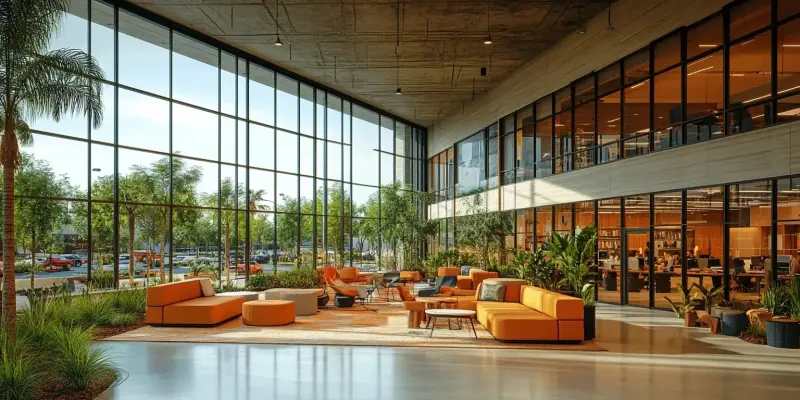
As the world continues to adapt to a post-pandemic reality, the question of how to fully utilize office spaces outside of standard business hours has become increasingly pertinent. The shift from remote to on-premise roles has introduced the need to maximize the utility of these spaces, which often remain dormant after traditional work hours. Building owners, architectural firms, and companies are now exploring innovative ways to repurpose these spaces to create additional value by hosting community meetings, nonprofit events, and dining experiences.
Multifunctional Design in Practice
Dallas Studio of Perkins&Will Innovations
A prime example of this trend is evident at the Dallas Studio of Perkins&Will. This studio has effectively embraced multifunctional space designs to host a variety of community events. According to Courtney Johnston, managing principal of the Dallas Studio, integrating spaces for community use breathes new life into the conventional office setup. A notable design project, Impact Ventures, underscores this approach by featuring a community-oriented atmosphere that is both vibrant and heavily branded, aiming to inspire and engage employees and visitors alike.
Johnston illustrates the inventive use of their office space at the firm’s studio located in the historic Dallas High School. By repurposing an old auditorium within the high school, they have created a venue capable of hosting events for nonprofits and city officials. This initiative showcases the boundless potential of office spaces that extend their utility far beyond the standard 9-to-5 workday. The Perkins&Will example highlights how office environments can transform into dynamic spaces that offer value to a broader segment of the community, proving that office spaces need not lie dormant outside working hours.
Spectorgroup’s Dynamic Approach
Scott Spector, principal of Spectorgroup, adds that there is a growing trend among clients looking for innovative after-hours uses of their office spaces. Spectorgroup has responded to this demand by designing dynamic, multi-functional spaces capable of hosting a diverse array of events, including client meetings, art exhibitions, and film screenings. Their approach incorporates “hospitality zones,” which are essential in making these spaces attractive and functionally adaptable throughout the day and night.
These hospitality zones contribute to a welcoming atmosphere while ensuring the space remains useful for various purposes. The adaptability of these spaces demonstrates the potential for office environments to serve multiple roles, providing value for employees and the surrounding community. The emphasis on detailed planning during the design phase ensures that spaces remain lively and active, preventing them from becoming stagnant after business hours. This innovative approach promotes a more engaging and inclusive workspace that reflects the varied needs of modern office utilization.
Monetizing Underutilized Spaces
Potential for Additional Revenue
An emerging trend within this paradigm is the potential for companies to monetize their underutilized office spaces, contingent upon the stipulations of their leases. This monetization involves renting out these spaces for various events or purposes during off-hours, transforming what were once idle areas into revenue-generating hubs. The potential applications are numerous, from hosting local community events to offering space for transient pop-up shops or even temporary coworking areas. The added revenue can significantly contribute to offsetting operation costs, making the office space more financially efficient.
To achieve successful monetization, companies must engage in thorough planning during the initial design and construction phases. Working closely with architects and designers to create adaptable spaces ensures that office environments can pivot to meet diverse needs seamlessly. The focus on multifunctional design not only boosts potential revenue but also fosters a sense of community and engagement within the workspace. By anticipating various uses and incorporating flexibility into the layout, companies can maximize their space’s potential while contributing positively to the local community.
Creating Livable Office Environments
As the world adjusts to a post-pandemic reality, the challenge of how to make the most of office spaces outside of standard business hours has become increasingly relevant. The transition from remote work back to on-site roles has highlighted the importance of maximizing these spaces, which often sit unused after regular work hours. In response, building owners, architectural firms, and companies are now seeking creative ways to repurpose office spaces to generate additional value. They are considering options such as hosting community gatherings, nonprofit events, and unique dining experiences. By reinventing the use of these spaces, they can build stronger community ties and also create new revenue streams. This approach not only optimizes the physical space but also fosters innovation and resilience, ensuring that office buildings are vibrant hubs of activity at all hours. The move towards multifunctional spaces reflects a broader trend towards flexibility and adaptability in the workplace, driven by the challenges and lessons of the pandemic.