

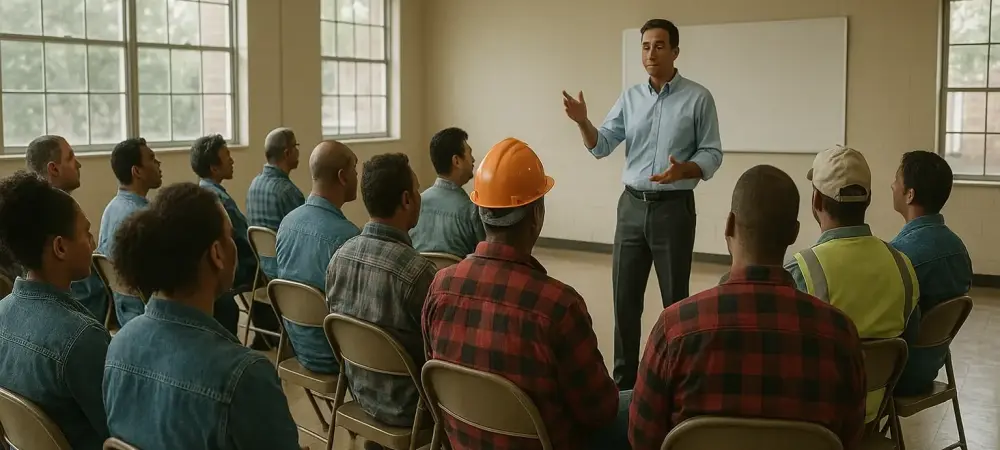
Industrial peace in the post-uprising era depends on the government’s ability to foster a tripartite cooperation model between employers, workers, and state agencies. The 2024 mass uprising serves as a monumental turning point, fundamentally altering the trajectory of industrial relations and human rights within the nation. Prior to this shift, the labor landscape was defined by a repressive environment where organizing for better conditions often resulted in severe personal and professional consequences. Workers and activists faced systematic intimidation, ranging from arbitrary terminations and criminal prosecutions to physical violence and enforced disappearances. The current administration is now tasked with dismantling this legacy of fear and replacing it with a robust legal framework that guarantees the fundamental right to associate and bargain collectively. This transformation is not merely a matter of legal compliance but a socio-political necessity for a country that seeks to maintain its competitive edge in the global market while ensuring the dignity of its massive workforce. The transition from a state of “suffocation” to one of open democratic participation represents the most significant challenge and opportunity for the current government.
The International Catalyst: Addressing Global Standards
The Article 26 Complaint: A Technical and Reputation Crisis
The Article 26 complaint, lodged with the International Labor Organization in 2019, represents the most severe form of international labor scrutiny, signaling a deep-seated failure in a nation’s commitment to ratified conventions. For Bangladesh, this complaint centered on the persistent inability to implement standards related to labor inspections, the right to organize, and collective bargaining. Throughout 2026, the government has worked under the shadow of a strict roadmap established by the ILO Governing Body, which mandates comprehensive reforms before a final deadline in March 2027. Failure to meet these benchmarks would not only result in international diplomatic friction but could also trigger economic consequences, such as the loss of preferential trade status in Western markets. The resolution of this complaint is therefore a matter of national economic security, forcing a rapid modernization of legal and administrative structures that were previously resistant to change. The scrutiny has pushed the state to move beyond rhetoric and adopt measurable metrics for progress in worker rights.
The roadmap for 2026 has focused heavily on aligning domestic practices with ILO Conventions 87 and 98, which serve as the bedrock of freedom of association. Historically, these conventions were often ignored or bypassed through local regulations that favored industrial owners over labor representatives. The current pressure from the international community acts as a necessary counterweight to the powerful industrial lobbies that have long influenced domestic policy. To avoid the stigma of a Commission of Inquiry, the government must prove that its legislative amendments are being implemented in the factories, not just printed in the official gazette. This involves a level of transparency in reporting and a willingness to allow external monitors to verify improvements. As the 2027 deadline approaches, the integration of global standards into the national legal fabric has become the primary metric by which the success of the post-uprising government is judged, reflecting a shift toward a more accountable and globally integrated economic model.
Structural Shifts: The Four-Pillar Roadmap
The strategy to resolve the Article 26 challenge is built upon four distinct but interconnected pillars: legal reform, administrative simplification, enhanced enforcement, and the protection of workers from violence. A critical component of this structural shift involves the harmonization of Export Processing Zone (EPZ) laws with the general Labor Act of 2026. For years, EPZs operated as legal enclaves where workers were denied the same rights to unionize that were afforded to those in other sectors. True reform requires that the Ministry of Labor and the Department of Inspection for Factories and Establishments have full jurisdictional access to these zones. By ensuring that EPZ workers enjoy uniform legal protections, the government is attempting to eliminate the tiered rights system that international observers have long criticized as discriminatory and exploitative. This harmonization is essential for creating a level playing field across all manufacturing sectors and ensuring that economic growth does not come at the expense of fundamental human rights.
Another vital element of the roadmap is the digitalization and simplification of the trade union registration process. In the past, the registration system was frequently used as a tool for administrative harassment, with applications being rejected for minor technicalities or kept in a state of perpetual delay. The new system, implemented throughout 2026, utilizes a digital database to ensure transparency and accountability in the approval process. The law now mandates a strict 55-day limit for the government to either approve or provide a legally justified rejection for union applications. This shift aims to remove the “gatekeeping” power of bureaucrats who were often aligned with factory owners to prevent the formation of collective bargaining units. By streamlining this process, the state is signaling a commitment to fostering an environment where workers can organize without fear of administrative sabotage. The success of this pillar depends on the technological infrastructure being used to prevent the intentional loss or alteration of physical documents, which was a common tactic for suppressing union activity in previous years.
Legislative Milestones: Economic and Social Protections
Enhancing Union Formation: The Labor Act of 2026
The enactment of the Labor Act of 2026 marks a historic departure from restrictive labor policies by significantly lowering the threshold for forming trade unions. Previously, the law required a prohibitively high percentage of worker support, which served as a barrier to entry for many small and medium-sized enterprises. The current reform allows unions to form with a minimum of 20 workers in certain contexts, with staggered requirements for larger establishments, thereby democratizing the ability to engage in collective bargaining. This change is designed to empower workers in the garment sector and beyond, allowing them to participate directly in the decisions that affect their livelihoods. By reducing these legal hurdles, the government is acknowledging that a healthy industrial sector requires a balanced power dynamic between management and labor. This legislative milestone is seen as a direct response to the demands of the 2024 uprising, where the right to organize was a central pillar of the movement’s agenda for social justice and economic equity.
Beyond the right to organize, the 2026 Act incorporates advanced protections against gender-based violence and harassment in the workplace, aligning the nation with ILO Convention 190. The law now mandates the creation of complaint resolution committees and safety committees in all major industrial units, providing a formal mechanism for addressing grievances that were previously overlooked. This focus on occupational health and safety is particularly relevant given the nation’s history of industrial tragedies. By ratifying Conventions 155 and 187 in the preceding year, Bangladesh has committed to a promotional framework for safety that treats the physical well-being of the worker as a non-negotiable priority. These committees are not just advisory bodies; they are legally empowered to identify hazards and demand corrective actions from management. This shift toward a safer work environment is intended to reduce the frequency of industrial accidents and foster a culture of prevention rather than reaction. The integration of social protections into the labor code reflects a broader understanding of the worker as a citizen with rights that extend beyond simple wage compensation.
Economic Responsiveness: Wages and Social Dialogue
To address the volatile economic conditions of 2026, the new legal framework has introduced a more responsive wage adjustment mechanism. The law now mandates that the minimum wage for industrial sectors be reviewed every three years, a significant reduction from the previous five-year cycle. This change is crucial for protecting the purchasing power of workers in an era of fluctuating inflation and rising living costs. By making wage reviews more frequent, the state aims to mitigate the desperation that often leads to industrial unrest and spontaneous protests. This proactive approach to economic stability is coupled with the establishment of sector-specific wage boards that include genuine representatives from both labor and management. The goal is to ensure that wage increases are based on data and mutual agreement rather than being imposed unilaterally by the state or influenced solely by the profitability of manufacturers. This responsiveness is a key strategy for maintaining social cohesion during periods of economic transition.
Complementing the economic reforms is a renewed emphasis on social dialogue and alternative dispute resolution (ADR). The government has invested in training programs to help both employers and workers navigate conflicts through negotiation rather than litigation or strikes. The introduction of social dialogue forums at the factory level allows for the early identification of issues, ranging from overtime disputes to workplace conditions, before they escalate into larger confrontations. By fostering a culture of communication, the state hopes to reduce the burden on the already overstretched Labor Court system. This approach acknowledges that industrial peace is most sustainable when it is built on a foundation of mutual respect and shared interests. The success of ADR mechanisms in 2026 has shown that when workers feel their voices are heard, they are more likely to engage in constructive dialogue. This focus on communication is essential for transforming the traditional adversarial relationship between labor and capital into a partnership that supports long-term industrial growth and stability.
Enforcement Challenges: Beyond Legislative Text
Strengthening Oversight: Inspection and Judicial Capacity
The efficacy of the 2026 labor reforms relies heavily on the Department of Inspection for Factories and Establishments (DIFE) and its ability to enforce the new standards across thousands of industrial units. Throughout 2026, the government has focused on a massive scaling of the inspectorate, hiring and training hundreds of new officers to ensure that every factory is subject to regular and rigorous oversight. These inspectors are now receiving specialized training in identifying modern workplace hazards, including electrical safety, structural integrity, and occupational health risks. Transparency has become a central theme, with inspection reports being made available in a public database to prevent corruption and ensure that corrective actions are followed. Without a credible threat of enforcement, even the most progressive laws remain ineffective. The expansion of the DIFE is therefore a critical investment in the rule of law within the industrial sector, moving away from a system of voluntary compliance to one of mandatory accountability.
Parallel to the expansion of the inspectorate is the urgent need to address the judicial backlog within the Labor Court system. For years, workers seeking justice for wrongful termination or unpaid wages have faced delays that could stretch into several years, effectively denying them their rights. In 2026, the government has moved to establish additional Labor Courts in major industrial hubs like Gazipur, Chattogram, and Narayanganj. The goal is to ensure that labor disputes are resolved within a reasonable timeframe, providing workers with the legal recourse they were promised under the new Act. The judicial reform also includes training for judges and legal professionals on the nuances of international labor standards and the specific provisions of the Labor Act of 2026. By increasing the capacity of the courts, the state is attempting to restore faith in the legal system as a neutral arbiter of industrial conflict. Ensuring that “justice delayed” does not continue to be “justice denied” is a fundamental requirement for the long-term success of the nation’s labor reform agenda.
Mitigating Risks: Preventing Paper Reforms through Vigilance
A persistent concern among domestic labor unions and international observers is the risk of “paper reforms,” where legislative changes are made to satisfy international critics but are not reflected in actual workplace practices. This danger is particularly acute during the drafting of the implementing rules and regulations that follow the passage of the main Act. If these secondary documents introduce new bureaucratic hurdles or allow for broad interpretations that favor employers, the progress made in the 2026 Act could be significantly undermined. Throughout the current year, civil society organizations and labor federations have remained vigilant, demanding that the rule-making process be as participatory and transparent as the legislative process itself. They argue that the true test of the government’s commitment lies in the details of these regulations, which govern everything from union registration forms to the procedures for filing a safety complaint. Continuous oversight is necessary to ensure that the spirit of the reform is maintained.
Vigilance also extends to the monitoring of the factory floor, where management may attempt to bypass new laws through informal practices or intimidation. Reports of “shadow unions”—organizations created by management to prevent the formation of genuine, independent unions—remain a challenge that the government must address through the new registration system. Furthermore, the practice of blacklisting union activists, which prevents them from finding work across the sector, requires a coordinated response from both the DIFE and the judicial system. Labor activists emphasize that the 2024 uprising was not just about changing the law, but about changing the culture of the workplace. This requires a shift in mindset from factory owners who have historically viewed labor rights as a threat to profitability. The ongoing monitoring by international brands and labor rights organizations provides an additional layer of accountability, ensuring that the reforms are not just a temporary adjustment to appease the ILO, but a permanent shift in how the nation manages its industrial relations.
Redefining the Industrial Culture
Ending the Cycle: Anti-Union Discrimination and Violence
One of the most visceral challenges addressed in 2026 has been the eradication of the culture of violence and discrimination directed at labor organizers. For decades, the act of organizing was met with physical threats and systemic blacklisting, creating a climate of fear that suppressed collective action. The current reform agenda includes specific legal penalties for employers who engage in anti-union discrimination, along with a mandate for the state to investigate and prosecute acts of violence against activists. This change is not only about legal enforcement but about a fundamental shift in the social contract between the state and its citizens. Training programs for law enforcement agencies have been initiated to ensure that the police are no longer used as a tool for suppressing legitimate labor protests. By holding perpetrators of violence accountable, the government is attempting to build an environment where the exercise of fundamental rights does not carry the risk of physical harm.
A sustainable end to anti-union discrimination also requires the active participation of management in fostering a new industrial culture. In 2026, the government and various trade associations have collaborated on training modules for factory managers and HR professionals, focusing on the benefits of constructive industrial relations. These programs emphasize that a stable, satisfied workforce is more productive and less prone to the types of disruptions that hurt the bottom line. By reframing collective bargaining as a legitimate business process rather than an existential threat, the state hopes to encourage a more cooperative relationship between capital and labor. This cultural shift is essential for the long-term success of the reforms, as it moves the focus from conflict to collaboration. The goal is to create a workplace where workers feel safe to voice their concerns and where management views these concerns as an opportunity for improvement rather than a cause for retaliation.
Establishing the Social Contract: Steps Toward a Modern Workforce
The labor reforms initiated between 2024 and 2026 were designed to redefine the national social contract by prioritizing the dignity and safety of the workforce. The transition from a model of cheap, repressed labor to one of fair wages and high standards was not merely a reaction to international pressure but a strategic move to secure the nation’s economic future. By 2026, the government had successfully implemented the Labor Act and expanded the reach of the DIFE, yet the journey remained unfinished. Actionable next steps were identified to maintain this momentum, including the immediate and full digitization of all labor records to eliminate administrative corruption and ensure that every worker’s rights are traceable and protected. This technological shift was paired with a commitment to increase the number of mobile labor courts to provide rapid justice in remote industrial clusters, ensuring that the legal system remained accessible to the most vulnerable.
The government also prioritized the integration of vocational training with labor rights education, ensuring that the next generation of workers entered the market with a full understanding of their legal protections. These reforms were reinforced by a policy of radical transparency, where factory safety ratings and compliance records were made publicly accessible, allowing global consumers and domestic stakeholders to make informed decisions. By fostering an inclusive environment where labor unions were recognized as essential partners in national development, the state sought to prevent the recurrence of the unrest that had previously destabilized the sector. The success of these initiatives rested on the continued collaboration between the tripartite partners—government, employers, and workers—to ensure that the legal achievements of 2026 translated into a lived reality for every person on the factory floor. These practical measures formed the foundation for a resilient and equitable industrial economy that was prepared to meet the challenges of the coming decade.