

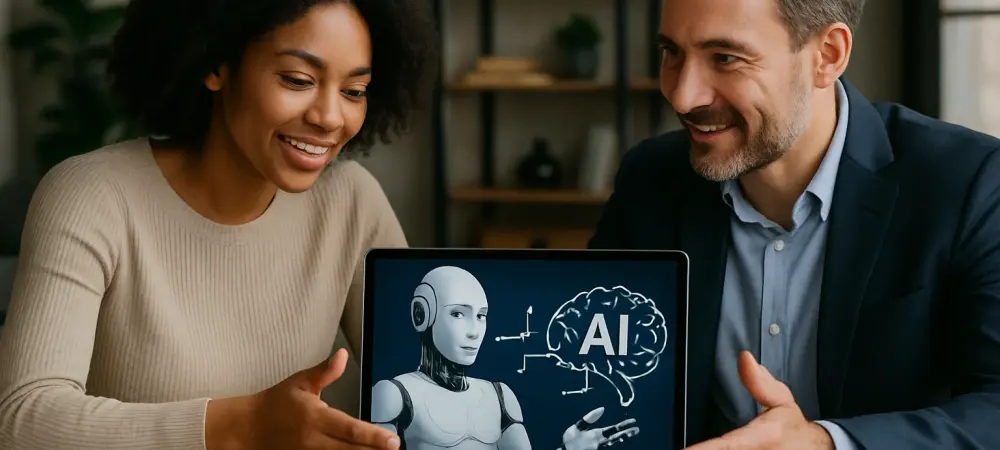
In a world where artificial intelligence reshapes industries overnight, a staggering reality emerges: despite billions invested in cutting-edge AI tools, nearly half of organizations report underwhelming results, raising a critical question about the missing piece. Could this fundamental element be something far more basic than technology itself? The answer may lie in the hands of employees, whose skills and adaptability might determine whether AI transforms workplaces or becomes just another expensive misstep.
Why Is AI Adoption Stalling Despite Massive Investment?
Massive financial commitments to AI technologies have not guaranteed success for many organizations. Reports indicate that while companies pour resources into sophisticated systems, a significant number struggle to see the promised return on investment. The disconnect often stems from an overemphasis on acquiring tools without addressing the readiness of teams to leverage them effectively.
This gap highlights a crucial oversight in strategic planning. Technology alone cannot drive transformation if the workforce lacks the capability to integrate it into daily operations. The focus must shift to understanding why even the most advanced algorithms fail to deliver when placed in unprepared environments, setting the stage for a deeper exploration of underlying causes.
The Hidden Barrier: Human Skills in an AI-Driven World
As digital transformation accelerates across sectors, the disparity between technological advancement and workforce readiness becomes increasingly evident. AI is no longer a futuristic concept but a present-day force reshaping job roles and business models. Yet, without the right human competencies, its potential remains untapped, leading to inefficiencies and missed opportunities.
The stakes are high, with productivity losses and stalled innovation affecting companies that neglect this critical balance. Leaders and employees alike face the challenge of adapting to a landscape where technical prowess must coexist with uniquely human traits. This dynamic underscores the urgent need to prioritize skill development alongside system implementation.
Unpacking the 13 Human Skills Essential for AI Success
Research by learning scientists has identified 13 pivotal human skills crucial for harnessing AI effectively, grouped into four key areas: cognitive abilities, AI responsibility, self-management, and communication. Cognitive skills, such as analytical reasoning and creativity, empower individuals to solve complex problems and innovate beyond automated outputs. For instance, systems thinking enables workers to anticipate AI’s broader impact on workflows.
AI responsibility, encompassing ethics and cultural sensitivity, ensures technology is used with integrity, as seen in decisions that prioritize fairness over efficiency. Self-management skills like adaptability and determination help employees navigate rapid changes, while communication competencies, including tailored messaging and feedback, foster collaboration. These skills transform passive tool usage into active, value-driven outcomes, as evidenced by upskilling programs showing marked improvements in AI application.
Practical examples further illustrate this impact. An employee using curiosity to experiment with AI-driven insights can uncover novel solutions, while detail orientation ensures accuracy in data interpretation. Together, these capabilities create a workforce that doesn’t just operate AI but amplifies its potential through human ingenuity.
Voices of Insight: Expert Perspectives on AI and Human Skills
Expert opinions reinforce the notion that AI adoption is as much a human challenge as a technological one. A prominent learning officer has emphasized that without fostering skills like ethical oversight and creative experimentation, AI initiatives risk falling short. This perspective aligns with qualitative research among top AI users, who consistently credit their success to balancing technical know-how with critical thinking.
Academic studies add further weight to this argument, revealing AI’s trade-offs, such as its potential to limit diversity of thought if not guided by human judgment. Meanwhile, employer surveys indicate that 60% of hiring managers now value soft skills over traditional qualifications, a shift reflecting the need for a well-rounded workforce. These insights collectively urge a reevaluation of how AI strategies are crafted and executed.
The data paints a compelling picture of evolving priorities. Organizations that overlook human capabilities in favor of purely technical solutions often face diminished outcomes. This growing consensus among researchers and industry leaders highlights the necessity of integrating skill-building into the core of AI deployment plans.
Actionable Steps to Bridge the Human Skills Gap in AI Integration
Addressing the human skills gap requires a structured approach for both organizations and individuals. One effective strategy involves designing targeted upskilling programs that focus on analytical reasoning and empathy, ensuring employees can critically assess AI outputs while maintaining a human-centered perspective. Such initiatives have shown success in enhancing workforce readiness for tech-driven environments.
Leaders can also foster a culture of curiosity and feedback by encouraging experimentation and open dialogue about AI applications. Practical tools like employee surveys and performance metrics help identify existing skill deficiencies, allowing for tailored interventions. Balancing technical training with soft skills development ensures that teams remain collaborative and innovative, even as automation grows.
Finally, integrating these competencies into daily operations maximizes AI’s impact while preserving human strengths. Companies that have adopted this dual focus report up to a 75% increase in project success rates, demonstrating the tangible benefits of a skilled workforce. This roadmap offers a clear path toward aligning human potential with technological advancement for sustainable results.
Reflecting on the Path Forward
Looking back, the journey of AI integration revealed a profound truth: technology’s promise was only as strong as the human hands guiding it. Organizations that once stumbled over unmet expectations found clarity in prioritizing skills alongside systems. The lessons learned underscored that neglecting human capabilities often led to diminished returns, no matter the investment.
The next steps demanded a deliberate shift in focus, urging companies to invest in comprehensive training that nurtured both technical and interpersonal strengths. By fostering environments where curiosity and ethics thrived, businesses could ensure AI became a partner, not a barrier. This balanced approach paved the way for innovation that honored both machine precision and human insight.