

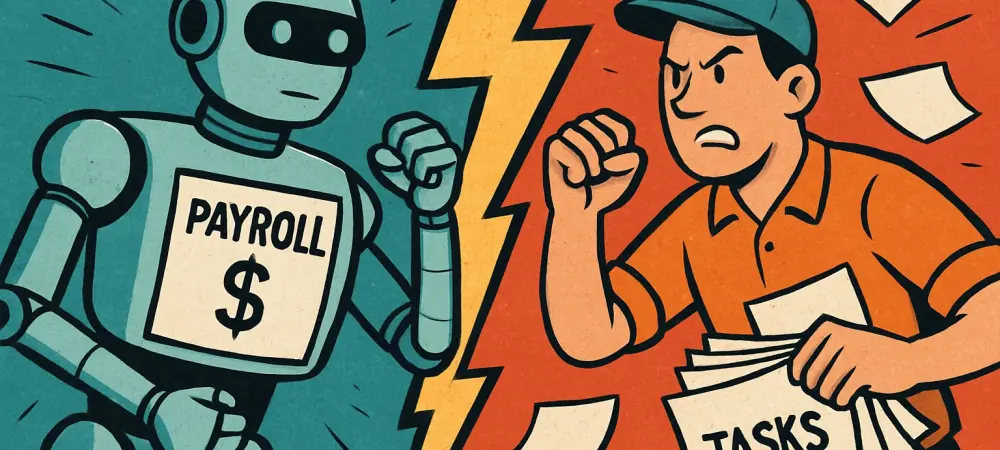
What happens when cutting-edge technology collides with stubbornly persistent old habits in a critical business function like payroll, the heartbeat of any organization? In 2025, payroll finds itself at this very intersection, as artificial intelligence (AI) promises unprecedented efficiency while manual tasks inexplicably surge. Picture a payroll team equipped with AI tools capable of automating complex calculations, yet still hunched over spreadsheets late into the night. This contradiction isn’t just a curiosity—it’s a pressing challenge reshaping how businesses operate and how employees are paid.
A Payroll Puzzle: Can Technology Outpace Tradition?
The payroll landscape today is a battleground of innovation versus inertia. On one side, AI stands as a beacon of hope, poised to streamline processes that have long been tedious and error-prone. On the other, manual methods cling on with surprising tenacity, bogging down professionals with repetitive data entry and outdated systems. This tension raises a pivotal question: can technology truly transform payroll, or will traditional practices continue to hold sway?
Delving deeper, the stakes become clear. Payroll isn’t merely a back-office task; it’s a linchpin of trust between employers and employees. When inefficiencies creep in—whether from tech glitches or manual oversights—the ripple effects can disrupt morale and even compliance. As businesses grapple with this puzzle, the balance between adopting AI and shedding outdated habits emerges as a defining issue for the industry.
Why Payroll Matters More Than Ever in the AI Era
Payroll has never been more critical than it is now, with AI reshaping business operations at lightning speed. Beyond ensuring employees receive their wages, payroll systems underpin organizational stability and regulatory adherence in an era of heightened scrutiny. The pressure to deliver flawless results quickly has intensified, making payroll a focal point for leaders aiming to maintain competitive edges.
A staggering 73% of payroll professionals view AI as the most transformative force in their field over the next year, according to a recent industry report by MHR. This statistic underscores the urgency for businesses to adapt, as employees expect seamless pay experiences and regulators demand precision. Yet, with growing complexities in tax laws and global workforces, the margin for error shrinks, amplifying payroll’s role in corporate success.
The implications extend beyond the payroll department. For every business leader, ensuring accurate and timely compensation is a non-negotiable priority that influences retention and reputation. As AI enters the scene, the opportunity to redefine payroll as a strategic asset grows—but only if the industry can navigate the hurdles that lie ahead.
The Dual Reality of Payroll: AI Promise vs. Manual Burden
Zooming into the payroll paradox, two starkly different realities emerge. AI offers a tantalizing vision of efficiency, with 52% of professionals already experiencing role changes due to its adoption over the past year, and 46% believing it will significantly cut errors. Picture a system that flags discrepancies in real-time, saving hours of manual review and preventing costly mistakes.
Yet, the flip side is jarring—manual workloads are climbing at an alarming rate. Spreadsheet use for processing has surged from 30% to 63% among teams, while manual data input has risen from 35% to 50%. Even more concerning, 55% of payroll groups now face duplication of records across systems, creating inefficiencies that sap productivity. These numbers paint a picture of an industry struggling to break free from legacy practices despite technological advances.
Consider the case of a mid-sized retail company that invested in AI payroll software, only to find its team reverting to manual checks due to integration issues with existing databases. This real-world snag illustrates a broader trend: while AI holds immense potential, the burden of outdated methods often overshadows progress, leaving teams frustrated and overworked. The clash between promise and reality continues to hinder operational gains.
Voices from the Frontline: Optimism and Obstacles
Listening to those on the payroll frontline reveals a mix of hope and hesitation. Anton Roe, CEO of MHR, encapsulates the frustration: “While companies are excited about AI, payroll teams remain tethered to outdated methods, creating a frustrating disconnect.” This sentiment resonates widely, as professionals grapple with tools that don’t fully align with their daily challenges.
The numbers tell a compelling story of both ambition and barriers. An overwhelming 88% of payroll staff advocate for greater investment in technology to bridge existing gaps. Meanwhile, 48% express deep concerns over data security with AI systems, and 38% point to inadequate training as a major roadblock. These hurdles often force reliance on familiar, manual processes, even when better solutions exist.
A payroll manager from a logistics firm shared a telling experience: after adopting an AI tool to automate tax calculations, the lack of clear guidelines led the team back to spreadsheets within weeks. Such anecdotes highlight a critical need for structured support and education. The voices from the field reflect a collective yearning for change, tempered by tangible obstacles that demand urgent attention.
Navigating the Payroll Paradox: Practical Steps Forward
Addressing the payroll paradox requires actionable strategies to reconcile AI’s potential with the grind of manual tasks. A starting point is targeted investment in scalable payroll software that embeds AI for error detection and compliance updates. Such tools can minimize human intervention in repetitive processes, freeing up time for strategic oversight. Equally vital is the push for comprehensive training initiatives. Workshops and ongoing learning modules can empower teams to confidently use new technologies, tackling the 38% skills gap head-on. Leadership must also step in to eliminate duplicate systems—a problem affecting 55% of teams—by streamlining workflows and integrating platforms for seamless data flow.
Finally, adopting a human-centric approach ensures balance. Inspired by industry events like MHR’s PayFest ‘25, which emphasizes a “People First” mindset, businesses should prioritize human judgment alongside AI to maintain trust and accuracy. These steps collectively pave the way for payroll professionals to move from constant troubleshooting to driving innovation, aligning technology with the personal touch that keeps organizations thriving.
Looking back, the journey of payroll in 2025 revealed a sector teetering between transformation and tradition. The promise of AI stood tall, yet the weight of manual tasks persisted as a stubborn counterforce. Reflecting on this duality, it became evident that the path forward hinged on strategic investments, robust training, and a commitment to blending tech with human insight. Businesses that tackled these challenges head-on positioned themselves to not only streamline payroll but also elevate it as a cornerstone of employee trust and organizational resilience.