

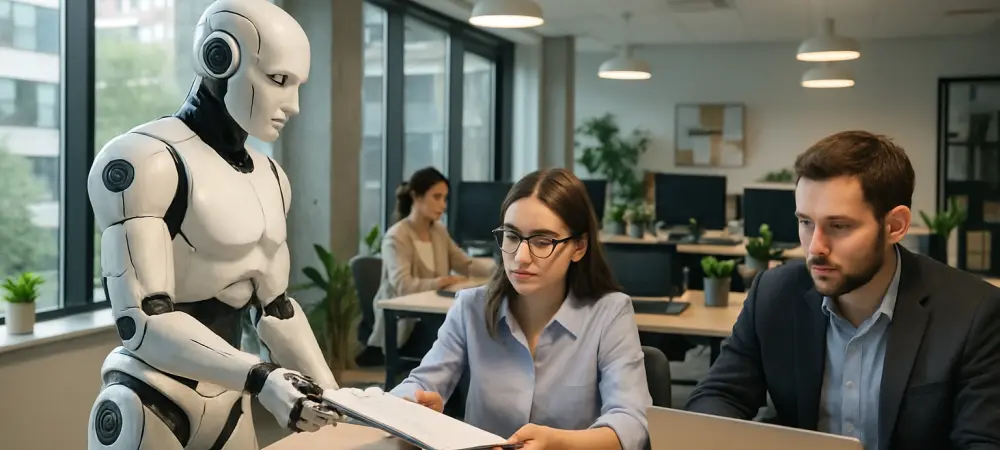
I’m thrilled to sit down with Ling-Yi Tsai, a renowned HRTech expert with decades of experience in transforming workplaces through technology. With a deep focus on HR analytics and the seamless integration of tech into recruitment, onboarding, and talent management, Ling-Yi is the perfect guide to help us explore the emerging world of Agentic AI. In this conversation, we’ll dive into how this innovative technology differs from past AI systems, its potential to reshape business operations, the benefits and risks it brings—especially in areas like cybersecurity—and its role in specific functions like supply chain management. Let’s uncover how Agentic AI could redefine the future of work.
How would you describe Agentic AI, and what makes it stand out from earlier technologies like Generative AI or Robotic Process Automation?
Agentic AI is a significant leap forward because it’s not just about generating content or following strict scripts like Generative AI or RPA. It’s about autonomy and decision-making. While Generative AI, like ChatGPT, excels at creating text or images based on prompts, and RPA automates repetitive tasks with predefined rules, Agentic AI can think and act independently to some extent. It analyzes situations, makes choices, and executes tasks without constant human input. What makes it unique is its contextual intelligence—it can adapt to new scenarios and even learn from them, almost like a virtual co-worker rather than just a tool.
In what ways do you see Agentic AI transforming the workplace over the next few years?
Over the next five years, I believe Agentic AI will fundamentally change how we approach work by taking on a wide range of routine and even mid-level tasks. Think data entry, scheduling, basic customer inquiries, or even initial candidate screening in HR. It’s likely to have a profound impact across industries like retail, manufacturing, and IT, where operational efficiency is key. For business functions, areas like supply chain and customer service stand out as prime candidates for transformation, as AI agents can handle complex coordination and real-time problem-solving. This shift will push human workers toward more strategic, creative roles, reshaping job descriptions in ways we’re just beginning to understand.
What are some of the biggest advantages Agentic AI offers to businesses and their employees?
The benefits are twofold. For businesses, Agentic AI drives efficiency by automating mundane tasks, reducing errors, and speeding up processes. For employees, it’s a game-changer in freeing up time. Imagine a scenario in HR where an AI agent handles all the initial resume reviews and interview scheduling. This allows recruiters to focus on building relationships with candidates and strategizing talent pipelines. It’s not just about working faster; it’s about working smarter, giving people the space to tackle high-value projects that require human insight and creativity.
How is Agentic AI being leveraged to strengthen cybersecurity in organizations?
In cybersecurity, Agentic AI is becoming a critical ally. It can continuously monitor networks for unusual activity, detect potential threats, and even respond to them in real time—often before a human would even notice. Tasks like patching vulnerabilities or isolating compromised systems can be handled autonomously, which drastically cuts down response times. For IT staff, this means less time firefighting minor issues and more focus on developing long-term security strategies. It’s like having a tireless guard on duty 24/7, keeping the organization safer with minimal human intervention.
On the other hand, what risks does Agentic AI pose in the realm of cybersecurity?
The flip side is that the same autonomy that makes Agentic AI a powerful defender can be weaponized by cybercriminals. Imagine an AI agent designed to autonomously seek out network weaknesses or execute sophisticated attacks at scale without much human oversight. It lowers the barrier for less-skilled attackers to cause significant damage. Companies need to stay ahead by integrating AI into their defenses strategically, training their teams on these tools, and investing in complementary technologies. It’s a race—adapting quickly and responsibly is the only way to maintain an edge over malicious actors.
Can you explain how Agentic AI’s ability to train other AI models works, and why this matters for businesses?
This is one of the most exciting aspects of Agentic AI. It can act as a mentor of sorts, guiding other AI agents by monitoring their performance, spotting errors, and offering corrections. For example, a specialized AI agent trained in payroll processing could oversee other agents learning the same task, ensuring accuracy and consistency. This matters because it allows businesses to scale expertise without human bottlenecks. It paves the way for highly specialized AI roles within a company, tailored to specific functions, which can dramatically boost operational precision and efficiency.
How can Agentic AI specifically enhance business functions like supply chain management?
In supply chain management, Agentic AI shines by handling vast amounts of data in real time. It can monitor variables like weather disruptions, market trends, or shipping delays, predict potential risks using historical patterns, and suggest alternative solutions—like rerouting shipments to avoid a delayed port. A real-world example might be a retailer using an AI agent to flag a delayed shipment and automatically source inventory from a nearby warehouse to meet customer demand. This kind of proactive decision-making minimizes disruptions and keeps operations running smoothly, ultimately improving customer satisfaction.
What is your forecast for the role of Agentic AI in the workplace over the next decade?
Looking ahead, I think Agentic AI will become a cornerstone of the workplace, evolving from a supportive tool to a core component of business strategy. We’ll likely see it deeply embedded in every function, from HR to finance to operations, handling increasingly complex tasks with greater autonomy. The challenge will be balancing this integration with human oversight to ensure ethical use and maintain trust. I foresee a hybrid workforce where AI agents and humans collaborate more seamlessly, with AI taking on the heavy lifting of data-driven decisions while people focus on innovation and empathy-driven leadership. It’s an exciting, transformative era, but it will require thoughtful adaptation to truly unlock its potential.