

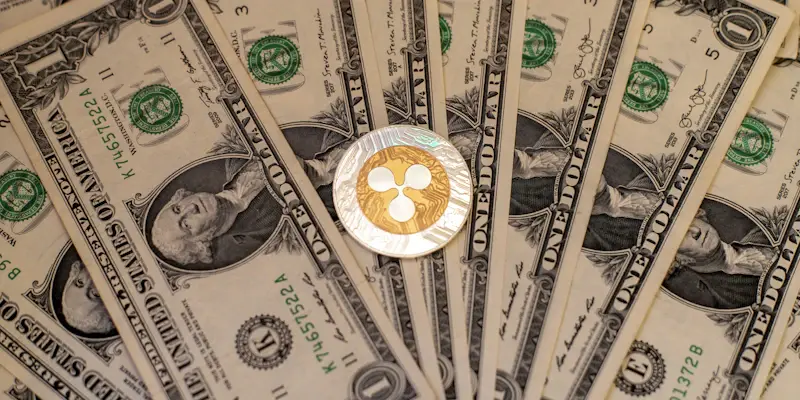
The cryptocurrency market continues to captivate investors with its potential for high returns and revolutionary technology. As of January 2025, the spotlight has turned to XRP, currently valued slightly above $3 and facing significant market resistance. Analysts are actively debating whether XRP remains a premier choice for cryptocurrency investments, especially considering its performance projections.
XRP Price Projections
Bitcoin’s Influence on XRP
A significant factor influencing XRP’s future price trajectory is Bitcoin’s performance. Analysts predict Bitcoin might rally to an astounding $150,000 before experiencing a market correction. Given the historical relationship between Bitcoin and other cryptocurrencies, XRP could ride the coattails of Bitcoin’s success. If Bitcoin hits these new heights, favorable U.S. policies could also play a crucial role in driving XRP to new records. Projections suggesting that XRP could reach values between $5 to $6 translate to a 50-70% increase for investors, marking considerable gains.
However, some extreme predictions even propose that XRP might skyrocket to an astonishing $500 valuation. This projection hinges on the notion that XRP would surpass Bitcoin in market dominance, a scenario deemed unlikely by most experts. Should market sentiment remain bullish, XRP’s price might rise to $3.50 in the short term, aligning with overall bullish attitudes within the broader cryptocurrency sector. Conversely, a bearish market could drag XRP’s value down to $2.
Short-Term and Long-Term Predictions
In the short term, XRP’s potential for growth seems to hinge on prevailing market sentiment. If the market continues to exhibit bullish trends, a 15% increase in XRP’s price could be seen in the coming weeks, reflecting positive investor attitudes. Nonetheless, this potential is balanced by the risk of a downward trend; if bearish sentiment prevails, XRP’s price might dip as low as $2. Consequently, investors must remain vigilant, continuously monitoring market conditions to make informed decisions.
Over the long term, the broader cryptocurrency market’s trajectory will likely play a pivotal role in XRP’s growth potential. Some analysts have projected that the cryptocurrency market might reach a staggering $10 trillion valuation during this bull run. XRP, as a significant player within this ecosystem, could benefit substantially from such market expansion. However, investors should remain cautious of overly optimistic projections and consider the inherent volatility of the cryptocurrency market when planning their investment strategy.
The Rise of Memes and $RISE Token
Initial Success and Growing Popularity
Amid the analysis of XRP’s potential, a new project called The Rise of Memes is capturing the attention of crypto enthusiasts. The project’s $RISE token has experienced rapid success during its presale phase, managing to sell 650 million tokens almost instantaneously. Priced attractively at $0.000420, $RISE offers a potentially lucrative entry point for adventurous investors seeking novel opportunities. This swift uptake highlights the growing excitement and curiosity surrounding The Rise of Memes, suggesting it might hold significant promise for high returns.
The Rise of Memes leverages the Play-to-Earn (P2E) gaming model, designed around a meme-centric universe. In this innovative virtual world, players can build cities, form alliances, and engage in battles, all while interacting with meme-inspired characters. By tapping into the burgeoning P2E trend, The Rise of Memes appeals to a broad audience of gamers and investors alike. This twin appeal positions $RISE as a strong candidate for significant growth, standing out amid a crowded cryptocurrency marketplace.
Potential for High-Growth Opportunities
The uniquely engaging concept behind The Rise of Memes, combined with its early-stage presale, suggests it has considerable potential for exponential growth. Unlike more established cryptocurrencies like XRP, $RISE’s relatively low market cap means it could experience more dramatic gains if the project manages to capture widespread popularity. For investors willing to take on higher risk in exchange for potentially astronomical returns, $RISE represents a tantalizing opportunity.
In comparing XRP and $RISE, both present interesting investment avenues, albeit catering to different investor profiles. XRP’s established market presence and substantial market cap provide relatively stable returns, aligning with projections of moderate gains around 50-70%. On the other hand, $RISE’s low market cap and innovative P2E model suggest a higher upside potential. This potential for 100x returns makes $RISE particularly appealing to those looking for high-growth opportunities within the dynamic and fast-evolving cryptocurrency landscape.
Conclusion
The cryptocurrency market continues to fascinate investors with its potential for substantial returns and groundbreaking technology. By January 2025, one digital asset attracting significant attention is XRP, which is currently priced a little above $3. Despite facing substantial market resistance, it has managed to stay afloat. Financial analysts are in heated discussions about whether XRP should still be considered a top-tier option for cryptocurrency investors, particularly when taking into account its future performance predictions.
XRP, developed by Ripple Labs, has long been a staple in the crypto world, known for its fast transaction speeds and relatively low costs. However, it has faced numerous challenges, including regulatory scrutiny and market volatility. These factors contribute to the ongoing debate about its investment viability. Investors are keenly watching how XRP will navigate these hurdles and adapt to evolving market conditions. Some believe XRP’s underlying technology and partnerships could secure its place as a valuable asset, while others remain skeptical about its long-term prospects.