

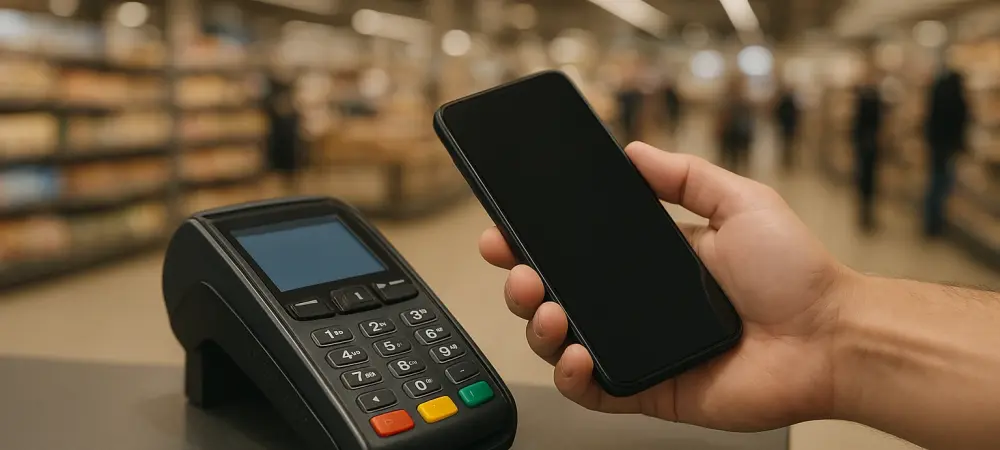
Despite holding out for years while eighty-five percent of American retailers adopted Apple Pay, Walmart is finally aligning its checkout infrastructure with current consumer payment preferences. For over a decade, the retail giant stood as the most prominent holdout against the Near Field Communication standards that powered competitors like Target and Costco. By prioritizing its proprietary QR-code-based system, Walmart Pay, the company aimed to retain control over valuable transaction data while avoiding the processing fees associated with third-party digital wallets. However, as the ecosystem of 2026 has matured, the friction caused by requiring a separate app for payments has become a significant deterrent for a younger demographic accustomed to the seamless tap-to-pay experience. This shift represents a fundamental change in strategy, moving away from a closed-loop environment toward an open architecture that values customer throughput and satisfaction over data exclusivity. The transition underscores a realization that in a hyper-competitive market, forcing a specific user behavior is less effective than adapting to established habits of shoppers who demand speed above all else.
Evolutionary Shifts in Retail Payment Standards
The historical resistance to Apple Pay was never about a lack of technical capability but rather a strategic play to safeguard the company’s analytical goldmine. By funneling users through the Walmart app, the retailer successfully mapped individual shopping journeys with surgical precision, linking digital browsing habits directly to physical point-of-sale transactions. This closed ecosystem allowed for highly personalized marketing campaigns and inventory management that few other retailers could match. However, the isolationist approach began to fray as the broader market moved toward universal standardization. In 2026, the proliferation of wearable technology and biometric authentication has made the process of unlocking a phone to scan a QR code feel remarkably antiquated. Shoppers often expressed frustration when reaching the register, only to find that their primary method of payment was unsupported. This friction point became a hurdle that outweighed the benefits of data collection, especially as third-party payment providers offered more robust data-sharing agreements that were not available in the previous years.
The decision to incorporate Apple Pay into the checkout experience marked a pivotal moment in the history of American commerce. It signaled the end of the fragmented digital wallet wars that had characterized the early 2020s. By prioritizing the user experience, the retailer successfully increased checkout efficiency and saw a measurable rise in customer satisfaction scores across diverse demographics. The move also forced a reconfiguration of the internal data systems, which led to more efficient ways of tracking consumer trends without relying on restrictive proprietary software. This transition demonstrated that large-scale infrastructure changes were possible when aligned with the clear demands of the market. The retail industry observed this shift as a validation of the universal payment standard, effectively ending the era of closed-loop payment systems for major national chains. By removing the friction at the point of sale, the company paved the way for a more integrated shopping experience that bridged the gap between digital and physical commerce. These changes reflected a broader trend toward interoperability that defined the current mid-decade retail environment.