

Introduction
Tap-to-pay habits have reshaped daily commerce, yet crypto balances have mostly sat on the sidelines, ready in theory but rarely swiped in practice because merchant rails, compliance, and conversion frictions kept them out of checkout lines worldwide. That is where Digitap, with its $TAP token and planned Visa integration, steps into the frame.
The goal here is to unpack whether Digitap’s “omni-bank” vision—one wallet for fiat and crypto with card-based spending—could move crypto from speculation to everyday utility. The discussion explores how the model works, what Visa enablement could change, why the PayFi thesis matters, and how token mechanics and presale activity fit into the picture. Readers can expect a structured walkthrough of the key questions that determine real-world viability: the scope of merchant acceptance, the economics of instant conversion, the strength of fiat on/off-ramps, and the credibility of claims around adoption and investor interest. The aim is clear answers, balanced with the nuances that ultimately make or break payment products.
Key Questions or Key Topics Section
What is Digitap and What Does an “omni-bank” Promise?
Digitap describes an integrated platform where users hold fiat and crypto within one app and wallet, moving between them without juggling separate tools or providers. The “omni-bank” label points to a hybrid stack: exchange-like swaps, on/off-ramps to bank accounts, and mobile banking features layered with self-custody for digital assets.
This model tries to solve a familiar pain: people want crypto’s speed and flexibility without losing the reach and trust of legacy rails. By consolidating balances and controls in a single interface, the platform positions itself as a daily-finance utility rather than a niche trading venue, aiming for utility that endures beyond market cycles.
Claims of seamless orchestration are ambitious because the plumbing spans licensing, liquidity, risk controls, and user experience. However, if the stack holds, it addresses a central blocker to adoption—fragmentation—by making movement between money types feel routine instead of exceptional.
How Would a Visa Integration Make Crypto Usable at Checkout?
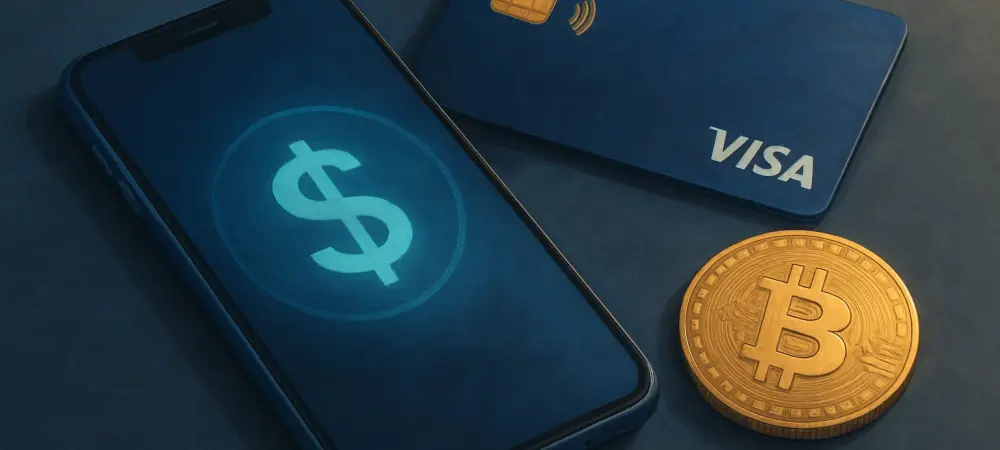
The headline idea is straightforward: enable card spending of crypto balances across Visa’s vast merchant network, with on-the-fly conversion at the point of sale. In principle, the card functions like any other, while the app handles behind-the-scenes asset selection and trade execution. Such a setup has two critical levers. First, coverage: Visa connectivity theoretically opens more than 130 million merchant endpoints, placing crypto within familiar checkout flows. Second, experience: instant conversion needs deep liquidity and transparent fees, or the benefit collapses into unpredictability for users.
Execution still depends on program scope, settlement rules, regional restrictions, and the economics of FX and network costs. Not every card-crypto product achieves uniform performance globally. If Digitap’s integration delivers broad acceptance alongside predictable pricing, it could turn a repeated promise—“spend crypto anywhere”—into a dependable habit.
What is PayFi, and Why Does It Matter Now?
PayFi reframes decentralized finance around payments as the primary use case, not a secondary perk. The concept prioritizes instant settlement, global reach, and smooth on/off-ramps, aligning blockchain benefits with the everyday act of paying for goods and services. This shift matters because payments demand relentless reliability: low failure rates, clear fees, and consistent merchant behavior. Projects that lead with payments must tame complexity across compliance, liquidity, and user support. The upside is tangible: when crypto behaves like money at checkout, adoption hurdles fall, and utility can outlast narrative cycles. Momentum behind PayFi reflects fatigue with speculation-driven tokens that lack lived utility. By leaning on familiar card rails while preserving the speed and programmability of crypto, PayFi platforms aim to unlock usage from the first tap instead of promising eventual breakthroughs.
How Does the $TAP Token Function Inside the Digitap Ecosystem?
According to project materials, $TAP ties platform activity to token demand through several roles: staking, fee participation, rewards and cashback, payment routing, and governance. The idea is to weave incentives through real usage rather than pure yield chasing, building retention as users spend and move funds. Utility tokens often live or die by design details that are easy to gloss over: supply schedules, emissions, lockups, and the source of staking yields. Without clarity here, perceived utility can blur into unsustainable rewards that fade post-launch. Token mechanics that map to actual platform cash flows tend to fare better in volatile markets. If card spending, swaps, and on/off-ramp flows scale, $TAP could benefit from a flywheel of activity and rewards. If volumes stall or incentives rely on subsidies, the token could decouple from the platform’s payment pitch, weakening the core promise.
What Current Signals Suggest Traction in the Presale?
Project communications highlight a staged presale price of $0.0326, moving to $0.0334 in the next step, with a claimed 76.71% discount during the phase. Reported tallies noted more than 131 million tokens sold and at least $2.1 million raised, plus a promotional code for first-time buyers and a large giveaway campaign.
Such figures, if accurate, point to growing attention around the payments thesis and the Visa narrative. Promotions and discounts are common in this stage and can accelerate early momentum, especially when paired with a clear product story and near-term milestones. However, presale success does not equal post-launch stickiness. The more telling signal will be live product usage: card transactions settled, conversion responsiveness under load, user retention, and merchant acceptance consistency across regions.
How Does Digitap Compare With Typical Presales?
Many presales lean on lofty roadmaps and social heat, with concrete payment features often arriving late, if at all. By contrast, Digitap frames its utility as the centerpiece: merchant payments, card functionality, fiat bridges, and exchange-style tools bundled into one user-facing layer.
This stance positions the project as a challenger to traditional banks, not just a Web3 convenience. Speed, borderless reach, and user custody sit beside card familiarity to lower switching costs for mainstream users. It is a bold claim that raises the bar on delivery and compliance readiness.
Competitive reality complicates any “first” label. Card-enabled crypto products exist, each with different scopes and trade-offs. The differentiator will likely be how deeply the card is integrated into a broader omni-bank experience, not just whether a card exists.
What Risks or Unknowns Should Be Weighed?
The biggest hinge is the Visa integration itself: program depth, merchant coverage by region, fee transparency, settlement timelines, and compliance guardrails. Not every integration grants equal capabilities, and local rules can narrow or expand what users actually experience at checkout. Promises of instant conversion and low cross-border costs depend on liquidity, FX spreads, network fees, and jurisdictional constraints. Real performance can vary widely across markets, and edge cases—refunds, chargebacks, dispute handling—matter to everyday reliability. Token sustainability also remains a core question. Without detailed tokenomics, it is difficult to assess dilution, reward funding sources, and long-term value accrual. Independent verification of presale data, partnership status, and licensing would add needed confidence to the narrative.
How Could Merchants and Users Benefit if PayFi Works as Described?
For users, PayFi can compress steps: hold crypto, tap card, complete purchase anywhere Visa is accepted, all while seeing fair, predictable fees. Cross-border travel and remittances could feel simpler when settlement happens quickly and balances are unified in one wallet. Merchants, meanwhile, gain a broader customer base without holding volatile assets. Real-time conversion reduces exposure while keeping checkout flows unchanged. The model avoids new hardware or staff retraining, making adoption less disruptive. The inclusion angle also deserves attention. In regions with shallow banking access, a hybrid wallet combined with card rails could widen participation in global commerce. When fiat entry and exit points sit beside crypto balances, financial mobility tends to improve.
What Should Potential Participants Watch for Next?
Proof will come from product readiness and scope: live cards in multiple regions, consistent merchant acceptance, explicit fee schedules, and clear support workflows. These operational details reveal whether the platform behaves like a bank-grade service rather than a demo. On the token side, comprehensive disclosures matter: supply, emissions, lockups, vesting, and mechanisms linking platform volume to token demand. Governance functions and reward models should map to observable cash flows and user activity. Finally, transparent updates on licensing, custody arrangements, and partner confirmations would solidify confidence. The best signal remains usage that endures beyond promotions: transactions completed, users retained, and support tickets solved quickly.
Summary or Recap
The discussion traced how Digitap aims to serve as an omni-bank that unites fiat and crypto in one wallet, anchored by a planned Visa integration intended to unlock merchant spending at scale. The PayFi thesis stood out as a pragmatic pivot in crypto, putting payments first and tolerating fewer excuses around friction, fees, and reliability.
Key strengths included a utility-centered roadmap—cards, on/off-ramps, swaps, and rewards—plus presale activity that suggests growing interest in payment-led utility. The counterweights were clear: execution risk around program scope, regional performance, and token economics that require more disclosure to judge durability.
The takeaway is straightforward. If the integration performs as described—with wide acceptance, predictable costs, and dependable conversion—Digitap could move crypto from the watchlist to the wallet at checkout. Those evaluating next steps may want to follow product releases, tokenomics documents, and compliance milestones, along with credible third-party verification where available.
Conclusion or Final Thoughts
This analysis pointed to a turning point where crypto utility hinged less on narratives and more on whether a card at a counter simply worked. PayFi promised to bring that simplicity by marrying blockchain speed to familiar rails, and Digitap’s claims placed the project near the center of that shift.
The most practical next moves had involved watching for live regional rollouts, transparent fee tables, and clear custodial and licensing frameworks, while examining token design documents that tied rewards and governance to measurable platform activity. Independent checks on the Visa program scope and ongoing performance metrics would have provided the best confirmation.
Seen through that lens, progress was best measured by steady transaction volumes, low-friction support, and durable user retention rather than headline promotions. As the space matured, the winners appeared poised to be those that made crypto spendable everywhere people already paid, turning a long-running promise into an ordinary, reliable habit.