

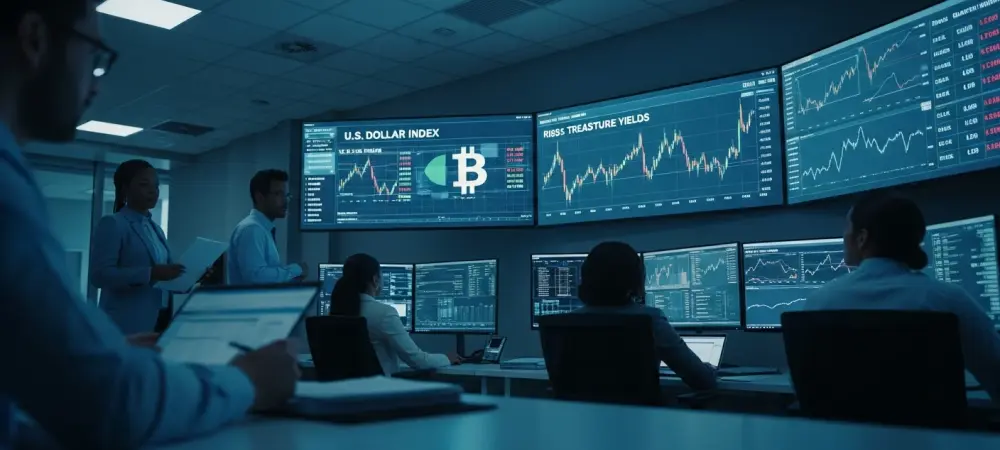
The Trump Nomination Shaking Monetary Policy and Crypto Markets
In a move poised to reshape United States monetary policy, former President Donald Trump announced his intention to nominate Kevin Warsh as the next Chairman of the Federal Reserve, succeeding Jerome Powell. This declaration, broadcast via the Truth Social platform, immediately sent ripples through global financial markets, confirming what prediction markets like Polymarket had already priced in with 96% certainty. For the digital asset space, however, the nomination presents a fascinating paradox. Warsh is simultaneously a monetary “hawk” whose policies could create short-term headwinds for Bitcoin, and a nuanced pragmatist on digital assets whose views may foster long-term legitimacy. This article explores the complex and seemingly contradictory implications of a potential Warsh-led Fed for the world’s leading cryptocurrency.
From Powell’s Dovish Era to a Potential Hawkish Regime Change
To grasp the significance of Warsh’s nomination, one must understand the monetary landscape he seeks to change. The era under Jerome Powell was largely defined by an accommodative, or “dovish,” stance, characterized by prolonged low interest rates and massive asset purchase programs (Quantitative Easing) designed to inject liquidity into the economy during crises. Warsh, a former Federal Reserve governor who served during the tumultuous 2008 financial crisis, represents a stark departure from this approach. He has been a vocal critic of the Fed’s “ultra-loose” monetary policies, arguing they distort market signals, inflate asset bubbles, and erode the central bank’s credibility. His call for a “regime change” is a call for a return to monetary discipline, fiscal restraint, and a more predictable policy framework—a philosophy that fundamentally alters the investment calculus for every asset class.
Decoding Warsh’s Stance: A Double-Edged Sword for Digital Assets
The Monetary Hawk: Why Tighter Policy Spooked Bitcoin Investors
The immediate reaction from the cryptocurrency market was telling. Upon the news breaking, Bitcoin (BTC) experienced a notable downturn, falling nearly 3% to $82,700. This bearish price action is a direct response to Warsh’s hawkish reputation. A tighter monetary environment, featuring higher interest rates and reduced liquidity, makes speculative, high-risk assets like Bitcoin less attractive. When investors can earn safer, more predictable yields from government bonds, their appetite for volatile assets naturally wanes. Warsh’s public record suggests he would prioritize rigorously controlling inflation over stimulating short-term growth, a policy mix that historically dampens enthusiasm for assets that thrive on cheap capital and liquidity.
The Digital Asset Pragmatist: An Unexpected Ally Against CBDCs
Despite the market’s initial jitters, a deeper look at Warsh’s record reveals a more sophisticated and potentially constructive view on digital assets—the other side of the paradox. Crucially, Warsh is on record as being opposed to a retail Central Bank Digital Currency (CBDC), a position that aligns perfectly with cryptocurrency advocates who fear the potential for government surveillance and control. Furthermore, he has expressed a preference for privately issued stablecoins, signaling a belief that innovation in digital money is best left to the private sector. Most significantly, he has framed Bitcoin not as a competitor to the U.S. dollar, but as a source of “market discipline”—a barometer for flagging confidence in central bank policies, which could ultimately lend it a legitimate and enduring role in the financial ecosystem.
Beyond Crypto: Market-Wide Ripples and the Political Gauntlet Ahead
The implications of Warsh’s nomination extend far beyond digital assets. In the days leading up to the announcement, the U.S. dollar strengthened and Treasury yields rose, indicating that currency and fixed-income markets were already preparing for a more hawkish Fed. Conversely, precious metals like gold and silver, which often perform well in low-interest-rate environments, saw sharp price declines. However, the nomination is not a finality. It kicks off what is expected to be a contentious Senate confirmation process, where Warsh will face tough questions on his past criticisms of the Fed. This political battle adds another layer of uncertainty to a complex macroeconomic environment, forcing markets to price in not just a policy shift but also the political fight to enact it.
The Future Under a Warsh-Led Fed: A New Era for Capital and Innovation
The potential confirmation of Kevin Warsh signals a pivotal shift away from the crisis-response, liquidity-injection model that has dominated central banking since 2008. A move toward a more traditional, inflation-fighting mandate would herald an era where capital is more expensive and liquidity less abundant. This forces a fundamental reassessment of asset valuations across the board, from equities to real estate. For the cryptocurrency industry, this trend presents a dual challenge and opportunity. While tighter financial conditions may temper speculative fervor, a regulatory environment under Warsh could prove more favorable for private innovation, potentially accelerating the maturity of stablecoins and solidifying Bitcoin’s status as a legitimate macro asset.
Navigating the Paradox: Key Takeaways for Investors
The market’s reaction reveals a consensus that a Warsh-led Fed means tighter financial conditions—a forecast that is bullish for the U.S. dollar but presents headwinds for risk assets like Bitcoin. For investors, the primary takeaway is the need to balance short-term macroeconomic pressures against long-term structural tailwinds.
- Acknowledge the Macro Headwind: Higher interest rates and quantitative tightening are, on balance, negative for Bitcoin’s price in the near term. Portfolio strategies should account for this increased volatility and potential for price corrections.
- Focus on the Regulatory Upside: Warsh’s opposition to a CBDC and his pragmatic view on private digital assets could de-risk the industry from a regulatory standpoint, which is a significant long-term positive.
- Monitor the Confirmation Process: The political battle in the Senate will be a key indicator of future policy. Investors should watch the proceedings closely, as the rhetoric and lines of questioning will offer clues into the future direction of both monetary and regulatory policy.
A Pivotal Moment for Money, Markets, and a Digital Future
The nomination of Kevin Warsh forces market participants to grapple with a complex duality: a Fed Chair who is both a monetary hawk and a digital asset pragmatist. This paradox encapsulates the broader maturation of the cryptocurrency industry, which is now inextricably linked to global macroeconomic policy while simultaneously carving out its own distinct technological and philosophical path. While a Warsh-led Fed may bring an end to the era of easy money that fueled Bitcoin’s last bull run, it could also usher in a period of regulatory clarity that cements its place in the financial system for decades to come. For Bitcoin, the path forward may be more challenging, but its foundation could ultimately become far more secure.