

Introduction
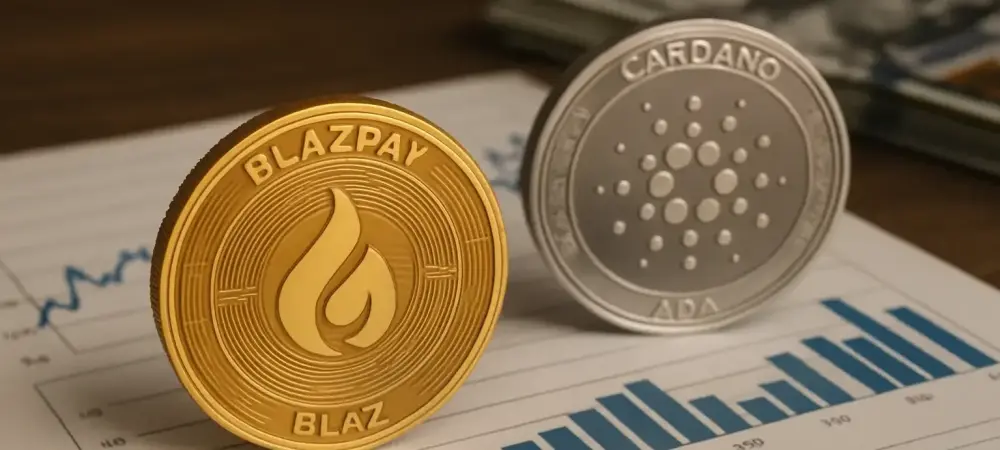
The digital asset landscape is in a perpetual state of flux, with new projects constantly emerging to challenge the established order. This dynamic creates a crucial dilemma for token holders: should one invest in the stability and proven track record of a mature project or embrace the high-risk, high-reward nature of an early-stage presale? This analysis explores that central question through the lens of two distinct projects.
On one side stands Blazpay, a platform leveraging artificial intelligence and unified multichain services to offer practical utility from its inception. On the other is Cardano, a top-tier blockchain known for its methodical, research-driven approach to development and its robust ecosystem. This examination will answer key questions surrounding their technology, investment potential, and strategic positioning to help investors navigate this complex decision.
Key Questions or Key Topics Section
What Differentiates Blazpay in a Crowded Market
In an ecosystem saturated with new crypto coins, Blazpay sets itself apart by integrating a sophisticated suite of AI-driven features with a cohesive platform of Unified Services. This dual focus is designed to deliver tangible value beyond speculative hype, a critical factor for long-term viability. The AI component provides users with powerful tools such as predictive analytics to forecast market movements, smart trading insights to inform decisions, and real-time portfolio monitoring to automate asset management.
This technological foundation is complemented by its Unified Services system, which streamlines the user experience by bringing payments, rewards, and token management together in one accessible interface. Crucially, this functionality extends across multiple blockchains, enhancing liquidity and interoperability for both traders and developers. By embedding practical utility directly into its core architecture, Blazpay positions itself as a functional ecosystem rather than just another token, appealing to those seeking projects with strong fundamentals.
How Does Cardano Position Itself for Future Growth
Cardano maintains its relevance not through explosive presale dynamics but through a commitment to steady, deliberate evolution and ecosystem expansion. As a mature blockchain, its foundation rests on secure smart contracts, a decentralized governance model, and a thriving DApp ecosystem that has been built and tested over several years. This stability makes it a trusted platform for developers and institutions.
Looking ahead, Cardano is not resting on its laurels. The planned rollout of the Midnight Protocol is set to significantly enhance data protection and smart contract functionality, improving overall network efficiency and privacy. Moreover, the project is actively pursuing strategic partnerships in the United States and other global markets, aiming for broader enterprise and government-level adoption. These initiatives, combined with potential future upgrades incorporating AI-assisted tooling, signal a clear strategy focused on long-term, sustainable growth and relevance.
What Is the Potential Return on Investment for Each Asset
The investment potential of Blazpay and Cardano represents two fundamentally different approaches to wealth generation in the crypto market. For Blazpay, the appeal lies in the exponential upside characteristic of early-stage presales. To illustrate, a $3,000 investment during its Phase 5 at a price of $0.0135 per token would secure approximately 222,222 BLAZ. Should the token list on exchanges within a projected range of $0.08 to $0.10, that initial investment could see its value grow to between $17,777 and $22,222, demonstrating the significant return potential for early participants.
In contrast, Cardano offers a more moderate but stable growth trajectory. Currently trading around $0.41, analyst projections for 2026 place its potential value between $1.20 and $2.50. This outlook depends heavily on prevailing market conditions and the successful implementation of its network upgrades. While this represents a solid return, it is far more conservative than the potential multipliers of a successful presale. Consequently, Cardano is often viewed as a lower-risk asset suitable for long-term holds, whereas Blazpay attracts those willing to assume greater risk for the chance of higher rewards.
How Do Their Risk Profiles Compare for an Investor
An investor’s choice between Blazpay and Cardano is largely a reflection of their personal risk tolerance. Blazpay, as a project in its presale phase, inherently carries a higher level of risk. The platform is still in development, its market acceptance is not yet proven, and the broader success of its ecosystem is not guaranteed. The history of presales is filled with projects that fail to deliver on their promises, making such investments speculative. However, this elevated risk is counterbalanced by the potential for outsized returns if the project achieves its goals and gains market traction. Conversely, Cardano represents a much lower-risk investment. With years of development, a large and active community, a substantial market capitalization, and a proven technological framework, the chances of a complete project failure are significantly diminished. Its price is less susceptible to the wild volatility that can affect nascent projects. This stability makes Cardano a suitable anchor for a diversified crypto portfolio, providing a solid foundation while allowing an investor to explore higher-risk assets like Blazpay for growth potential.
Are There Additional Incentives for Early Blazpay Participants
Beyond the potential for significant price appreciation, Blazpay has implemented a structured referral program designed to reward early adopters and foster robust community growth. This system provides tangible, immediate benefits that enhance the overall value proposition for participants in its presale. The program is built on a multi-tier incentive structure that offers instant, USD-based rewards for successfully referring new investors to the platform.
This approach serves a dual purpose. For the investor, it creates a pathway to generate a passive income stream simply by advocating for a project they already support. For the Blazpay ecosystem, it fuels organic marketing and accelerates token distribution, helping to build a broad and engaged user base from the outset. These incentives make participating in the Blazpay presale more than just a speculative bet on future price; it becomes an opportunity to actively contribute to and benefit from the project’s early expansion.
Summary or Recap
The comparison between Blazpay and Cardano highlights a fundamental strategic choice for any cryptocurrency investor. Blazpay presents a compelling case as a high-growth opportunity, driven by its innovative fusion of AI-powered analytics and integrated, multichain financial services. Its presale status offers the potential for substantial returns, though this comes with the inherent risks of an early-stage project. The platform’s focus on utility from day one, however, provides a strong foundation for its future ambitions.
Cardano, in contrast, offers the security and predictability of a market-leading blockchain. Its value proposition is built on a history of rigorous development, a stable and expanding ecosystem, and a clear roadmap for future enhancements like the Midnight Protocol. While its growth potential may be more moderate, its lower risk profile makes it an attractive asset for conservative investors or as a stabilizing element in a more aggressive portfolio. Ultimately, the “better” investment depends entirely on an individual’s financial goals, timeline, and tolerance for risk.
Conclusion or Final Thoughts
The decision between an emerging innovator like Blazpay and an established pillar like Cardano was a defining one for investors navigating the market in 2025. It underscored a broader trend where projects promising immediate, tangible utility began to seriously challenge the established hierarchy of the blockchain world. This dynamic forced a reevaluation of what constitutes a valuable digital asset, moving the conversation beyond mere speculation and toward functional application.
Ultimately, this choice prompted investors to look inward and assess their own strategies more critically. It required them to decide whether their philosophy favored the explosive potential of pioneering technologies or the steady, compounding growth of proven platforms. The wisest participants recognized that a well-rounded portfolio often found strength not in choosing one over the other, but in strategically balancing the ambition of the new with the resilience of the old.